heater should be at what temperature
Learn how to set your heater to the right temperature for comfort and energy savings. This Heater Cost guide covers baselines, room-by-room ranges, and practical tips.


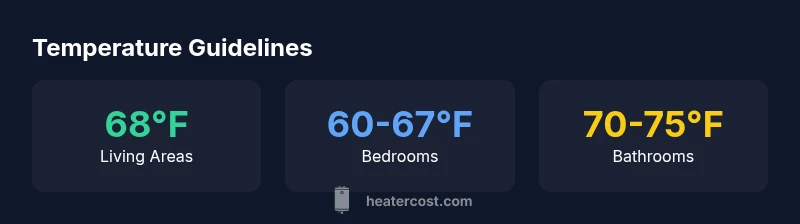
Baseline thermostat setting for comfort and efficiency is around 68°F (20°C) in living areas when you're home. For sleep, aim for 60-67°F (15-19°C), and bathrooms can be warmer at 70-75°F (21-24°C) as needed. Individual preferences and climate vary, but these ranges balance comfort with energy use, according to Heater Cost Analysis, 2026.
The basics of thermostat temperature and comfort
If you ask, 'heater should be at what temperature,' you're balancing comfort with energy efficiency. According to Heater Cost Analysis, 2026, most homes achieve comfortable living spaces by targeting a baseline around 68°F (20°C) in common areas such as the living room and family space. Personal preference, climate, and occupancy can shift that baseline up or down by a few degrees, but the goal remains consistent: minimize temperature swings while maintaining well-being.
In practice, comfort is not only about the air temperature. Humidity, drafts, clothing insulation, and activity levels all influence how warm a room feels. A 1- to 2-degree difference can feel substantial in a drafty room, so a holistic approach—combining insulation, seals, and thermostat strategy—tends to outpace setting a single universal number.
How to determine your baseline temperature
The baseline is the temperature you aim for when you are at home and awake. Start with 68°F (20°C) in living areas, then observe how it feels over several days. Use a reliable thermometer in key rooms to verify that the thermostat reading matches the actual air temperature. If you notice hotspots near windows or drafts along doors, adjust the local environment rather than forcing the entire house to warmer settings. Programmable or smart thermostats can automatically maintain the baseline while applying a gentle setback at night or when the house is empty. A night setback of even a few degrees can yield meaningful energy savings without sacrificing comfort.
To ensure accuracy, check that your thermostat sits away from heat sources like lamps or appliances, and avoid placing it behind furniture that blocks air flow. If you have multiple zones, you can fine-tune each zone to reach its own baseline while keeping overall building energy in check.
Living areas: recommended range and rationale
Living rooms and open-plan spaces are where many households spend most of their waking hours. A practical target is 68-72°F (20-22°C) when the space is in active use. This range reflects human comfort during daily activities and step changes in metabolic heat. If the space tends toward heat loss—due to large windows or high ceilings—you might lean toward the lower end of the range and offset with better insulation. Conversely, more humidity or higher activity can justify a slightly higher point. The goal is to maintain perceptible warmth without overheating the room, which wastes energy and can dry out indoor air.
For homes with family members who feel cold more easily, consider a slight elevation in short bursts (like after outdoor time) or a temporary boost during activities that require more warmth. Using zoned control helps keep other zones at lower baselines where people are less active.
Bedrooms and sleep: how temperature affects rest
Bedrooms are where cooler settings often improve sleep quality. Target a range of 60-67°F (15-19°C) for most sleepers. A cooler environment can help you fall asleep faster and enjoy deeper rest, especially if you use breathable bedding and keep humidity in a comfortable range. If you share a bed with a partner who prefers warmer conditions, consider individual bedding strategies or a slightly higher baseline in that room, but avoid large, night-long swings. Consistency matters; a gradual nighttime cool-down pace tends to outperform abrupt drops.
Smart thermostats with a sleep schedule can gently reduce temperature at a predictable time, preserving comfort while cutting energy use. If you wake during the night, a quick bump back to the daytime baseline can prevent cold-induced wakefulness.
Bathrooms and utility rooms: quick-warmth guidelines
Bathrooms should feel warm when in use, especially during colder months. A target of 70-75°F (21-24°C) is common, but this should be temporary: adjust to a comfortable level during use and then allow the space to return to the building’s baseline or a nearby zone setting when unoccupied. Portable thermostatic heaters or towel warmers can provide supplemental comfort without impacting the whole-house system. Ensure exhaust fans are balanced to manage humidity, which affects perceived warmth.
If you frequently use a bathroom in the morning, consider a small timer or zone control to pre-warm shortly before use. This strategy minimizes energy waste while maximizing comfort.
Seasonal strategy: winter vs summer thermostat strategies
In winter, the primary objective is to maintain warmth with minimal energy consumption. A baseline around 68°F (20°C) in living areas is a solid starting point, with bedrooms cooler at night. In hot seasons, the goal shifts toward reducing cooling loads by shading windows, sealing leaks, and using a setpoint that keeps interiors comfortable without forcing air conditioning into overdrive. Advanced systems can automatically adjust baselines by time of day and occupancy, leveraging weather data to reduce unnecessary heating or cooling.
Seasonal strategies also include optimizing insulation, sealing leaks, and using ceiling fans to redistribute air. These measures make it feasible to maintain comfortable indoor temperatures with less energy, regardless of the outside temperature.
How to implement zone heating without expensive upgrades
Zone heating allows different parts of the home to be heated to different temperatures. If you have an existing single thermostat, start by closing doors to unoccupied rooms and using curtains or blinds to reduce heat exchange. For more precise control, consider adding additional thermostats in key zones or using a smart thermostat with multi-zone capability. The payoff comes from heating only the spaces in use, which can significantly reduce overall energy consumption over time.
If you’re not ready for a full zoning system, a portable space heater in a frequently used room can complement a central system. Use safety guidelines (tip-over switches, proper clearance) and avoid heating adjacent rooms to excessive warmth.
Monitoring and adjusting: sensors, smart thermostats, and best practices
For accuracy, install temperature sensors in several rooms across different floors to gauge how the thermostat setting translates into actual room temperatures. Smart thermostats simplify monitoring by showing live readings and energy usage trends, and they can adapt to occupancy patterns. Calibrate the system after major weather changes, renovations, or changes in insulation. Humidity levels also affect perceived warmth; aim for indoor RH in the 30-50% range for comfort and efficiency.
Regular maintenance—filter changes, vent cleaning, and checking boiler or furnace efficiency—helps ensure your system maintains the intended temperatures without waste.
Common myths vs reality: dispelling misconceptions
A common myth is that higher temperatures always mean more comfort. In reality, once you exceed a comfortable baseline, you waste energy without a proportional increase in warmth. Another misconception is that a single temperature works everywhere; homes vary by room, sun exposure, and occupancy, so room-by-room setpoints often outperform a uniform setting. Finally, many people assume programmable thermostats automatically save money; they do so only if programmed with realistic schedules and if the home is well-insulated and sealed. By focusing on actual conditions, you can separate myths from practical, cost-effective strategies.
Room-by-room temperature guidelines
| Room/Zone | Recommended Temperature (°F) | Converted (°C) |
|---|---|---|
| Living areas | 68-72°F | 20-22°C |
| Bedrooms | 60-67°F | 15-19°C |
| Bathrooms | 70-75°F | 21-24°C |
| Unheated spaces (basement/attic) | 50-60°F | 10-16°C |
Got Questions?
What is the recommended thermostat setting for winter?
In winter, aim for a baseline around 68°F (20°C) in common rooms when occupied. Lower bedrooms to 60-67°F at night. If away from home, consider setback to 50-60°F to save energy.
In winter, target about 68 degrees in living areas and cooler bedrooms for sleep; when away, use a setback to save energy.
Is it better to keep a single temperature or use room-by-room settings?
Room-by-room setpoints usually balance comfort and efficiency more effectively than a single house-wide temperature, especially in homes with varying sun exposure, insulation, and occupancy.
Room-by-room settings often save energy while keeping people comfortable, especially in complex homes.
How can I tell if my heater is at the right temperature?
Use multiple room sensors to compare actual temperatures with your thermostat. If discrepancies persist, adjust the placement of sensors, vents, or insulation, and consider a thermostat with zone awareness.
Check with several room sensors and adjust as needed.
Do programmable thermostats save money?
Yes, programmable thermostats can save money when schedules align with occupancy and habits. The biggest gains come from setting back temperatures during sleep and away periods.
Programmable thermostats save money when you schedule setbacks.
Is 68°F comfortable year-round?
Not for everyone. Individual comfort varies; some people prefer warmer bedrooms or cooler living spaces. Adjust baselines gradually and use zoning to maintain comfort.
Comfort varies; adjust gradually and consider zones.
What should I do if my home is poorly insulated?
Improve insulation, seal leaks, and use draft stoppers. In the meantime, rely on moderate baselines and temperature setbacks to reduce energy waste without sacrificing comfort.
Insulate and seal leaks; use careful setbacks to save energy.
“Accurate temperature management improves comfort while reducing energy waste, especially when you tailor setpoints by room and season.”
The Essentials
- Set living areas to 68°F as the baseline.
- Sleep in bedrooms at 60-67°F for rest.
- Keep bathrooms at 70-75°F when in use.
- Use programmable setbacks to save energy.
- Verify temps with sensors and adjust as needed.