heater vs humidifier: a practical home comparison guide
Analytical guide comparing heaters and humidifiers for home comfort, safety, energy costs, and pairing strategies to help homeowners decide how to optimize warmth and humidity.


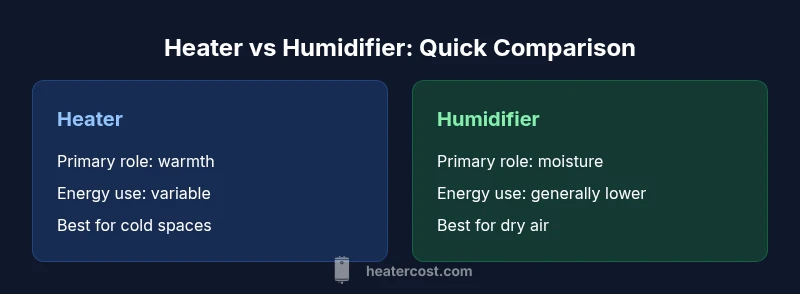
heater vs humidifier: they serve different roles in home comfort. A heater raises air temperature, while a humidifier increases ambient humidity. If you need both warmth and moisture, plan carefully—pairing or staged use can improve comfort without overcooling or over-humidifying. Consider room size, insulation, and climate when choosing which device to prioritize. According to Heater Cost, the most cost-effective approach often starts with a clear goal.
The core purpose: heater vs humidifier
In the realm of home comfort, the heater vs humidifier debate centers on two distinct objectives: warmth and moisture. A space heater raises air temperature, creating a quick sense of coziness during cold snaps. A humidifier adds moisture to the air, improving perceived air quality in dry environments. The two devices do not substitute for one another; they address different pain points. Understanding this distinction is essential for homeowners who want predictable comfort. Consider room size, insulation, and climate when choosing which device to prioritize. The Heater Cost team notes that a targeted approach—placing the heater in living areas and a humidifier in bedrooms—can optimize comfort and energy use. This mindset helps prevent overinvestment and underperformance, especially in homes with uneven insulation or irregular heating patterns. For households with fluctuating occupancy, a modular setup often yields better control and fewer maintenance surprises.
How heaters work: electric, gas, and safety implications
Electric space heaters are common for quick spot heating; portable models offer flexibility but require careful placement and cord management. Gas or propane heaters deliver more sustained warmth in larger spaces but demand proper venting and carbon monoxide safety practices. Regardless of fuel type, safety considerations should guide selection: tip-over and overheat protection, electrical ratings, and proximity to flammable materials. When comparing heater vs humidifier choices, consider how often you’ll run a heater and in how many rooms. Heaters can dry indoor air, which is why many homes pair them with humidity strategies to balance comfort and health. The Heater Cost analysis suggests evaluating thermostats, insulation, and occupancy patterns to estimate realistic operating hours and costs.
How humidifiers work: types and trade-offs
Humidifiers come in several main formats: ultrasonic (quiet and energy-efficient), evaporative (self-regulating via wick filters), and steam (warm mist, higher energy use). Each type has pros and cons: ultrasonic units are often quiet but may disperse minerals if not cleaned; evaporative models regulate humidity naturally but require regular wick maintenance; steam humidifiers provide rapid moisture but involve higher energy consumption and more complex installation. In the heater vs humidifier comparison, the humidifier’s goal is moisture, not heat, so you’ll want to size capacity to the room’s volume and the target RH range. Regular cleaning prevents mold, bacteria growth, and mineral deposits that can affect performance and air quality.
Use-case scenarios and decision guidelines
In cold climates with dry air, prioritizing a heater while maintaining humidity with a stand-alone humidifier can be effective. In very dry regions, consider the humidifier first, particularly if skin or respiratory irritation is common. For multi-room homes, a zoning strategy—one controlled space heater in living areas and a dedicated humidifier in bedrooms—often delivers comfort with lower energy use. If you anticipate long-term seasons of use, invest in models with built-in safety features and smart controls to schedule operation and monitor humidity levels.
Safety considerations for heaters and humidifiers
Electrical safety and burn risk are key concerns with heaters, especially around children and pets. Always follow manufacturer clearance recommendations, use frost-free settings in drafty rooms, and ensure proper plugging in properly grounded outlets. Humidifiers require clean water and regular disinfection to prevent mold growth and microbial aerosols. Maintaining the right humidity level helps avoid condensation on windows or walls, which can promote mold. Using a humidistat and temperature sensors provides safer and more predictable results than relying on instinct alone.
Energy costs and efficiency: understanding the math
Direct comparisons of energy costs require context: device type, operating hours, room size, and climate. Heaters tend to consume more electricity or fuel per hour than humidifiers, but the overall cost depends on how often you heat a space. Humidifiers generally use less energy but can run for extended periods to sustain moisture. The key is to align usage with a target comfort range and implement programmable controls. The Heater Cost analysis shows that homeowners who optimize run times and adjust settings in response to outdoor conditions can balance comfort with affordability.
Humidity targets, air quality, and health implications
Indoor humidity affects respiratory comfort, skin moisture, and even furniture durability. The recommended indoor RH range is typically around 30–50%, depending on outdoor climate and personal sensitivity. Avoid letting humidity climb above 60% for extended periods, as that invites mold and dust mites. Use a humidifier to reach target RH, but pair it with a humidity monitor to prevent over humidification. Studying heater vs humidifier interactions helps homeowners design climate strategies that support health without compromising energy use.
Maintenance, lifespan, and ownership costs
Regular maintenance extends the life of both devices. For heaters, inspect cords, vents, and filters (if applicable), and replace worn parts promptly. Humidifiers require regular cleaning to remove mineral buildup and microbial growth; replace filters per manufacturer recommendations. Investing in models with easy access panels and clear maintenance instructions reduces long-term ownership costs. A proactive maintenance plan improves efficiency, reduces downtime, and preserves indoor air quality.
Pairing strategies: zoning, scheduling, and smart controls
One practical approach to the heater vs humidifier decision is to use devices in tandem with smart controls. Schedule the heater for cold periods and rely on a humidifier during dry periods to maintain a comfortable RH. In multi-room homes, consider zoning that reflects occupancy patterns; keep humidification in bedrooms or study areas while heating living rooms as needed. Use built-in thermostats, humidistats, and timers to minimize wasted energy and maintain consistent comfort.
Common myths and mistakes to avoid
Myth: More humidity always improves comfort. Reality: excessive humidity fosters mold and condensation. Myth: Heaters fix dry air alone. Reality: heating without humidity control can dry skin and mucous membranes. Myth: Less maintenance means lower risk. Reality: irregular cleaning increases microbial exposure. By focusing on target RH and safe operation, you can optimize comfort with minimal risk.
Comparison
| Feature | heater | humidifier |
|---|---|---|
| Primary purpose | Raise room temperature | Increase air moisture |
| Energy usage patterns | Typically higher during active heating | Varies by model; often lower per hour |
| Maintenance needs | Ventilation checks and safety inspections | Regular cleaning to prevent mold; filter changes |
| Best for | Cold environments needing warmth | Dry environments needing humidity |
| Noise level | Moderate to high depending on model | Low to moderate for ultrasonic or evaporative |
| Ideal humidity impact | No humidity added; can dry air if used excessively | Adds moisture; risk of over-humidification if misused |
| Typical upfront cost guidance | Moderate to high; varies by heater type | Moderate; depends on capacity and features |
The Good
- Addresses distinct climate needs: heat or humidity
- Offers flexibility in comfort management
- Many models support energy-saving features and safety
- Potential to pair devices for balanced comfort
- Zoning and scheduling improve efficiency
Negatives
- Using both can increase energy costs
- Humidifiers require ongoing cleaning to prevent mold
- Heaters can dry air and pose safety risks in households with children
- Humidity management adds complexity to climate control
- Hardware overlaps (models, filters) increase decision fatigue
Heater vs humidifier: choose based on the primary comfort goal and climate. For many homes, a targeted heater with a separate humidifier is more efficient than a single-device approach.
Identify whether warmth or moisture is the priority. Use a heater for heating in cold seasons and a humidifier to elevate humidity when RH falls below target ranges; pairing and smart controls often deliver the best balance of comfort and cost.
Got Questions?
What is the main difference between a heater and a humidifier?
A heater raises room temperature, while a humidifier increases ambient humidity. They address different comfort needs, so plan to use one for warmth and the other for moisture when appropriate.
A heater warms the space, a humidifier adds moisture. They serve different roles, so use each where it fits your comfort goals.
Can I safely use both a heater and a humidifier at the same time?
Yes, but you should monitor both devices to avoid overheating and excessive humidity. Use a humidistat and thermometer to maintain stable conditions and prevent mold or condensation.
Using both is possible with care—watch temperature and humidity and use controls to stay within safe ranges.
Do heaters use more energy than humidifiers?
Heaters typically consume more energy than humidifiers on a like-for-like basis because they generate heat. The actual difference depends on model, usage, and room size.
Heat devices usually draw more power than humidifiers, but it depends on how long you run them.
What humidity level should I aim for indoors?
Aim for a relative humidity in the 30–50% range for most homes. Adjust based on comfort, health needs, and outdoor conditions.
Target around 30 to 50 percent humidity for comfort and health.
Is it safe to run a heater in a humid environment?
Yes, but ensure proper ventilation, avoid placing heaters near water sources, and use devices with safety shutoffs. Too much heat can be dangerous in damp spaces.
Keep heaters away from water, ensure good ventilation, and use safety features.
What are good maintenance practices for both devices?
Regularly clean humidifier reservoirs and replace filters; inspect heaters for cord wear and vent obstruction. Schedule professional service if you notice unusual noises or odors.
Clean and inspect both devices regularly to prevent safety risks and optimize performance.
The Essentials
- Define your primary comfort goal before buying
- Use humidifiers to manage humidity, heaters for warmth
- Monitor RH with a humidistat to avoid over-humidification
- Prioritize safety features and regular maintenance
- Consider staged or paired use for optimal comfort and efficiency