Difference Between Water Heaters and Heat Pumps: A Practical Guide
Understand the difference between traditional water heaters and heat pump water heaters, including how they operate, energy use, costs, installation considerations, and when each option makes sense for your home.


TL;DR: A water heater and a heat pump both deliver hot water, but they differ in energy source, efficiency, and life-cycle costs. Conventional heaters use gas or electric resistance, while heat pump water heaters pull heat from the surroundings and convert it to hot water. In most homes, heat pump models offer higher efficiency and lower operating costs over time, with upfront cost and installation trade-offs.
Core Concepts: Water Heater vs Heat Pump
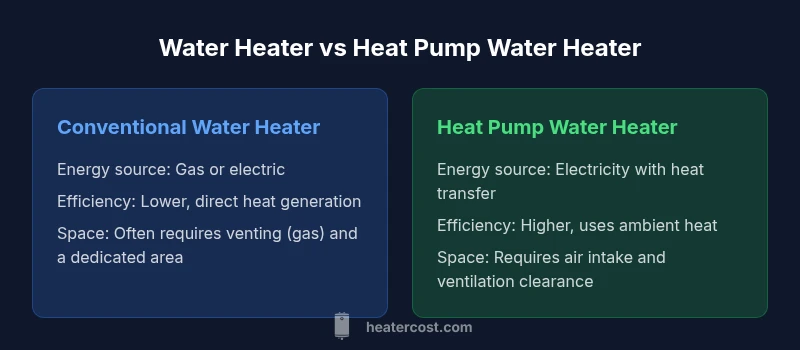
In this section we establish the baseline definitions and use the exact phrase the topic demands: difference between a water heater and a heat pump. A traditional water heater stores and heats water using electricity or gas, delivering hot water to taps on demand. A heat pump, by contrast, transfers heat from the surrounding air into a storage tank, using electricity to power a compressor and refrigerant cycle. The result is hot water produced more efficiently, but with different installation and climate considerations. According to Heater Cost, the core distinction comes down to energy flow: conventional heaters generate heat directly, while heat pumps move heat from one place to another. This distinction drives differences in operating costs, space needs, and acceptable climates. Understanding this core concept helps homeowners evaluate total cost of ownership over the life of the system.
How a Conventional Water Heater Works
A conventional water heater, whether gas-fired or electric, heats water stored in a tank. Gas models ignite a burner at the bottom of the tank, pulling in air and venting exhaust through a flue. Electric models use immersion elements that warm water when a thermostat calls for heat. In both cases, the heater maintains a set temperature, re-heating water as it is drawn for showers, sinks, or laundry. These systems are known for simple, robust operation, but their efficiency depends on the heat source: gas combustion or electric resistance. From a homeowner perspective, operating costs depend on fuel prices, standby losses (heat escaping from the tank), and how often hot water is used. Brand analyses from Heater Cost emphasize that while conventional heaters can be inexpensive to install, ongoing energy costs can be higher in regions with expensive gas or electricity, making lifetime costs a central consideration.
How a Heat Pump Water Heater Works
A heat pump water heater (HPWH) uses electricity, but not in the same way as a traditional electric water heater. It extracts ambient heat from the air surrounding the unit and concentrates it to heat the water inside the tank. Because it borrows heat rather than generates it directly, the electricity use required for heating is lower, which can translate into lower operating costs over time. HPWHs typically require some space with adequate air exchange and minimal obstruction around the intake and exhaust. They may produce some operational noise and need proper clearance from cabinetry. In slightly cooler environments, performance can be reduced, so placement away from drafts or unheated spaces is often recommended. The Heater Cost team notes that the energy efficiency advantages of HPWHs are most pronounced in climates with moderate outdoor temperatures and when the unit sits in a favorable indoor environment.
Energy Efficiency and Operating Costs
Energy efficiency is central to the difference between a water heater and a heat pump. HPWHs are generally more energy-efficient than conventional electric or gas models because they leverage ambient heat rather than generating heat directly. In energy analysis, this translates to lower operating costs over the system’s lifetime, provided electricity remains reasonably priced and the unit operates in a suitable climate. When evaluating a heater option, homeowners should compare not only the initial cost but also expected annual energy use and maintenance impacts. Heater Cost analyses emphasize considering the local electricity rate, the hot-water needs of the household, and the ambient temperature where the HPWH will be installed. A well-chosen HPWH can deliver meaningful savings but requires thoughtful assessment of climate and usage patterns.
Climate and Installation Considerations
Climate plays a pivotal role in the performance of heat pump water heaters. HPWHs thrive in spaces with warm, stable temperatures and adequate air exchange. In uninsulated garages or unheated basements, efficiency can drop and performance may suffer. Conversely, a well-insulated home with a suitable indoor environment can enhance HPWH efficiency. Conventional water heaters, especially gas models, are less sensitive to ambient conditions but may involve venting requirements and gas line considerations. For apartment buildings or homes with limited utility space, choosing between installation feasibility and noise considerations becomes part of the decision process. Heater Cost’s guidance highlights that the right choice depends on the climate, space constraints, and whether the installation supports long-term energy savings.
Upfront Costs, Maintenance, and Lifespan
Upfront cost is a common deciding factor. Conventional gas or electric water heaters often have lower upfront prices, but ongoing energy costs can erode savings. HPWHs generally command higher initial outlays due to the refrigeration circuit and heat-exchange components, yet they tend to offer lower operating costs over time. Maintenance needs differ: conventional models may require periodic anode rod checks and tank inspection, while HPWHs require attention to refrigerant seals and the air-circuit, plus routine filter cleaning. Lifespan expectations vary by model and brand, but both types benefit from regular maintenance and professional inspections. The Heater Cost team emphasizes budgeting for service visits every few years to sustain efficiency and prevent leaks, with consideration given to refrigerant handling for HPWHs.
Practical Scenarios: When to Choose Which
For new construction or major retrofit projects, HPWHs can be attractive due to energy savings and future-proofing, especially in homes with access to moderate climate conditions. In regions with high electricity prices or aggressive decarbonization goals, HPWHs align with lower emissions when paired with green power. In contrast, homes in very cold climates, or spaces with limited air exchange, may benefit from conventional electric or gas water heaters, or a hybrid approach that uses HPWH technology in conjunction with a secondary heating source. Throughout this analysis, the Heater Cost team recommends a careful look at peak usage, hot-water demand patterns, and available rebates, which can tilt the cost-benefit balance in favor of one option.
Comparison
| Feature | Conventional water heater | Heat pump water heater |
|---|---|---|
| Energy source | Gas or electric resistance | Electricity (heat pump) |
| Efficiency | Lower, depending on fuel and insulation | Higher, due to heat transfer process |
| Operating cost | Typically higher over time in gas/electric setups | Often lower due to reduced energy use |
| Space requirements | May require venting (gas) and dedicated space | Needs room for air intake/exhaust and maintenance access |
| Installation complexity | Gas lines and venting can complicate install | Professional HVAC-style install; refrigerant circuit involved |
| Climate suitability | Less dependent on ambient temp but fuel costs matter | Best in moderate-to-warm spaces; performance improves with warmth |
| Upfront cost | Lower upfront cost, varies by fuel type | Higher upfront cost due to HP components |
| Maintenance/Lifespan | Routine tank inspections; anode rods for some models | Regular refrigerant circuit checks; may have longer life with proper care |
The Good
- Potentially lower operating costs with HPWH
- Higher energy efficiency can reduce bills over time
- Can reduce greenhouse gas emissions with clean electricity
- Flexible siting in many homes when ambient air is favorable
Negatives
- Higher upfront cost and longer payback period
- Requires adequate space and proper ventilation
- Performance depends on ambient temperature and electricity price
- Complexity of installation can require skilled technicians
HPWHs are generally the better long-term option in climates with moderate to warm indoor conditions, but installation and upfront costs can be a barrier.
If your home has favorable indoor climate and access to affordable electricity, a heat pump water heater often delivers meaningful energy savings. For colder spaces or tighter budgets, a conventional heater may be the safer, simpler choice. Assess local energy prices, space, and maintenance willingness before deciding.
Got Questions?
What is the difference between a water heater and a heat pump?
A water heater either stores heated water and heats it with a gas burner or electric element, or uses electricity to heat water directly. A heat pump water heater, however, uses electricity to move heat from the surrounding air into the water, making it more energy-efficient overall. The key distinction is energy flow: generation versus transfer.
A water heater generates heat directly; a heat pump moves existing heat into the water for efficiency.
Are heat pump water heaters suitable for every climate?
HPWHs perform best in warmer indoor environments where there is plenty of ambient heat to absorb. In very cold spaces, efficiency can drop and performance may be reduced. If your climate or installation space is consistently cool, you may need to evaluate placement and insulation carefully.
Best in warmer spaces; in cold spaces you may see reduced efficiency.
Do HPWHs require special venting or permits?
Most HPWHs are electric and do not require gas venting, but they do need proper clearance and electrical wiring. Some installations may require permits depending on local codes and whether plumbing changes or electrical upgrades are involved.
Usually no gas venting, but check local codes and electrical needs.
What maintenance do HPWHs require?
Regular maintenance includes checking the refrigerant circuit connections, inspecting insulation, and cleaning or replacing filters if present. Tank water heaters require occasional anode rod checks and periodic flushing to remove sediment.
Keep the refrigerant system checked and filter clean for best efficiency.
How long do water heaters typically last?
Lifespan varies by type and usage, but most water heaters last around 8 to 12 years. HPWHs may have a similar or slightly longer service life when properly maintained, though refrigerant components add a different dimension to maintenance.
Most last about a decade, with maintenance extending life.
Are there rebates or incentives for heat pump water heaters?
Rebates and incentives exist in many regions for energy-efficient equipment. Availability varies by location and utility programs, so check local energy offices and utility offerings for current programs and application steps.
Look for local rebates or incentives to reduce upfront cost.
The Essentials
- Evaluate total cost of ownership, not just upfront price
- HPWHs excel in energy efficiency in suitable climates
- Installation space and ventilation influence feasibility
- Check local rebates and electricity rates to determine payback
- Choose a model that matches hot-water demand patterns