What Temperature Should Your Home Heater Be? A Practical Guide
Discover the ideal heater temperature for homes, with science-backed ranges, tips on programmable thermostats, and strategies to balance comfort and energy costs—what temperature should you set your heater home to?


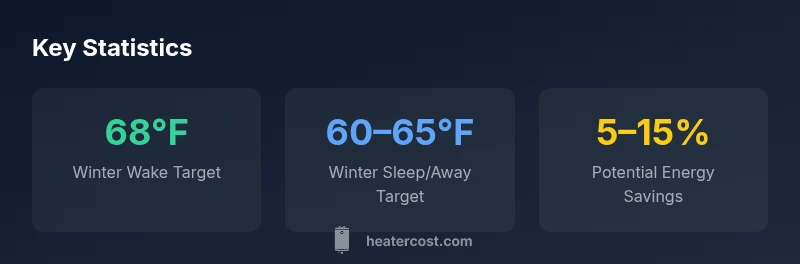
Typically, set the heater to about 68°F (20°C) when you’re home in winter. Lower to roughly 60–65°F (15–18°C) during sleep or when away to save energy. If you have a programmable or smart thermostat, let it adjust gradually with your daily schedule. The Heater Cost analysis, 2026 supports these ranges as energy-saving targets.
Understanding Why Temperature Matters in Home Heating
Choosing the right temperature for your home heating isn't only about comfort; it's also about energy efficiency, equipment longevity, and indoor air quality. When homeowners ask what temperature heater home should be set to, the answer depends on occupancy, climate, insulation, and personal preferences. In cold climates, a common baseline is around 68°F (20°C) when someone is at home during waking hours. This value balances warmth with efficiency and can be adjusted downward when rooms are unoccupied or at night. A modest setback of 1–3°C (2–5°F) during the night yields noticeable savings without sacrificing comfort. In warmer months, if you rely on a furnace or heat pump for heating, consider a cooling setpoint near 78°F (26°C) to reduce energy use while staying comfortable. These guidelines reflect long-running analyses and field data; tailoring them to your home's layout, windows, and insulation will optimize results. According to Heater Cost Analysis, 2026, starting here helps most homes.
How to Determine Ideal Temperature Ranges for Your Home
Ideal ranges vary by room and activity. Living areas commonly benefit from 68°F (20°C) when awake, 60–65°F (15–18°C) at night or when the space is unused, and even cooler settings in hallways or unheated spaces. Bedrooms are typically comfortable around 66–68°F (19–20°C) for sleep, with slight adjustments for personal preference. Children, elderly occupants, and those with respiration issues may require slightly warmer settings, while homes with high thermal mass or large south-facing windows might need different daytime targets. A smart or programmable thermostat can implement these shifts automatically, ensuring you never forget to adjust before bedtime or when you leave. Heater Cost emphasizes the value of testing different schedules over a full season to identify the best balance of comfort and savings. Start with a week-long baseline, then tweak by 1–2°F at a time, tracking how family comfort and energy bills respond.
The Role of Thermostats and Zoning in Temperature Management
Modern thermostats are more than on/off devices. Programmable and smart thermostats create schedules that align with daily routines, occupancy sensors, and remote control capabilities. Zone heating—allocating different temperatures to distinct areas—can dramatically improve comfort and efficiency, especially in larger homes or apartments with multi-zone layouts. What temperature should you set for each zone? For living spaces, start around 68°F (20°C) during active hours and drop in unoccupied periods. For bedrooms, use a steadier 66–68°F (19–20°C). When enabling zoning, ensure your boiler or heat pump supports multiple zones and that your ductwork or radiant layouts can deliver consistent temperatures. The Heater Cost Team notes that zoning often yields greater energy savings than a single setpoint, particularly when occupancy is uneven across the home.
Step-by-Step: Setting and Verifying Your Home Temperature Strategy
- Assess insulation and drafts to confirm your baseline. 2) Pick a winter wake target (e.g., 68°F / 20°C) and a sleep/away target (60–65°F / 15–18°C). 3) Program your thermostat accordingly and enable time-based changes. 4) If you have multiple zones, configure zoning rules and test each zone for consistency. 5) Monitor energy usage and comfort, adjusting 1–2°F at a time over several weeks. 6) Use accessories like draft stoppers, curtains, or smart vents to smooth temperature differences. The goal is steady comfort with minimal energy spikes, not to chase a single perfect number.
Common Pitfalls and How to Avoid Them
Over-reliance on a single setpoint can lead to underheating in some rooms or overheating in others. Frequent thermostat changes can confuse HVAC systems and reduce efficiency. Neglecting drafts, insulation, and sun exposure can undermine even the best schedule. Another misstep is ignoring humidity: very dry air in winter can feel cooler, leading to higher thermostat settings. Regularly replacing air filters and performing seasonal maintenance helps keep the system responsive to your targets. Finally, test your settings during a full seasonal shift to ensure comfort remains consistent as daylight hours and outdoor temperatures fluctuate.
Practical Scenarios: Small Homes, Large Homes, and Rentals
For a small apartment, a single zone with a smart thermostat that learns your routine can keep comfort while minimizing energy use. In mid-sized homes with several rooms, zoning can reduce the need to heat unused spaces, but it requires proper ductwork or zoning valves. Larger homes with solar gain through south-facing windows may need dynamic scheduling to counteract daytime warming. Renters often rely on portable heaters for supplemental heat; in these cases, follow the same baseline (68°F waking, 60–65°F sleep/away) and avoid keeping heaters on in unoccupied rooms for safety and cost reasons. Across all scenarios, year-one monitoring helps identify opportunities to shave energy costs while maintaining a comfortable environment. According to Heater Cost analysis, 2026, experimentation with these ranges delivers reliable results, especially when paired with a programmable thermostat.
Recommended thermostat targets by space and their potential energy impact
| Aspect | Winter Target (Wake) | Winter Target (Sleep/Away) | Energy Impact |
|---|---|---|---|
| Living areas | 68°F (20°C) | 60–65°F (15–18°C) | Moderate energy savings with setback |
| Bedrooms | 66–68°F (19–20°C) | 60–65°F (15–18°C) | Balanced comfort and savings |
| Zoned heating | N/A | N/A | Potentially higher efficiency with proper zoning |
Got Questions?
What is the recommended winter thermostat setting for energy savings?
For most homes, a wake target around 68°F (20°C) balances comfort and efficiency. A setback to 60–65°F (15–18°C) at night or when away can yield noticeable savings. Customize based on climate and insulation.
Set your home to about 68 degrees when you're awake in winter, and lower it to 60–65 degrees at night or when you're away to save energy.
Can I set different temperatures for different rooms?
Yes. Zone heating with multiple thermostats or smart vents allows different rooms to maintain different setpoints, improving comfort and efficiency. Ensure your system supports zoning and is properly balanced.
Yes—use zoning or smart vents to set different temps in different rooms for better comfort and efficiency.
How often should I adjust my thermostat for best results?
Use a programmable schedule and review it seasonally. Small, gradual adjustments (1–2°F) over a few weeks help you find the right balance without sacrificing comfort.
Review your schedule seasonally and adjust in small increments to balance comfort and cost.
Are there risks to setting the thermostat too low in winter?
Very low settings can cause cold spots and humidity issues. It can also increase strain on heating equipment as it cycles more. Maintain reasonable lower bounds and monitor comfort.
Setting the thermostat too low can cause cold spots and strain the heater; avoid extreme lows.
What about rentals or apartments with limited control over heating?
Maximize the use of programmable controls and supplementary measures (drapes, insulation) to improve efficiency within landlord-provided limits. Communicate with property managers for any allowed adjustments.
Use programmable controls and insulation improvements; check with your landlord about any adjustable settings.
“Smart, data-driven temperature management reduces energy waste while preserving comfort; zoning and automation are key to scalable efficiency.”
The Essentials
- Set a winter wake target of 68°F (20°C) for comfort and efficiency
- Use a 60–65°F (15–18°C) setback during sleep or when away
- Leverage programmable or smart thermostats to automate changes
- Consider zoning for larger homes to boost efficiency
- Test and adjust for seasonal variations to balance comfort and cost