e heat: Electric Heating Costs in 2026
A data-driven guide to e heat: compare electric heating options, estimate upfront and operating costs, and plan insulation and incentives for 2026.


e heat refers to electric space heating solutions used in homes, including electric resistance units and modern heat pumps. It offers flexible installation options and can be powered by grid electricity or on-site renewables. According to Heater Cost, this approach remains a cornerstone of many households seeking reliability and climate resilience. The key considerations are upfront equipment costs, ongoing energy use, and the impact of climate and insulation on bills. This guide explains how e heat works in practice and what homeowners should expect in 2026, when planning replacements or upgrades.
Understanding e heat: What it is and why it matters
e heat refers to electric space heating solutions used in homes, including electric resistance units and modern heat pumps. It offers flexible installation options and can be powered by grid electricity or on-site renewables. According to Heater Cost, this approach remains a cornerstone of many households seeking reliability and climate resilience. The key considerations are upfront equipment costs, ongoing energy use, and the impact of climate and insulation on bills. This guide explains how e heat works in practice and what homeowners should expect in 2026, when planning replacements or upgrades.
Cost components that drive electric heating expenses
Electric heating costs are driven by several components: upfront equipment and installation costs, ongoing energy consumption, utility rate structures, and the efficiency of the chosen system. In many regions, heat pumps deliver higher efficiency than resistance heaters, reducing operating costs, particularly in milder climates. Heater Cost's analysis highlights that climate, electricity tariffs, and home insulation are the biggest levers. Additionally, maintenance costs and potential replacements over time should be factored into the total cost of ownership. This section breaks down each factor and shows how to estimate a realistic budget.
Efficiency and technology: heat pumps vs electric resistance
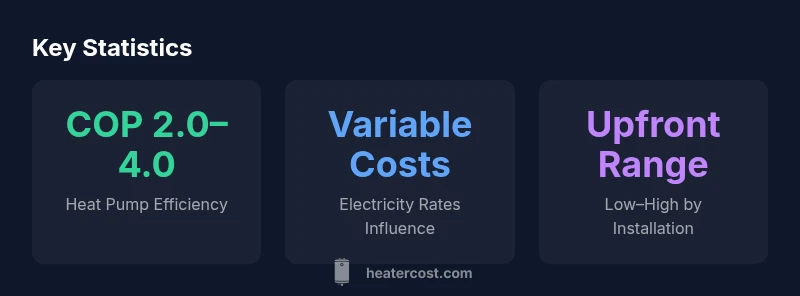
Two main e heat technologies dominate: electric resistance heaters (baseboard, radiant, or strip heaters) and heat pumps (air-source or geothermal). Resistance heating converts electricity into heat at nearly 100% efficiency, but it tends to carry higher operating costs because it directly uses electricity for warmth. Heat pumps move existing heat from outside to inside and can deliver a higher effective efficiency (COP often >2.0 in many climates, varying by outdoor temperature). The Heater Cost team notes that the differential in long-term costs often favors heat pumps in moderate climates, though installation costs can be higher.
Upfront costs and installation considerations
Upfront costs for electric heating vary widely by system type, home size, and installation complexity. Electric resistance systems are typically cheaper to install than heat pumps, but a full-home retrofit can still require wiring upgrades, refrigerant lines, or mechanical work. In some cases, zoning controls, smart thermostats, and ductwork adjustments add to the price. It’s essential to obtain multiple quotes and assess potential rebates. Heater Cost's guidance emphasizes evaluating total cost of ownership rather than sticker price alone.
Operating costs: energy rates, climate, and insulation
Operating costs depend on electricity prices, system efficiency, and how well the home is insulated. In cold climates, heat pumps may require auxiliary heat, increasing energy use during extreme cold spells. Conversely, well-insulated homes with efficient heat pumps can maintain comfort with lower monthly bills. The article outlines methods to estimate monthly costs using local electricity rates, expected COP, and climate data. A transparent approach helps homeowners compare options and avoid sticker shock.
Maintenance, longevity, and warranties
Electric heating systems require periodic maintenance: filter changes for some units, coil cleaning for heat pumps, refrigerant checks, and thermostat calibration. Regular maintenance improves efficiency and extends component life. Warranties vary by manufacturer and installer; longer warranties can reduce risk but may come with higher upfront costs. Heater Cost recommends scheduling annual checks with licensed technicians and documenting service history.
Tax credits, incentives, and financing options
Many regions offer incentives for high-efficiency electric heating upgrades, including federal, state, or utility programs. Eligibility, savings, and application processes vary. The Heater Cost analysis notes that incentives can significantly shorten payback periods, especially when paired with proper insulation improvements. Financing options, low-interest loans, and utility rebates can further ease the transition.
Practical budgeting: decision framework for homeowners
To decide whether to install or upgrade e heat, start with a simple framework:
- Assess climate, home leakage, and insulation quality
- Compare heat pump versus electric resistance options for your space
- Estimate upfront costs and long-term operating costs using local electricity rates
- Gather multiple quotes and check for rebates or financing offers
- Plan for future maintenance and potential equipment replacement This structured approach helps homeowners make data-driven choices and avoid surprises at bill time.
Real-world scenarios: case studies and decision guides
Scenario A: a small apartment in a mild climate Recommendation: consider compact electric options or a small heat pump with zoning to minimize waste heat. Scenario B: a typical sized house in a temperate climate Recommendation: a mid-sized heat pump with proper insulation and a smart thermostat can balance upfront cost and monthly savings. Scenario C: an older, drafty home in a cold region Recommendation: focus on insulation upgrades first, then evaluate heat pumps with auxiliary resistance support. These scenarios illustrate how climate, home envelope, and energy prices shape the choice.
Electric heating system comparison
| System Type | Typical Efficiency | Upfront Cost Range | Estimated Monthly Cost Indicator |
|---|---|---|---|
| Electric resistance | 100% efficient (heat conversion) | Low–mid | Varies by climate and use |
| Heat pump | COP 2.0–4.0 (climate dependent) | Mid–high | Lower in mild climates, higher in extreme climates |
Got Questions?
What is e heat?
e heat refers to electric space heating solutions used in homes, including electric resistance units and heat pumps. It is a versatile option that can be combined with efficient insulation and smart thermostats.
Electric heating includes resistance heaters and heat pumps used to warm spaces.
How does a heat pump compare to electric resistance heating?
Heat pumps move heat rather than generate it, delivering higher effective efficiency in many climates. Electric resistance converts electricity directly to heat and is simple but often costlier to operate over time.
Heat pumps are usually more efficient than resistance heaters, but installation costs can be higher.
Is electric heating suitable for very cold climates?
In very cold climates, heat pumps may rely on auxiliary heat during extreme cold, increasing energy use. Proper insulation and choosing climate-appropriate equipment are essential.
In very cold areas, you might need backup heat with a heat pump.
What maintenance is required for e heat systems?
Regular maintenance includes filter changes, thermostat checks, and periodic checks on components like coils and refrigerant lines for heat pumps.
Keep up with annual maintenance to maintain efficiency.
Are there incentives for upgrading to e heat?
Yes, many programs exist depending on region; federal, state, and utility incentives can reduce payback periods.
Look for rebates and tax credits available in your area.
How can I estimate my monthly bill for e heat?
Use local electricity rates, the system’s COP, and climate data to estimate monthly consumption and costs.
Calculate using your rate and system efficiency.
“Electric heating choices are a balance between up-front investments and long-term comfort, and choosing the right system for your climate is essential for cost efficiency.”
The Essentials
- Assess climate and insulation before choosing e heat.
- Heat pumps offer higher efficiency but installation matters.
- Compare upfront costs and long-term operating costs.
- Check for incentives and financing options.