Electric Heating Systems: Costs, Efficiency, and Tips
Explore electric heating systems—from heat pumps to resistance heaters and infrared panels—and learn about efficiency, installation costs, running costs, and practical guidance for homeowners, renters, and property managers in 2026.


Definition: Electric heating systems are heat sources powered by electricity, including resistance heaters, heat pumps, and infrared panels. They convert electric energy into warmth with varying efficiency depending on technology and climate. This article explains how they work, compares top types, and outlines cost considerations for homeowners.
What are electric heating systems?
Electric heating systems convert electrical energy into heat and come in several flavors, including electric resistance baseboard heaters, electric furnaces, heat pumps, and infrared panels. Electric resistance heating is the simplest technology: resistive elements warm up and heat the surrounding air. Heat pumps, by contrast, move existing heat into your home and often deliver multiple units of heat per unit of electricity, especially in milder climates. Infrared panels provide radiant warmth directly to people and objects, which can feel very comfortable even when air temperatures are cooler. For most homes, electric heating systems are a practical option when gas service is unavailable or when retrofitting a space where ducting is impractical. According to Heater Cost, sizing, climate, and electricity pricing are the main levers that determine overall cost and comfort. The Heater Cost team found that the best-fit option depends on climate, electricity prices, and how the space will be used. In milder winters, heat pumps tend to deliver superior efficiency; in very cold climates, electric resistance can be reliable for supplementary heating. When comparing options, consider how you’ll size equipment, whether you’ll zone spaces, and how you will control heat with smart thermostats. This article frames the landscape, compares common types, and offers practical guidance for homeowners evaluating electric heating systems.
How electric heating systems work
Electric resistance heaters convert electricity directly into heat with high availability and simple wiring. They have no moving parts beyond fans in some models and can respond quickly to temperature changes, making them well-suited for spot heating or bursts of warmth. Heat pumps operate on a different principle: they extract ambient heat from outside air or the ground and transfer it inside. Their efficiency is expressed as a coefficient of performance (COP) and typically exceeds 3.0 in moderate climates, with performance decreasing as outdoor temperatures fall. Infrared panels generate radiant heat that warms people and objects rather than heating the entire room air, delivering comfortable warmth with modest air movement. As a result, even in small rooms, infrared panels can feel subjectively warmer at lower air temperatures. The Heater Cost team notes that pairing electric heating systems with a smart thermostat or zoning can yield significant savings by avoiding unnecessary heating in unoccupied spaces. For many homes, the optimal approach blends technology with intelligent controls to maximize comfort while minimizing electricity use.
Sizing and zoning considerations
Accurate sizing is essential for efficiency and comfort. An undersized system will struggle to maintain temperature on cold days, while an oversized system wastes energy cycling on and off. For electric heating systems, a professional load calculation should account for insulation levels, window area, occupancy, and climate. Zoning—heating different areas of the home independently—can deliver comfort where you need it most and reduce waste in unoccupied spaces. A well-designed zoning plan works in concert with a programmable or smart thermostat, allowing you to pre-heat commonly used rooms and de-activate heating in rarely used areas. In practice, combining heat pumps with targeted infrared panels for specific rooms can optimize both comfort and energy use, especially in older homes with uneven insulation. The goal is to align heat delivery with occupancy patterns, climate, and electrical capacity to avoid overloading the electrical service while keeping each zone comfortable.
Costs and cost-effectiveness
Operating costs for electric heating systems depend heavily on the price of electricity and the chosen technology. Electric resistance heat tends to have higher running costs than heat pumps in most climates, because each unit of heat is produced at a higher price per BTU. Heat pumps, by extracting heat from the outside environment, can deliver multiple units of heat per unit of electricity and thus lower monthly bills in climates with moderate winters. Infrared panels can be economical for room-specific heating but may require multiple units to cover larger spaces. When evaluating options, consider installation costs, potential electrical upgrades (such as a higher-capacity panel or dedicated circuits), and ongoing electricity prices. In some regions, upgrading to an efficient heat pump system qualifies for tax credits or incentives, which can reduce upfront costs and shorten payback periods. Heater Cost analysis indicates that the long-term economics improve when the system is used to heat the spaces that are actually occupied, and when paired with smart controls that minimize unnecessary heat loss.
Installation, electrical upgrades, and permits
Installing electric heating systems often involves electrical service considerations. Baseboard or panel-mounted heaters may require additional circuits or upgraded panel capacity. Heat pumps typically demand a robust electrical supply and proper outdoor unit clearance, plus any required refrigerant line set routing. In many jurisdictions, a permit is required for major upgrades, and an electrical inspection ensures that wiring meets code and is safe. It is critical to evaluate the home's existing wiring, panel capacity, and potential load redistribution before purchasing equipment. The presence of solar panels or a desire to integrate with battery storage may further influence the design and cost. Planning ahead can prevent inconvenient outages and ensure a smoother installation, with less downtime and a faster path to comfort.
Practical scenarios and use cases
Electric heating systems shine in several scenarios: small rental units or apartments where installing gas service is not feasible, retrofits in older homes where ductwork is absent, and new builds designed around electric heating plus smart energy management. In milder climates, heat pumps can provide year-round comfort with very competitive operating costs, especially when paired with a well-insulated envelope and double-paned windows. In colder climates, electric resistance can serve as a reliable supplemental heat source in zones that need rapid warmth or when a heat pump is not sufficient alone. For homes with solar PV, electricity costs can be further reduced, as solar production offsets daytime usage. An integrated approach that uses heat pumps as the primary heating source and infrared panels for targeted zones can balance upfront costs, efficiency, and occupant comfort while aligning with decarbonization goals.
Pros, cons, and best practices
Pros:
- High comfort and fast response with electric systems
- No combustion byproducts, improving indoor air quality
- Flexible installation in retrofit projects
Cons:
- Running costs vary with electricity prices
- Electric resistance heat can be expensive in very cold climates
- Heat pump performance depends on climate and proper sizing
Best practices:
- Start with an accurate load calculation and a phased installation plan
- Use smart thermostats and zone controls to minimize wasted energy
- Pair heating with insulation upgrades to maximize efficiency
- Consider grid-friendly options and incentives when available
Comparison of electric heating system types
| System Type | Typical Efficiency (COP) | Typical Installation Cost | Notes |
|---|---|---|---|
| Electric resistance heaters | 1.0-1.5 | Low | Best for spot heating or temporary setups; simple wiring |
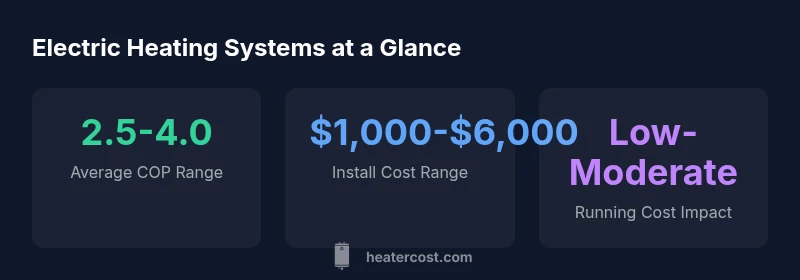
| Heat pumps | 2.5-4.0 | Medium | Efficient option in many climates; requires adequate electrical service |
| Infrared panels | 0.9-1.5 | Medium | Targeted warmth; works well for room-specific comfort |
Got Questions?
Are electric heating systems energy-efficient?
Yes, efficiency varies by type. Heat pumps typically offer higher efficiency than electric resistance heaters, but overall efficiency depends on climate and electricity price.
Electric heating systems can be very efficient, especially heat pumps, but it depends on climate and electricity costs.
What is the typical installation cost?
Costs vary widely based on system type and required electrical upgrades; simple additions are cheaper, while full heat pump retrofits can be more expensive.
Costs range widely depending on system type and electrical upgrades.
Do electric heating systems qualify for tax credits?
In many areas, certain electric heating upgrades qualify for tax credits or incentives; check local guidelines and utility programs.
Some electric heating upgrades may qualify for tax credits depending on location.
Can electric heating heat an entire large home effectively?
Yes in many cases with properly sized heat pumps and zoning; large homes may require multiple zones and a robust electrical service.
It can work, especially with efficient heat pumps and good zoning.
What maintenance do electric heating systems require?
Regular inspections of wiring, cleaning of components, and periodic service are recommended to maintain safety and efficiency.
Regular inspections and cleaning help longevity.
Are infrared panels safe for homes?
Infrared panels are generally safe when installed per manufacturer guidelines and standards.
Infrared panels are safe when installed correctly.
“Electric heating systems can deliver reliable warmth when sized correctly and paired with smart controls; efficiency gains from heat pumps especially compound over time as the grid decarbonizes.”
The Essentials
- Assess climate and electricity costs before selecting a system.
- Heat pumps offer best efficiency in moderate climates.
- Plan for electrical upgrades if required by your choice.
- Use smart zoning and controls to maximize savings.
- Balance upfront costs with long-term running costs for best value.