Do Oil Heaters Use a Lot of Electricity? What Homeowners Should Know
Explore whether oil heaters consume a lot of electricity, how to estimate running costs, and practical tips to maximize efficiency without sacrificing comfort.


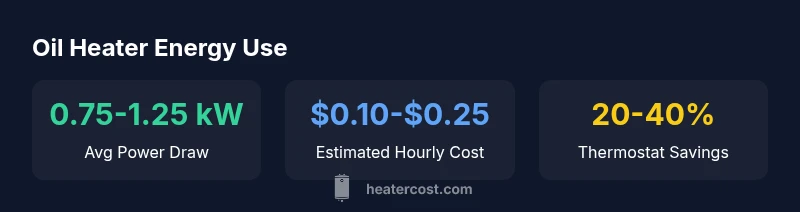
Oil heaters generally draw about 0.75 to 1.25 kW of power per hour on medium settings, translating to roughly $0.10 to $0.25 per hour at typical electricity rates. Do oil heater use a lot of electricity? Not inherently—cost depends on room size, thermostat use, and insulation. With smart controls and proper sizing, you can minimize consumption while maintaining comfort.
How oil heaters work and why electricity matters
Oil-filled heaters convert electricity into radiant heat and gentle convection. The oil inside the fins is heated and stores warmth, releasing it over time. This design yields steady, uniform warming with less noise than many fan heaters. When people compare heating options, it’s helpful to understand how energy use relates to comfort. do oil heater use a lot of electricity is a common worry, but the answer depends on settings, room size, and insulation; for a mid-range setting, most units draw about 0.75–1.25 kW while operating, and costs scale with your local electricity price. According to Heater Cost, the efficiency advantage comes from keeping heat localized and avoiding overheating; selecting a correctly sized unit and using a thermostat can reduce waste without sacrificing warmth. In practice, this means pairing your oil heater with weatherstripping, curtains, and a properly sealed room to maximize the warmth you get per kilowatt-hour. This section lays the groundwork for understanding energy use across different spaces.
Do oil heaters use a lot of electricity? A closer look
The short answer is: it depends on how you use the heater. Oil-filled radiators are typically more energy-efficient for maintaining steady temps in small-to-medium rooms than rapid, high-heat throwers. A unit set to medium heat often operates in the 0.75–1.25 kW range, but only while the thermostat is calling for heat. If the thermostat sits near the top of its range or if you overheat the space, energy use climbs quickly. Conversely, using a timer to preheat an entry, then letting the room coast with the radiator warmed by stored heat can dramatically cut hourly costs. Real-world costs also hinge on electricity pricing, which varies by region and season. Heater Cost analysis shows that your local rate largely determines the bottom-line impact of running an oil heater.
Key factors that influence electricity use
- Room size and insulation: Larger or poorly insulated rooms require more energy to maintain comfort.
- Thermostat strategy: Lowering the thermostat by a degree or two can reduce consumption by a meaningful margin.
- Heat retention: Sealing drafts, closing doors to unused rooms, and using heavy curtains help keep warmth in.
- Operating pattern: Continuous low-level heat uses energy differently than brief peak heating; timers often improve efficiency.
- Appliance quality: Newer models with better thermostat control and safety features tend to be more energy-efficient.
Understanding these variables helps homeowners tailor usage to climate and occupancy, avoiding the trap of over-heating spaces that don’t need it.
Estimating costs: a practical example
To estimate costs, multiply the heater’s power draw by your electricity price per kWh and the number of hours you run it. For example, at a typical price of $0.15 per kWh and a 1 kW heater running 5 hours, the cost would be around $0.75. If you run it 8 hours, expect about $1.20. These figures vary with rate changes and thermostat behavior, but the math remains straightforward. Use the same method for larger rooms and higher wattages, adjusting hours to reflect actual usage. Keep in mind that oil heaters store some heat energy, so turning the unit off after reaching a comfortable temperature may still keep the room warm for a while, reducing ongoing electricity needs. This makes dimming or delaying heat a practical way to save money without compromising comfort.
Oil heaters vs other space heating options
Oil-filled radiators are generally quieter and more maintenance-friendly than fan-forced heaters. They excel in providing steady warmth with minimal air movement, which is ideal for bedrooms and study areas. Compared with electric baseboard heaters or ceramic space heaters, oil heaters tend to have slower warm-up times but offer better heat retention due to the oil’s thermal mass. Gas-fired heaters may deliver more rapid, large-scale warmth, but their energy cost structure and venting requirements differ. In terms of overall efficiency, oil heaters shine in zone heating scenarios where a single room or small apartment is heated consistently rather than the entire home. Regional energy prices and insulation quality will ultimately shape which option is cheapest over a season.
Choosing the right oil heater for your space
Select a model whose nominal wattage aligns with the room size. A small bedroom may do well with 0.75–1 kW, while a medium living room might benefit from 1–1.5 kW. For larger or drafty spaces, consider two smaller units to avoid oversizing a single heater. Look for features like an accurate built-in thermostat, an overheat protection switch, and a durable finish. Energy efficiency labels and manufacturer efficiency curves can guide your choice. If you share walls with cold exterior spaces, you’ll also want to ensure you pick a design with good heat storage capacity and low surface temperature on the exterior for safety.
Best practices for maximizing efficiency
- Use a programmable thermostat or timer to set heating windows when you’re home and awake.
- Prioritize well-insulated spaces and seal drafts around doors and windows.
- Position the heater away from walls and furniture to improve air circulation and avoid blocked heat paths.
- Maintain units per the manual; clean vents and ensure the thermostat reads room temperature accurately.
- Consider multi-room zoning: stagger heater use so not all rooms run simultaneously, focusing on occupied areas.
These practices help reduce waste and keep comfort high while electricity costs remain manageable.
Real-world scenarios: small apartment vs large home
In a small apartment with good insulation, an oil heater used for a few hours daily may represent a modest portion of monthly electricity costs, especially if you leverage a thermostat and seal drafts. In a larger home or a draft-prone environment, you might need higher wattage and longer run times, increasing overall energy use. The key is to couple heating with passive strategies: better insulation, heavy drapes, and strategic door management. Tracking usage with a smart meter or energy app can reveal where your consumption peaks and help you adjust behavior or upgrade to better-insulated areas.
Comparison of common space heaters and their energy usage
| Device Type | Avg Power Range (kW) | Estimated Use Per Hour (kWh) | Notes |
|---|---|---|---|
| Oil-filled radiator | 0.75-1.25 | 0.75-1.25 | Efficient for steady, localized heat |
| Convection space heater | 0.9-2.0 | 0.9-2.0 | Faster warm-up, higher energy in large spaces |
Got Questions?
Do oil heaters use a lot of electricity?
Not inherently. Electricity use depends on wattage, thermostat settings, and room insulation. When used with a thermostat and in well-insulated spaces, oil heaters can be energy-efficient for targeted heating.
Oil heaters aren’t automatically expensive to run. It depends on how you set the thermostat and how well your room is insulated.
What factors influence electricity use the most?
Thermostat setting, room size, insulation quality, and heater efficiency determine electricity use most. Overheating the space or using the heater continuously in a drafty room will raise costs.
Thermostat and insulation matter the most; avoid overheating and drafty spaces.
Are oil heaters safe to use indoors?
Yes, when used according to the manufacturer’s instructions and safety guidelines. Keep flammable materials away, ensure proper clearance, and use models with overheat protection.
Yes, they’re safe indoors if you follow safety guidelines and keep clearance around the heater.
How can I reduce costs with an oil heater?
Use a programmable thermostat, set modest temperatures, seal rooms, and heat only occupied spaces. Maintenance and clean filters also help maintain efficiency.
Set a schedule, insulate well, and only heat where people are present.
Is it cheaper to heat with oil or gas in winter?
Costs depend on energy prices in your area, installation, and usage patterns. In many regions, oil heaters cost less to operate in a small, well-insulated space, but gas may be cheaper for whole-home heating when available.
Costs vary by your local energy prices and home size—there isn’t a one-size-fits-all answer.
“Oil heaters offer steady warmth with excellent heat retention when paired with proper insulation and smart controls. They can be economical for zone heating if used thoughtfully.”
The Essentials
- Evaluate room size and insulation before selecting an oil heater
- Thermostat control and timers materially reduce energy use
- Oil heaters are best for zone heating, not whole-home warming
- Compare wattage and heat retention when choosing a model
- Track actual energy use to identify savings opportunities