Different Heater Types: A Practical Side-by-Side Guide
A detailed comparison of different heater types for homes, focusing on efficiency, upfront and operating costs, climate suitability, and maintenance to help homeowners and property managers choose the best option.


A quick look shows that heat pumps often deliver the highest efficiency in moderate climates, while gas furnaces excel in very cold settings, and electric resistance is a simple backup option. See our detailed comparison chart to pick the right heater type for your home.
Understanding different heater types
Choosing among the different heater types starts with recognizing that each option has a distinct heat delivery method, efficiency profile, and cost trajectory. For homeowners and property managers, the goal is to map a given home’s needs — space, climate, insulation, and occupancy patterns — to a system that balances comfort with long-term costs. When we discuss the phrase different heater types, we’re comparing four core families: central furnaces that burn gas or oil, boilers that circulate hot water or steam, heat pumps that move heat rather than generate it, and electric resistance options that convert electricity directly into heat. Each family has variants and configurations, from traditional ducted layouts to radiant floor systems and space heaters. The Heater Cost Team emphasizes that the best choice depends on climate, home design, and budget, not on a single “one-size-fits-all” solution. This section introduces the framework for evaluating options so you can make a well-informed decision across the board.
Core categories and how they heat your space
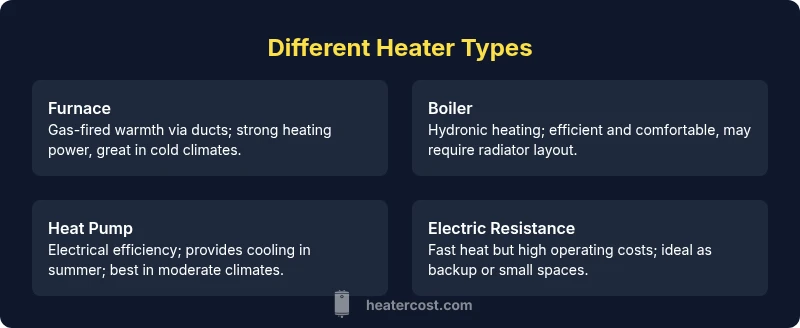
The four primary families represent different heat-transfer mechanisms. Furnaces burn fuel to heat air which is distributed via ducts; boilers heat water for radiators or radiant floors; heat pumps extract heat from outside air or ground and move it inside, sometimes providing cooling in summer; electric resistance heaters convert electricity directly into heat. Within each category, there are subtypes and compatibility considerations, such as ductwork, zoning, and existing electrical capacity. For home performance, it’s essential to assess not only the equipment but the distribution system, insulation quality, and potential air leaks. This approach helps avoid selecting a heater type that would underperform in your climate or demand unnecessary retrofits. The goal is to align system capabilities with real-world load profiles and occupancy patterns, ensuring comfort without wasteful energy use.
Energy efficiency and climate suitability
Efficiency and climate couple strongly when evaluating different heater types. Heat pumps generally offer high efficiency in moderate climates because they move existing heat rather than create it, resulting in favorable operating costs over time. Gas furnaces can remain very effective in colder zones where outdoor air temperatures regularly drop below freezing, provided sizing and ductwork are appropriate. Boilers, whether gas or oil, often excel in homes with radiant heating and cooler rooms, delivering steady comfort with lower air movement. Electric resistance heaters tend to be simple to install and respond quickly but typically carry higher operating costs in regions with high electricity prices. Your climate, heating load, and insulation level should drive the choice, alongside potential incentives for energy-efficient upgrades.
Upfront costs vs long-term savings
Projecting upfront costs against long-term savings is crucial when comparing different heater types. Gas-based systems may have higher installation complexity due to venting and ductwork, with longer payback periods in areas with low energy rates. Boilers and radiant systems often require significant retrofits but can deliver steady comfort and favorable longevity when paired with well-insulated homes. Heat pumps may have a higher initial cost, especially in retrofit scenarios, yet their operating costs are typically lower in favorable climate conditions. Electric resistance options usually incur the lowest upfront price but come with higher ongoing electricity bills. A thorough assessment of your home’s insulation, air sealing, and thermal mass will illuminate where the best balance lies and how incentives or rebates may alter the economics over time.
Space, installation, and maintenance considerations
Space constraints and installation effort play a decisive role in which heater type to choose. Ducted furnaces demand space for a furnace, air handler, and ductwork, which can be disruptive to install in older homes but may be preferable for large spaces. Boilers require room for a boiler unit, expansion tanks, and radiators or radiant floors, with planning needed for piping and controls. Heat pumps reduce on-site equipment needs but may require outdoor clearance and proper refrigerant service. Electric resistance heaters are compact and versatile but can overwhelm a small electrical panel if not sized correctly. Maintenance patterns also differ: gas systems need annual inspections and vent cleaning, boilers require periodic boiler maintenance, heat pumps benefit from seasonal checks of refrigerant and coils, and electric heaters demand basic electrical safety checks. Balancing these factors with your budget and lifestyle will guide a practical selection.
How climate and insulation influence selection
Climatic context matters deeply when selecting among different heater types. In milder climates with moderate heating loads, heat pumps often offer the best long-term value due to high efficiency and cooling capability. In very cold climates, traditional gas furnaces or dual-fuel setups may outperform heat pumps by delivering reliable warmth when temperatures plummet. Strong insulation and air-sealing improve any system’s performance by reducing heat loss, effectively lowering the required heating capacity. For rental properties or multiunit buildings, zoning strategies and maintenance logistics become key to keeping operating costs predictable. In short, a climate-responsive approach that couples equipment choice with home performance improvements yields the best balance of comfort, efficiency, and cost control.
How to choose by home type (new build, retrofit, rental)
New builds offer the advantage of optimized air distribution and system design, making high-efficiency heat pumps or well-planned gas systems good long-term bets. Retrofitting older homes requires careful assessment of ductwork, insulation, and electrical capacity; in some cases, layered upgrades (insulation first, then the heating system) deliver the most cost-effective results. For rental properties, reliability, ease of maintenance, and predictable energy costs are prioritized, often favoring systems with straightforward service, compact footprints, and effective zoning. Regardless of type, an informed decision rests on performing a home energy assessment, comparing efficiency ratings, and accounting for local fuel prices and rebates. The Heater Cost Team highlights the importance of aligning your heating strategy with occupancy patterns to maximize comfort and financial value.
Practical steps to compare options
Start with a thermal baseline: measure insulation quality, air leaks, and the building envelope. List candidate heater types for your climate and property type, noting install complexity and compatibility with existing infrastructure. Run a qualitative cost-benefit analysis focusing on upfront costs, operating costs, maintenance needs, and warranty terms — avoiding simplistic price comparisons. Consider space constraints, noise, and zoning options, then create a short list of two to three viable systems. Finally, consult local incentives and energy programs, and request a formal assessment from a qualified HVAC professional to confirm sizing, efficiency, and compatibility with your home’s electrical and plumbing layouts.
Common myths about heater types
One common myth is that the most expensive option always delivers the best comfort. In reality, suitability to climate and home design matters more than sticker price. Another misconception is that electric resistance heaters are always costly to operate; in well-insulated spaces with moderate electricity rates, they can be practical as backups or for small zones. A final myth is that central systems alone are enough to achieve comfort; without proper insulation and air sealing, any system will struggle to maintain even temperatures. Debunking these ideas requires a balanced view of climate, efficiency, and the building envelope.
Real-world scenarios: sample homeowners
Consider a multiple-unit building in a cool temperate climate. A heat pump with supplemental electric resistance for peak demand could provide reliable comfort while keeping energy bills manageable. A single-family home in a cold climate with existing ductwork might benefit from a high-efficiency gas furnace paired with zone controls for energy balance. A newer urban apartment with limited space might rely on an electric resistance system, supplemented by efficient insulation and smart thermostats to manage usage. These scenarios illustrate how the same set of heater types can yield very different outcomes depending on climate, construction, and occupancy patterns. The core takeaway is clear: evaluate different heater types not in isolation, but in the context of your home’s specific performance and budget goals.
Regulatory and incentive considerations
Regulatory and incentive landscapes influence the feasible options for different heater types. Many regions offer rebates or tax incentives for high-efficiency equipment and better insulation. Compliance with building codes, ventilation requirements, and carbon monoxide safety standards is essential for gas-fired systems, while electrical capacity and safety standards govern electric options. When planning a replacement or upgrade, verify eligibility for energy-efficiency programs, and work with licensed professionals to ensure proper sizing, installation, and compliance. The long-term value of a system is enhanced when incentives are coupled with sound performance improvements and proper maintenance planning.
Feature Comparison
| Feature | Furnace (gas) | Boiler (gas) | Heat pump (air-source) | Electric resistance heater |
|---|---|---|---|---|
| Energy Efficiency | moderate | moderate | high | low |
| Installation & Upfront Cost | high | high | moderate | low |
| Operating Cost (fuel/electricity) | high | high | low-to-moderate | high |
| Maintenance & Longevity | moderate maintenance | moderate maintenance | low maintenance (seasonal checks) | low maintenance |
| Best For | cold climates with ductwork | gas infrastructure and radiators | moderate climates with cooling needs | budget-conscious spaces or backup heat |
The Good
- Broad availability of service technicians
- Strong support for larger homes and consistent comfort
- Established infrastructure and parts supply
- Clear upgrade paths with zoning options
Negatives
- Higher upfront costs for some options
- Complex installation may disrupt living spaces
- Maintenance varies by type and climate
- Electric resistance can have high operating costs in some regions
Heat pumps offer the strongest overall value for many homes, with gas furnaces remaining optimal for very cold climates; electric resistance is a practical backup option.
Choose heat pumps for efficiency in moderate climates, and pair with gas for extreme cold where necessary. Electric resistance should be reserved for small spaces or as a supplementary heat source; align the final choice with climate, insulation, and budget.
Got Questions?
What are the main categories of different heater types?
The main categories are furnaces, boilers, heat pumps, and electric resistance heaters. Each uses a different heat-transfer method and has unique efficiency profiles, installation needs, and climate suitability. A performance assessment should consider climate, home design, and occupancy to pick the best option.
There are four primary heater categories: furnaces, boilers, heat pumps, and electric resistance heaters. Each has distinct efficiency and climate suitability, so match the choice to your home and climate.
Which heater type is most energy efficient overall?
Heat pumps generally offer the highest efficiency in many climates because they move heat rather than generate it. Gas furnaces can be highly efficient in very cold climates when properly sized, while boilers and electric resistance have niche advantages depending on home design and electricity or gas prices.
Heat pumps are typically the most energy efficient for moderate climates, with gas furnaces performing well in very cold weather when properly installed.
How do installation costs vary by heater type?
Installation costs vary with system complexity. Furnaces and boilers often require ductwork, venting, and professional combustion safety checks. Heat pumps may involve outdoor unit and refrigerant work, while electric resistance heaters usually incur lower upfront costs but can demand electrical panel upgrades in some homes.
Costs depend on the system and home. Ducted gas or boiler setups tend to be pricier, while electric resistance is cheaper to install, and heat pumps may cost more upfront due to outdoor equipment and refrigerant work.
What maintenance does each heater type require?
Gas systems generally need annual inspections and vent maintenance. Boilers require regular boiler-specific servicing, heat pumps need seasonal checks of coils and refrigerant, and electric resistance heaters require basic safety checks but minimal ongoing maintenance.
Gas and boiler systems usually need yearly checks; heat pumps need seasonal coil and refrigerant checks; electric heaters are the simplest to maintain.
Are there incentives or tax credits for certain heater types?
Many regions offer incentives for high-efficiency equipment, including heat pumps and high-efficiency furnaces. Availability varies by location and program year, so check local programs and eligibility with your contractor.
Yes, there are often incentives for efficient heat pumps and furnaces, but programs change by location. Check local programs before purchasing.
What should renters consider when choosing a heater?
Renters should prioritize reliability, ease of maintenance, and cost predictability. Portable or compact options, zoning flexibility, and consult with the landlord about modifications or upgrades can help balance comfort with tenant responsibilities.
Renters should focus on reliable, low-maintenance options and ask about landlord approval for any system changes or upgrades.
The Essentials
- Assess climate before choosing a heater type
- Balance upfront cost with long-term savings
- Prioritize insulation and air sealing first
- Consider zoning and maintenance needs
- Check for energy efficiency incentives