Pool Heater vs Heat Pump: What Works Best for Your Pool?
Compare pool heaters and heat pumps to understand operating costs, climate suitability, and installation considerations. Heater Cost analyzes efficiency, upfront costs, and long-term value for homeowners exploring the difference between a pool heater and a heat pump.


For most residential pools in temperate climates, a heat pump typically offers lower operating costs and higher year-round efficiency than a traditional pool heater, especially when paired with a proper pool cover. Gas-powered pool heaters heat fastest and work well in very cold weather, but they cost more to run and produce more emissions. Your climate and usage determine the best fit.
Purpose and scope of the comparison
The difference between a pool heater and a heat pump is not just about how they heat water; it’s also about when and where they perform best, what they cost to operate, and how much space and maintenance they require. This comparison helps homeowners, renters, and property managers weigh upfront costs, ongoing energy use, and long-term reliability. Informed choices reduce annual expenses and improve pool comfort. According to Heater Cost, the decision hinges on climate, pool usage patterns, energy prices, and maintenance willingness. Throughout this article, we’ll reference practical scenarios and approachable guidelines to translate theory into a real-world plan.
How pool heaters and heat pumps work
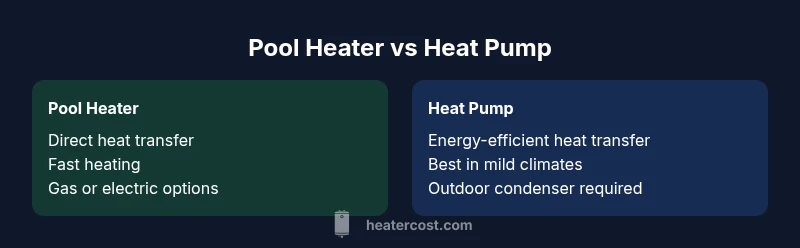
Pool heaters, typically gas-fired or electric-resistance units, transfer heat to water through direct flame or electric coils. They provide rapid heating and are less sensitive to outdoor temperatures, but fuel or electricity costs rise with usage. Heat pumps, by contrast, extract heat from the surrounding air and transfer it to the pool water using a refrigerant cycle. They rely on electricity to run the compressor and fan, but their heat transfer is highly efficient, especially when outdoor temperatures are moderate. The core distinction in the difference between a pool heater and a heat pump is the energy source and the mechanism of heat transfer: combustion versus ambient heat capture.
Climate and ambient temperature effects
Ambient temperature plays a crucial role in the performance gap between pool heaters and heat pumps. Gas heaters are relatively immune to outdoor cold snaps, offering reliable heating when winter weather is harsh. Heat pumps, however, perform best in mild to warm climates where outdoor air provides a substantial heat source. In cool or windy conditions, heat pumps require larger outdoor units or supplemental heaters to maintain target water temperatures. Heater Cost’s analysis emphasizes that climate and usage patterns determine whether a heat pump’s higher efficiency offsets its slower start-up in cold weather.
Efficiency and energy costs
Efficiency is central to the difference between a pool heater and a heat pump. Gas pool heaters convert fuel into heat with reasonable speed, but fuel costs and emissions can be substantial over time. Heat pumps deliver heat with high seasonal efficiency; their COP (coefficient of performance) rises when outdoor temperatures are comfortable and declines as it gets colder. Electricity prices influence operating costs for heat pumps, and utility rate structures matter. In many climates, a heat pump’s lower operating costs make it the preferred long-term choice, especially when paired with a pool cover that reduces heat loss.
Upfront costs and installation considerations
Upfront costs typically show a noticeable gap: heat pumps generally cost more to purchase and install than gas pool heaters, largely due to the outdoor unit, electrical upgrades, and potential trenching or pad requirements. Gas heaters may have lower initial price but require venting, gas lines, and regular burner maintenance. Installation space and local codes influence both options. Heater Cost notes that long-term savings from a heat pump can offset the higher upfront investment, particularly for homeowners who swim frequently and want steady, comfortable water temperatures with lower emissions.
Sizing and capacity considerations
Sizing a pool heating system correctly is essential to avoid over- or under-heating. Both options require calculating pool volume, desired water temperature, and climate-driven heat loss. Gas heaters can reach target temps quickly but may overshoot if not regulated. Heat pumps depend on ambient heat, so a larger unit may be needed in cooler climates to achieve the same warming rate. A professional load calculation should account for solar gains, shade, wind exposure, and pool cover usage to determine the appropriate BTU/h capacity for either option.
Maintenance and lifespan
Maintenance needs differ between the two technologies. Gas pool heaters typically require annual vent and burner inspections, plus general preventive maintenance. Heat pumps demand refrigerant checks, capacitor and fan inspections, and outdoor-unit cleaning. Lifespans for both systems tend to be in the ballpark of a decade or more with proper care, but local climate, usage frequency, and maintenance rigor influence longevity. Regular service ensures efficiency and reduces unexpected downtime.
Installation space and outdoor considerations
Gas heaters can be compact but require adequate venting and gas supply, which may limit placement options and increase ducting complexity. Heat pumps need outdoor space for the condenser unit and clearance for airflow, plus protection from extreme weather. Noise is a practical concern for both systems but tends to be more noticeable with outdoor heat pumps, while gas heaters operate more quietly inside a mechanical room. Proper placement minimizes vibration and maximizes efficiency.
Real-world scenarios and case studies
Consider a suburban home with a temperate climate and frequent pool use. A heat pump can deliver reliable comfort with lower annual operating costs, especially if the pool is covered when not in use. In a cold climate with intense winter swimming, a gas heater may be preferred for rapid heating and quick temperature recovery, despite higher running costs. A larger pool in a rural setting with variable electricity rates might benefit from a dual-system approach in some cases, allowing heat pump use most of the year with a backup gas heater for rare cold snaps.
Choosing the right option for your climate
Your climate, pool size, and how often you swim are the biggest decision drivers. For mild to warm climates, a heat pump often offers the best balance of comfort and long-term energy savings. In areas with long, cold seasons or where rapid heat is essential, a gas pool heater or a hybrid approach may be more suitable. Audience needs—such as quiet operation, footprint, and installation flexibility—also influence the final choice. In all cases, perform a simple life-cycle cost estimate that includes purchase, installation, maintenance, and energy costs.
Common misconceptions
A common misconception is that heat pumps can’t heat pools in winter. While efficiency declines in cold weather, heat pumps can still operate in cooler climates with appropriately sized equipment and backup heat. Another myth is that gas heaters are inherently cheaper to run; this depends on local gas and electricity prices and usage patterns. Finally, some assume installation complexity is the same for both. In reality, gas heaters often require venting and gas line work, while heat pumps depend on outdoor space and weather protection.
Making the decision: a practical checklist
To decide between a pool heater and a heat pump, start with a climate assessment, evaluate your pool usage, and run a simple cost comparison. Check utility rates, available incentives, and local installation constraints. Determine the required heat-up time and how often you’ll close the pool for the season. Finally, consult a local pro for a size-calculation and a verified life-cycle cost estimate that reflects your home’s specifics.
Comparison
| Feature | Pool Heater | Heat Pump |
|---|---|---|
| Technology | Gas-fired or electric-resistance heat | Air-source heat pump with refrigerant cycle |
| Typical operating ambient temperature range | Largely independent of outdoor temp (gas/electrics effective in cold) | Relies on warm outdoor air; best in mild-warm climates |
| Efficiency | Moderate efficiency; efficiency tied to fuel cost | High efficiency in warm climates; COP drops as it’s colder |
| Energy costs (operating cost perspective) | Fuel/electric costs vary; often higher with heavy use | Lower operating costs when electricity is affordable and climate is mild |
| Installation/space requirements | Venting/gas line; may require indoor mechanical space | Outdoor condenser unit; needs clearance and weather protection |
| Upfront cost | Typically lower initial cost | Higher upfront cost due to outdoor unit and installation |
| Maintenance | Annual burner/vent checks; routine service | Annual refrigerant and outdoor unit maintenance |
| Best climate/use case | Fast heating; reliable in very cold weather | Most efficient in moderate to warm climates; long-term savings |
The Good
- Heat pumps offer lower operating costs in temperate climates
- Gas pool heaters heat quickly and are reliable in cold weather
- Heat pumps have high energy efficiency and lower emissions
- Gas heaters provide consistent performance regardless of outdoor temperature
Negatives
- Gas heaters can have higher fuel costs and carbon footprint
- Heat pumps lose efficiency in very cold weather and need outdoor space
- Higher upfront cost and installation complexity for heat pumps
- Gas systems require venting and more routine maintenance
Heat pumps are generally the better long-term choice for most homeowners in temperate climates; gas heaters can be preferable when rapid heating is essential or in very cold environments.
If your climate is mild and you swim regularly, a heat pump usually saves money over time. In cold climates or when fast warmth is critical, a gas heater or hybrid approach can be more practical. Base your decision on climate, usage, and local energy prices.
Got Questions?
What is the main difference between a pool heater and a heat pump?
The main difference is how they generate heat. A pool heater uses either gas or electric resistance to heat water quickly, while a heat pump transfers heat from the air into the water using a refrigerant cycle. This makes heat pumps more energy-efficient in suitable climates but slower to heat in cold weather.
The key difference is energy source and heat transfer: gas or electric elements heat water directly, whereas a heat pump extracts heat from the air and transfers it to the pool water.
Can a heat pump work well in winter?
Yes, but efficiency decreases as outdoor temperatures fall. In very cold climates, a heat pump may require a backup heat source or a two-stage system to maintain desired pool temperatures.
Heat pumps can work in winter, but they get less efficient as it gets colder; you might need a secondary heat source for very cold days.
Are heat pumps noisy?
Most modern heat pumps are designed for quiet operation, especially on the outdoor condenser. Placement and seasonal maintenance can further minimize noise.
Modern heat pumps are fairly quiet, but placement matters for minimizing noise.
Which is cheaper to run over the long term?
Heat pumps usually offer lower operating costs in moderate climates due to high efficiency, while gas heaters may be cheaper to run in very cold climates if gas is inexpensive and your usage is intermittent.
In many places, heat pumps cost less to run over time, especially in milder weather.
Do I need a pool cover with these systems?
Using a pool cover reduces heat loss and improves cost efficiency for both systems, amplifying the benefits of whichever heater type you choose.
A pool cover helps save energy with either heater type by reducing heat loss.
How should I size a pool heating system?
A qualified installer should calculate your pool volume, desired temperature, wind exposure, and solar gains to determine the correct BTU/h capacity for either option.
Get a professional sizing calculation based on pool size, climate, and desired temperature.
The Essentials
- Assess climate: heat pumps excel in mild to warm climates
- Consider usage frequency to favor heat pumps for regular swimmers
- Account for total cost of ownership including maintenance and energy
- Plan for installation: outdoor space and noise considerations
- Size correctly using pool volume, desired temp, and cover usage