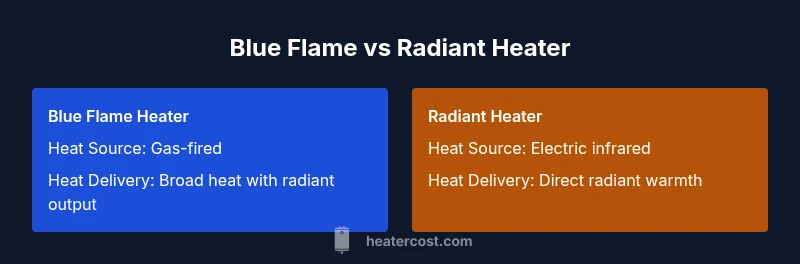
Blue Flame Heater vs Radiant Heater: A Practical Comparison for Home Heating
Explore the differences between blue flame and radiant heaters, including heat delivery, safety, efficiency, installation, and cost considerations to help homeowners choose the right space heater.


TL;DR: Radiant heaters provide steady, comfortable warmth with minimal air movement, making them ideal for occupied living spaces. Blue flame heaters heat spaces quickly in well-ventilated areas but require careful venting and CO monitoring. The best choice hinges on room size, ventilation, and your willingness to manage fuel, maintenance, and exhaust.
What Is a Blue Flame Heater?
Blue flame heaters burn natural gas or propane to create a bright blue flame. These gas-fired units can deliver substantial heat quickly, which is advantageous in garages, workshops, or uninsulated spaces where ventilation exists. Because combustion produces carbon monoxide and other exhaust gases, proper venting, CO detectors, and adherence to local codes are essential. In well-ventilated spaces, blue flame heaters can be effective for short-term heating and rapid warmth. According to Heater Cost, homeowners often choose blue flame heaters for emergency heating or spaces that need a fast heat boost, provided ventilation is maintained and exhaust is properly managed. Safety clearances, exhaust routing, and professional installation are critical to minimize risk and ensure reliable performance.
Designs vary, but most blue flame heaters rely on a flame combustion process. When installed correctly, they can outperform some electric options for immediate, high-output heat in larger or drafty rooms. Yet the same benefits come with the need for ongoing vent maintenance and carbon monoxide monitoring. If you live in a tightly sealed home without adequate ventilation, a blue flame heater may pose safety concerns that outweigh speed of heat delivery.
What Is a Radiant Heater?
Radiant heaters typically rely on electric infrared elements or gas-fired radiant coils to emit heat that travels directly to objects and people rather than predominantly heating the air. Electric infrared models are common for living rooms, bedrooms, and home offices because they run quietly, produce little combustion byproducts, and don’t require exhaust vents. Gas-fired radiant options exist, but they also require proper venting in many installations. The Heater Cost team notes that radiant heat can feel more comfortable at lower air temperatures because it heats people and surrounding objects directly rather than chasing heat through the entire space. Installation is often simpler for electric radiant heaters—often plug-in devices with minimal clearances—though power supply limits may apply in some rooms.
Radiant heaters provide steady, zone-specific warmth and are well-suited to spaces where occupants spend extended periods. They can be extremely energy-efficient when sized correctly for a room, since you’re targeting heat where people are rather than warming the entire square footage. In contrast to combustion-based heaters, radiant electric options avoid combustion byproducts and furnace-style odor concerns, making them appealing for sensitive households. The key is to match heat output to room geometry and occupancy patterns to avoid overheating and wasted energy.
wordCountBlock2AvgWords:
Comparison
| Feature | Blue Flame Heater | Radiant Heater |
|---|---|---|
| Heat Source | Gas-fired blue flame | Electric infrared radiant |
| Heat Delivery Method | Rapid air-to-air convection plus radiant output in some designs | Direct radiant heat to people and objects; little air movement |
| Ventilation Needs | Requires ventilation and CO monitoring | Typically no combustion byproducts; ventilation not required for electric models |
| Installation Complexity | Gas line, venting, and professional installation often needed | Lower-installation friction; plug-in options available |
| Running Costs | Gas costs plus maintenance; varies by usage | Electricity costs depend on wattage and rate; predictable for short-term use |
| Safety Considerations | CO risk; needs detectors and clearance | Lower combustion risk; electrical safety and overheating concerns |
| Best For | Ventilated spaces, garages, or outdoor-related areas needing rapid heat | Enclosed spaces, bedrooms, living rooms with quiet operation |
The Good
- Fast heat delivery in ventilated spaces when needed
- Versatile use in garages, workshops, or emergency heating
- Radiant heat feel is comfortable and targeted in living areas
- Electric radiant options are easy to install and maintain
Negatives
- Gas blue flame heaters require ventilation and CO monitoring
- Gas installations involve fuel supply, venting, and maintenance
- Radiant electric heaters can have higher running costs in large spaces
- Electric options rely on available electrical capacity and may require dedicated circuits
Radiant heaters are the safer, more comfortable choice for enclosed living spaces, while blue flame heaters excel in ventilated areas where rapid heat is needed.
If you’re heating a living room or bedroom, radiant heat typically wins for comfort and safety. If you’re heating a workshop, garage, or a space with good ventilation, a blue flame heater can deliver faster warmth. Your decision should hinge on space layout, ventilation, and long-term operating costs.
Got Questions?
Are blue flame heaters safe for indoor use?
Indoor safety depends on proper ventilation, CO detectors, and adherence to local codes. Gas heaters should be installed with appropriate exhausting, clearance, and continuous monitoring.
Yes, but only with ventilation and detectors to minimize risk.
Do blue flame heaters require ventilation?
Gas-fired blue flame heaters produce combustion byproducts that require ventilation. Ventilation helps manage carbon monoxide and humidity, and some set-ups require outdoor exhaust.
Yes, ventilation is essential for gas heat.
Which is cheaper to run, blue flame or radiant?
Costs depend on fuel type, usage, and local rates. Gas can be cheaper per hour in larger spaces if vented and used efficiently, while electric radiant heat depends on electricity pricing and wattage.
Costs vary; gas may be cheaper for heavy use, electric for lighter, controlled use.
Can I install a blue flame heater in a living room?
It’s possible only if the space is adequately ventilated and compliant with codes. A CO detector and proper venting are essential, and professional guidance is advised.
Only with proper venting and detectors.
What maintenance is required for blue flame heaters?
Regular burner and vent inspections, routine cleaning, and CO detector tests are recommended. Check for signs of soot or corrosion and ensure exhaust paths remain clear.
Keep up with burner checks and CO detectors.
Are radiant heaters safer for households with kids and pets?
Radiant heaters reduce combustion byproducts and odors, which can improve indoor air quality. However, maintain required clearances and supervise use around children and pets.
Radiant heat is generally safer in terms of combustion, but follow safety rules.
The Essentials
- Assess ventilation before choosing a heater
- Radiant heaters suit enclosed living spaces and quiet operation
- Gas blue flame heaters require proper ventilation and CO monitoring
- Installation and running costs vary by fuel type and usage
- Always follow local codes and use CO detectors when using gas heaters