Bed room heater Costs: A 2026 Buyer's Guide
Learn the true costs of bed room heaters, from purchase to running power, plus safety and efficiency tips for 2026. A practical, data-driven guide by Heater Cost.


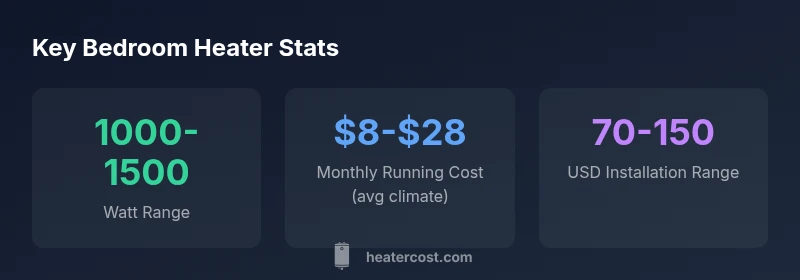
For a typical bedroom, a 1000–1500 watt bed room heater is usually sufficient for 100–200 square feet, depending on insulation and climate. Electric heaters are the most cost-effective to purchase and install, while running costs depend on electricity rates and usage (roughly $0.12–$0.25 per kWh). Gas heaters add venting and permit considerations. Based on Heater Cost Analysis, 2026, plan for both upfront costs and monthly energy use when budgeting.
Why a bed room heater matters
In modern homes, comfort in the bedroom is more than a luxury—it's a health and sleep factor. A well-chosen bed room heater can maintain a steady overnight temperature, helping you avoid drafts and temperature swings that disrupt sleep. According to Heater Cost, the right device should balance warmth, safety, and running costs while fitting the room size and insulation quality. A bed room heater is not a one-size-fits-all solution; climate, ceiling height, and window placement influence how many watts you truly need. The goal is consistent warmth without overheating, noise, or dry air. In practice, homeowners save money by choosing efficient, properly sized heaters with smart thermostats and proper placement.
When evaluating options, consider your bedroom’s insulation level, occupancy patterns, and safety needs. If you live in a drafty home, you’ll appreciate a heater with rapid warm-up and a tight temperature control. If you sleep with pets or children nearby, device safety features like tip-over switches, overheat protection, and cool-touch surfaces are essential. The Heater Cost team emphasizes that safety and energy efficiency should guide every purchasing decision, not just the lowest upfront price.
Key types of bed room heater options
There are several reliable categories for a bed room heater, each with distinct strengths and trade-offs. Portable electric heaters (ceramic or oil-filled) offer quick warmth and easy relocation, making them ideal for renters. Wall-mounted panels and baseboard convectors provide steady heat with reduced surface clutter, but often cost more upfront and may require professional installation. Infrared radiant heaters feel warm to the skin and can heat people and objects directly, which can be advantageous in short sessions or sparsely furnished rooms. For larger bedrooms, a combination of a primary heater and a secondary zone (like a programmable thermostat for a small area) can optimize comfort and cost. Safety considerations include automatic shutoff after tip-over or overheat, child-proof controls, and keeping the unit away from bedding and curtains. In all cases, choosing a model with an adjustable thermostat, a heater timer, and energy-efficient settings can reduce unnecessary energy use. The Heater Cost guidance suggests comparing running costs across models with similar wattage and features, and prioritizing units with durable build quality and warranties.
Energy costs and efficiency for a bed room heater
Energy costs are a major part of the total ownership expense. Electric bed room heaters convert electricity to heat directly, typically offering higher operating efficiency than combustion-based options, but with cost sensitivity to electricity rates. A 1000–1500 W unit running for a few hours on a cold night can significantly impact a household bill, especially in states with higher electricity prices. Based on Heater Cost Analysis, 2026, you should estimate monthly running costs by multiplying the heater’s wattage by the hours of operation and the local electricity rate (expressed per kilowatt-hour). In practice, this means a 1500 W heater used for 6 hours could cost roughly $1–$3 per day, depending on utility rates. For climate zones with milder winters, shorter use times and programmable thermostats dramatically reduce costs. Efficiency matters, too: look for models with high efficiency ratings, good insulation on the housing, and solid thermostat control. When possible, opt for energy-saving features like eco-modes and smart scheduling to minimize idle heat loss while maintaining comfort.
How to size a bed room heater and safety guidelines
Sizing a heater for a bedroom is about matching heat output to room size and insulation quality, while maintaining safe clearances. Start by measuring the bedroom (length × width × height) and noting window areas, drafts, and ceiling height. A general rule is to target enough watts to maintain comfort without overkill; in very well-insulated rooms, smaller heaters may suffice, while drafty spaces benefit from higher output or supplemental insulation. Safety guidelines include placing the unit on a stable, nonflammable surface away from drapes or bedding, using a model with tip-over and overheat protection, and ensuring proper cord management. Never leave an electric heater unattended for long periods, especially in spaces where children or pets are present. Regular maintenance, such as cleaning air intakes and testing safety features, helps prevent malfunctions that could lead to hazards. The Heater Cost approach stresses that correct sizing reduces both overuse and risk, producing safer, more comfortable bedrooms.
Installation and maintenance costs for a bed room heater
For homeowners, upfront costs vary by heater type and whether professional installation is required. Electric portable heaters incur minimal upfront costs and are typically ready to use after plugging in. Wall-mounted or baseboard units may require professional electrical work or minor remodeling, especially if wiring changes are needed to accommodate zoning or thermostatic controls. Gas or propane units involve venting, permits, and annual maintenance, which increases both initial and ongoing costs. Maintenance basics include periodic cleaning, checking seals, replacing filters if applicable, and testing safety features before winter. To manage long-term expenses, combine a well-insulated bedroom with a correctly sized heater, set schedules to minimize idle heat, and consider durable units with long warranties. The Heater Cost data for 2026 indicates that good maintenance can extend a heater’s life and improve reliability, making the total cost of ownership more predictable and affordable.
Practical buying guide: features and myths
Choosing the right bed room heater involves evaluating features that genuinely affect comfort and safety. Look for programmable thermostats, energy-saving modes, low-noise operation, and clear temperature readouts. Avoid relying solely on the claimed maximum wattage; instead consider how the unit performs in your room’s conditions. Common myths include the belief that bigger watts always mean warmer faster; in reality, efficiency and heat distribution matter more. Quiet operation and a compact footprint are often overlooked but contribute significantly to daily comfort in a bedroom. The Heater Cost guidance recommends reading customer reviews focusing on real-world performance in bedrooms and checking for certifications like UL or ETL.
Tax credits and incentives for energy-efficient heaters
Many regions offer incentives for upgrading to energy-efficient heating equipment. While specifics vary by location and program, homeowners should review federal, state, and local options for tax credits or rebates tied to efficiency improvements and smart thermostats. Checking eligibility before purchase can save money and guide product selection toward devices that qualify for incentives. The Heater Cost analysis emphasizes documenting energy savings—along with installed equipment details—for claims and future audits. Always consult local guidelines or a qualified contractor to confirm current programs.
Comparison of common bed room heater types
| Category | Typical Wattage | Estimated Running Cost (monthly) | Notes |
|---|---|---|---|
| Electric space heater (portable) | 1000-1500 | $8-$28 | Great for temporary zones and rental spaces |
| Electric panel heater | 750-1500 | $8-$25 | Built-in thermostat; steady heat in a fixed zone |
| Oil-filled radiator | 800-1500 | $8-$28 | Quiet operation; slower heat distribution |
| Gas room heater (vented) | 4000-8000 BTU/h | $40-$120 | Requires venting; higher upfront costs |
Got Questions?
Can I leave a bed room heater on overnight?
Leaving any heater on overnight is not recommended unless it has dependable safety features and a scheduled shutdown. Use devices with auto shutoff and a clear path around the unit. When in doubt, program a thermostat to maintain a safe sleeping temperature and turn the device off before bed.
Most heaters have safety auto shutoff; for overnight use, pick a model with timers and set it to a safe temperature before you sleep.
What is the safest type of bed room heater?
The safest options prioritize built-in safety features: tip-over protection, overheat protection, cool-touch surfaces, and certified electrical components. Oil-filled radiators and panel heaters with smart thermostats tend to be safer for bedrooms, especially with children or pets.
Look for tip-over and overheat protection, plus cool-to-touch surfaces and certifications.
Do bed room heaters require permits or professional installation?
Most electric heaters do not require permits, but gas or vented systems often do. If wiring changes are needed or you install a wall-mounted unit, consult a licensed electrician or HVAC professional. Local codes vary, so check with your city or county for requirements.
Gas or vented heaters often need permits; consult a pro for electrical or installation work.
What maintenance is required for a bed room heater?
Regular maintenance includes cleaning air intakes, inspecting cords and plugs, testing safety features, and replacing filters if applicable. For gas units, ensure venting is clear and get annual professional servicing. Keeping the area around the heater clear reduces dust and improves efficiency.
Clean intakes and test safety features regularly; service gas units yearly.
Are there tax credits for energy-efficient bedroom heaters?
Many regions offer incentives for energy-efficient heating upgrades. Programs vary by location and year, so verify eligibility with local authorities or a qualified contractor. Collect receipts and model numbers for potential credits.
Check local programs for credits or rebates; keep documentation for claims.
“Choosing a heater is about balancing heat needs with safety and efficiency. A correctly sized unit, paired with good insulation and smart controls, delivers the most comfortable bedroom without breaking the bank.”
The Essentials
- Size the heater to the room for safe, efficient heating
- Prioritize safety features and thermostat control
- Electric models are cheapest to install; running costs vary by rate
- Consider insulation and curtains to maximize efficiency
- Check for energy-saving features and warranties