Baseboard Hydronic Heating: Costs, Pros, and Setup
Learn how baseboard hydronic heating works, compare costs and efficiency, and get practical guidance on installation, sizing, and maintenance for homeowners and property managers.


A hydronic baseboard heater uses heated water circulating through pipes to emit steady warmth along the baseboard. It’s quiet, scalable for room-by-room comfort, and pairs well with a boiler or solar-boosted system. Compared with electric baseboards, hydronic units typically offer lower operating costs and better thermal stability in variable climates.
What is a hydronic baseboard heater?
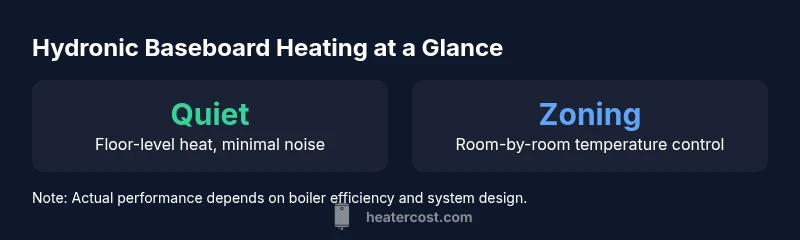
A hydronic baseboard heater, commonly described as a baseboard heater hydronic, heats spaces by circulating heated water through a continuous loop of copper or PEX piping tucked along the baseboard of exterior walls. The heated water originates in a boiler or heat source, and a small pump maintains flow. This setup radiates warmth from the finned tubes, creating a gentle, even heat pattern that rises from floor level. According to Heater Cost, this approach emphasizes thermal stability rather than rapid temperature swings, which is especially beneficial in rooms with large windows or poor insulation. The main advantages include quiet operation, strong zoning potential, and compatibility with modern boilers and solar-assisted systems. The keyword baseboard heater hydronic should appear naturally; homeowners often appreciate the unobtrusive heat this system provides. In practice, hydronic baseboard heat excels in homes that prioritize comfort and energy efficiency over quick, electric heat bursts.
Hydronic vs Electric Baseboard Heating: Pros and Cons
Electric baseboards heat quickly with simple installation but can lead to higher operating costs in cold climates due to continuous electric resistance losses. Hydronic baseboard heating, by contrast, uses stored heat in water, allowing longer comfort periods with fewer on/off cycles. Pros of hydronic systems include silent operation, improved zoning through multiple thermostats, and better work with high-efficiency boilers. Cons can include higher upfront costs and a longer installation timeline because a boiler, piping, and circulator must be integrated. For many homeowners, the choice depends on climate, existing boiler, and whether a retrofit is feasible in an older home. The Heater Cost team often finds that for larger rooms or homes with multiple zones, hydronic systems deliver more consistent warmth and can be cheaper to operate over time, especially when paired with efficient boilers and well-insulated spaces.
Key components and system integration
A hydronic baseboard system relies on a few core components: a boiler or heat source, a circulator pump, a network of pipes (often copper or PEX) running horizontally along the baseboard, and the finned aluminum or steel baseboard units that emit heat. The regulator valve and expansion tank help manage pressure; a mixing valve can modulate water temperature to avoid overheating. Depending on whether you have a combi boiler or a dedicated heating plant, zoning controls, thermostats, and motorized valves allow different rooms to maintain distinct temperatures. The baseboard units themselves are designed to be unobtrusive, with low height and slim profiles. In many installations, the run length per zone determines how many feet of baseboard are required, which then translates into tubing diameter and pump capacity. The end result is a modular system that can be scaled as space and budgets permit.
Sizing, zoning, and achieving even comfort
Sizing hydronic baseboards requires calculating the heat output in BTUs per hour per room and matching that to the local climate, insulation, and window performance. A common approach is to estimate BTU needs per square foot and then select baseboard sections that provide a safe buffer. Zoning becomes critical in larger homes or rooms with uneven heat loss, allowing separate thermostats to minimize overshoot and temperature gradients. For homes with expansive glazing or poor insulation, designers often plan multiple zones to avoid temperature swings, while keeping energy use efficient. When properly designed, a hydronic baseboard system can maintain a steady interior temperature with minimal fan movement and faster fallback warmth after outdoor temperature drops.
Installation considerations and timeline
Installing a hydronic baseboard system is more involved than a simple electric retrofit. It typically requires a licensed plumber or HVAC technician, a compatible boiler or heat source, paving of piping routes, and careful coordination with existing plumbing. If you are converting from another heating method, you may need permit approvals and boiler sizing adjustments to match your home’s layout. Expect a structured timeline that includes design, equipment ordering, rough-in piping, wall or baseboard mounting, and a final balancing of zones. The result is a scalable, durable heating solution, but homeowners should plan for a longer lead time and potential disruption compared with electric baseboard installation.
Maintenance and longevity
Hydronic systems demand periodic maintenance for optimal performance. Annually or semi-annually, a technician should inspect the boiler, circulator, expansion tank, and pressure relief valve. Regular flushing of the system and corrosion inhibitors help maintain water quality and prolong component life. Bleeding air from baseboard runs prevents heat pockets and ensures consistent warmth. With proper maintenance and quality boiler selection, a hydronic baseboard setup can deliver reliable performance for many years, often outperforming electric equivalents in energy efficiency and comfort stability.
Energy costs and performance across climates
Operational costs for hydronic baseboard heating hinge on boiler efficiency, water temperature, and the home’s insulation quality. In well-insulated homes with modern, high-efficiency boilers, operating costs tend to be favorable compared with older electric baseboard systems in similar climates. In colder regions, maintaining steady warmth can reduce thermostat cycling, which supports energy savings. Heat loss through windows and walls remains the dominant factor in any heating system, so supplemental insulation improvements can significantly impact overall performance and cost.
Common myths and misconceptions
A common myth is that hydronic systems are universally slow to heat up; in reality, zone control and properly sized baseboards can provide rapid comfort when the system is correctly designed. Another misconception is that hydronic coils are fragile; modern baseboard components are designed for durable operation in typical living spaces. Finally, some homeowners assume retrofitting is impractical; a retrofit is feasible in many homes, though it requires professional design and a suitable heat source.
When hydronic baseboard heating is the right choice
If your goals include quiet operation, strong zoning, and compatibility with a high-efficiency boiler or solar boost, baseboard heater hydronic systems offer compelling benefits. They work well in retrofit projects where wall space is constrained and where a discreet heating solution is preferred. For new construction, hydronic baseboard can be incorporated alongside other heating strategies to tailor comfort and cost. The best approach is a professional load calculation and a system design that accounts for climate, insulation, and occupancy patterns.
Hydronic baseboard vs electric baseboard comparison
| Aspect | Hydronic Baseboard Heating | Electric Baseboard Heating |
|---|---|---|
| Heating method | Water-filled loop with boiler and circulator | Electric resistance coils |
| Zoning and control | Excellent with multiple thermostats and zones | Often limited to single-zone control unless multiple circuits are used |
| Maintenance | Annual boiler service; periodic flushing | Lower ongoing maintenance but higher electricity use per degree of heat |
| Noise level | Very quiet operation | Moderate hum or fan noise in some models |
Got Questions?
What is hydronic baseboard heating?
Hydronic baseboard heating circulates heated water through baseboard coils to emit gentle warmth. It’s known for quiet operation and room-by-room zoning, especially effective when paired with a modern boiler.
Hydronic baseboard heating uses heated water to warm spaces quietly and with good zoning.
Can hydronic baseboards be installed in older homes?
Yes, with careful planning. Older homes may require boiler updates, pipe routing adjustments, and sealing improvements to maximize efficiency and minimize heat loss.
Yes, but it often needs evaluation of the existing plumbing and insulation.
How do you size hydronic baseboards?
Sizing involves calculating BTUs per room based on climate, insulation, and window performance, then selecting baseboard length and boiler output to meet those needs without oversizing.
Size by room’s heat needs and match to boiler output.
Are hydronic baseboards expensive to install?
Initial costs can be higher due to boiler, piping, and zoning components, but operating costs may be lower over time, especially with high-efficiency boilers.
Upfront cost is higher, but long-term savings can justify it.
Can I retrofit baseboard heating into an existing home?
Retrofits are often possible, but require professional design to fit space, piping routes, and a compatible heat source. In some cases, alternatives may be more practical.
Retrofit is possible, but call a pro to plan pipes and boiler.
What maintenance does a hydronic system require?
Regular boiler service, occasional system flushing, and periodic checks of expansion tanks and valves help prevent failures and maintain efficiency.
Keep up with boiler service and flushing to stay efficient.
“Hydronic baseboard heating delivers quiet, even warmth and strong zoning when designed with an efficient boiler.”
The Essentials
- Prioritize quiet operation and precise zoning with hydronic baseboard heat.
- Plan for higher upfront costs but potential long-term savings with efficient boilers.
- Size and zone the system for consistent comfort and energy efficiency.
- Maintenance and professional balancing are key to longevity.