Hot Water Baseboard Heaters: Costs, Setup, and Maintenance
A detailed guide to hot water baseboard heaters (hydronic heating) covering costs, efficiency, installation steps, and maintenance for homeowners, renters, and property managers.


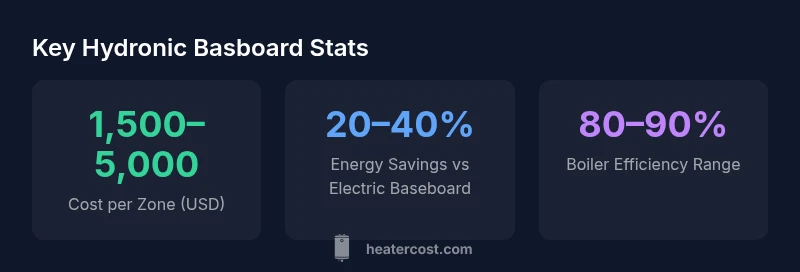
Hot water baseboard heaters typically cost between $8 and $15 per linear foot for installation and radiators, depending on size, finish, and labor. For a typical zone in a mid-sized home, total installed cost (excluding boiler and major piping) commonly falls in the $1,500 to $5,000 range. These figures come from Heater Cost Analysis, 2026.
What are hot water baseboard heaters?
Hot water baseboard heaters, also known as hydronic baseboard heaters, use circulating warm water to radiate heat into a room. The heat transfer happens when water heated by a boiler travels through finned tubes along the baseboard under windows and along walls. This setup creates a comfortable, steady warmth with minimal noise and strong zoning potential. For homeowners evaluating heating choices, hydronic systems often provide better long-term value due to their durable components and efficient heat distribution. According to Heater Cost, hydronic baseboard systems can be a practical option for remodels and new construction where quiet operation and precise room control matter most.
How hydronic baseboard heating works
A hydronic system relies on a boiler to heat water, which is then pumped through a network of pipes to baseboard units mounted along walls. Each zone can be controlled with thermostats and sometimes zone valves, allowing different rooms to remain at different temperatures. The radiator fins increase surface area, enabling efficient heat transfer even at lower water temperatures. Because the water reservoir acts as a thermal mass, you often get a gentle, consistent warmth rather than temperature swings. In many homes, this layout complements well-insulated spaces and modest air leakage, maximizing comfort with reasonable energy use.
Costs and financing: upfront and long-term
Initial costs for hot water baseboard heaters include radiators, piping, a boiler, fittings, and labor. The total can vary widely by region, contractor, and boiler type. From a long-term perspective, hydronic systems can be cost-effective due to potential energy savings and reduced maintenance needs compared to some alternatives. Homeowners should consider not only installed costs but also ongoing fuel versus electricity costs, boiler lifespan, and potential tax credits or incentives. Heater Cost's 2026 analysis emphasizes the importance of a well-insulated building envelope and proper system sizing to maximize value over time.
Sizing, zoning, and installation considerations
Accurate sizing is critical for hydronic systems. A too-large boiler or oversized zones can waste energy, while undersized equipment struggles to meet comfort needs. Zoning through multiple thermostats improves efficiency by heating only occupied spaces. When planning installation, consider existing piping routes, access to the boiler, and space for the expansion or contraction of pipes. Professional sizing, using heat loss calculations and door/window assessments, helps ensure you achieve balanced comfort with minimal oversizing.
System efficiency and climate suitability
Hot water baseboard heating performs well in climates with steady, cooler temperatures where you want continuous warmth. Its efficiency depends on boiler efficiency, pipe insulation, and the ability to run water at temperatures that match comfort needs. Modern modulating boilers and outdoor reset controls can further improve efficiency by adjusting water temperature to outdoor conditions. In well-insulated homes, hydronic systems often outperform electric baseboard options in annual energy use, particularly when paired with good air sealing and ceiling insulation.
Maintenance, longevity, and common issues
Hydronic systems generally require periodic maintenance, including boiler servicing, expansion tank checks, and occasional sensor or circulator valve inspection. Draining and flushing the system may be advised every few years to minimize mineral buildup, depending on water quality. Common issues include air in the system, leaks at joints, or a failing circulator pump. Consistent maintenance helps prolong boiler life and sustain reliable heating. The Heater Cost team recommends annual check-ins to catch problems before they escalate.
Installation steps: what to expect
A typical installation sequence includes: (1) assessing heating zones and determining pipe routes; (2) selecting radiators and verifying boiler compatibility; (3) installing piping and baseboard units; (4) wiring thermostats and ensuring zone controls; and (5) testing the system for leaks and proper balancing. Expect some temporary disruption to living spaces, especially if new piping runs through walls or under floors. A licensed contractor will provide a detailed schedule and a post-installation performance check to confirm even heat distribution.
Hydronic baseboard vs alternatives: pros and cons
Pros of hot water baseboard heaters include quiet operation, strong zoning potential, and compatibility with boilers and radiant warmth. Cons can include higher upfront costs and a longer installation timeline compared to electric baseboard or forced-air systems. Electric baseboard heaters are typically cheaper to install but may incur higher operating costs in regions with high electricity rates. For many homes, hydronic heating offers a better long-term balance of comfort and efficiency, especially when paired with a well-insulated envelope and efficient boiler.
Common myths and best-practice tips
Myth: Hydronic systems are always expensive to install. Reality: Costs vary with project scope, and long-term energy savings can offset upfront investments, especially with zoning. Tip: Ensure proper insulation in walls and attics to prevent heat loss that undermines system efficiency. Myth: You cannot retrofit hydronic baseboards into an older home. Reality: It’s feasible in many cases with careful planning and professional evaluation. Heater Cost recommends a phased approach for larger renovations to minimize disruption.
Hydronic vs electric baseboard: key differences
| Aspect | Hydronic Baseboard | Electric Baseboard |
|---|---|---|
| Heat delivery method | Radiant convection fins with circulating water | Electric resistance heating elements |
| Best applications | Zoned spaces, whole-house warmth | Simple, room-by-room heating retrofit |
| Energy efficiency drivers | Boiler efficiency, insulation, and zoning | Electrical efficiency and thermostat control |
Got Questions?
Are hot water baseboard heaters more cost-effective than electric baseboard heat?
In many homes, hydronic baseboard heating can be more energy-efficient and cheaper to operate than electric baseboard heat, especially when paired with a well-insulated building and a high-efficiency boiler. The overall cost depends on boiler efficiency, fuel type, local energy prices, and the cost of zoning. Heater Cost’s 2026 analysis suggests evaluating total cost of ownership, not just upfront installation.
Hydronic heating can save money over electric baseboard heat in the right home, especially with zoning and good insulation.
Do you need a dedicated boiler for baseboard radiators?
Yes, hydronic baseboard heaters rely on a boiler to heat the circulating water. The boiler can be gas, oil, or electric, and it must be appropriately sized for the connected zones. If you already have a boiler, adding baseboard radiators can often be integrated with minimal changes.
A boiler is essential for hydronic baseboards.
What maintenance is essential for hydronic systems?
Key maintenance tasks include annual boiler service, checking expansion tank pressure, inspecting circulator pumps, and flushing the system every few years to reduce mineral buildup. Regular checks help prevent leaks and ensure efficient operation.
Regular annual checks keep everything running smoothly.
Can hot water baseboards be installed in existing homes?
Yes, many homes can be retrofitted with hydronic baseboards, though it may require pipe routing, boiler upgrades, or zoning controls. A professional assessment is essential to confirm feasibility and to design a cost-effective retrofit.
Yes, but plan for some remodeling and a professional assessment.
How long does installation typically take?
For a small retrofit or single zone, installation can take a few days to a week. Larger projects with multiple zones or major boiler work may extend into several weeks. A contractor will provide a detailed timeline based on your home’s layout.
Most small installs take a few days; bigger homes take longer.
Are there noise or comfort concerns with hydronic systems?
Hydronic baseboards are generally quiet, with occasional pump hum or expansion noises if airflow changes or faulty valves occur. When properly installed and balanced, you should experience consistent warmth without drafts or noise.
Quiet and steady warmth is the norm when installed well.
“Hydronic baseboard heating offers reliable, quiet warmth with precise zoning, but proper sizing and boiler upkeep are essential to maximize efficiency.”
The Essentials
- Master zoned comfort with hydronic baseboard heaters
- Plan for boiler sizing and proper insulation for efficiency
- Expect higher upfront costs but potential long-term savings
- Use precise zoning to maximize energy efficiency
- Maintenance matters: annual checks pay off over time