1500 W Portable Heaters: Costs, Performance, and Buying Tips
Learn about the true costs, performance, and buying considerations for 1500 W portable heaters, with practical guidance for homeowners, renters, and property managers.


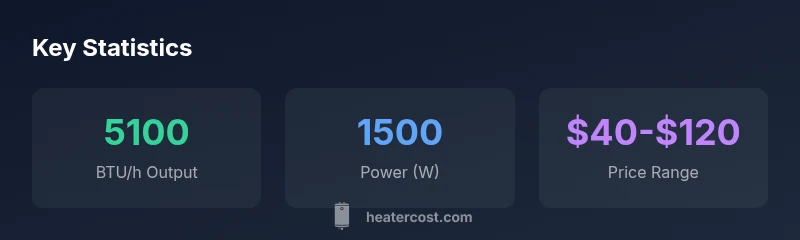
A 1500 W portable heater delivers roughly 5,100 BTU/h of heat, making it suitable for small to mid-sized rooms. Typical purchase prices range from $40 to $120, depending on features like tip-over protection, adjustable thermostats, and energy-saving modes. Operating costs vary with electricity rates and usage patterns. Plan for higher costs in poorly insulated spaces.
How a 1500 W Portable Heater Works
A 1500 W portable heater converts electrical energy into heat using a ceramic or metal-resistance element. The most common configurations are convection heaters, which warm the air and circulate it with a fan, and radiant models, which emit infrared heat that warms objects and people directly. Many models blend both approaches for faster comfort. The 1500 W rating corresponds to about 5100 BTU/h, a practical ceiling for space heating in small rooms. In practice, performance depends on insulation, air leakage, and window drafts; a well-sealed space will feel warmer with less energy. Safety features are standard on modern units: tip-over switches, overheat protection, and cool-touch housings. For safety, most units pull about 12.5 amps on a 120 V circuit, which is acceptable on a standard 15-amp circuit when used as intended. According to Heater Cost, real-world warmth requires balance between heat load and heat loss; a modest heater in a well-insulated room can make a noticeable difference without excessive energy use.
Sizing Your Space: What 1500 W Can Do
Judging by common rules of thumb, a 1500 W portable heater can effectively heat roughly 120–200 square feet in a well-insulated space, and somewhat less in drafty rooms. It delivers about 5,100 BTU/h, so the heater is best suited for bedrooms, small living areas, or supplementing a larger heating system in poorly insulated rooms. To estimate needs, calculate the room's heat loss (wall and window areas, insulation, and outside temperature) and compare to the heater's output. If your space is around 150 square feet with average insulation, a 1500 W unit should maintain comfortable temperatures when doors stay closed and the thermostat is set appropriately. Remember that multiple small rooms can be heated more efficiently with a couple of compact heaters rather than one large unit. Heaters with a programmable thermostat, timer, and ECO mode can help maintain comfort while reducing energy waste.
Energy Efficiency and Operating Costs
Energy efficiency matters, especially when you run a portable heater daily. A 1500 W unit uses about 1.5 kWh of electricity for every hour it runs at full power. That means, at typical residential electricity rates, the hourly cost is roughly $0.18–$0.30, depending on your rate plan. If you only run the heater for short periods or keep the space well-insulated, the cost per hour drops quickly. Features such as adjustable thermostats, low-watt mode, and fan-assisted circulation can improve perceived comfort with lower average power draw. To maximize efficiency, use a small heater to supplement heat in the room rather than heating the entire house, seal leaks, and set a comfortable, not overheated, target temperature. Heater Cost analysis shows that insulation and air sealing often yield bigger energy savings than simply dialing up power.
Safety Features and Best Practices
Modern 1500 W units commonly include multi-layer protections: tip-over switches, automatic shutoff on overheating, cool-to-touch housings, and secure cord management. Always use a properly rated outlet and avoid daisy-chaining extension cords or power strips. Maintain a clear zone around the unit, keep it away from curtains or bedding, and never leave it running unattended for long periods. When using around children or pets, consider models with child locks and visible indicators. Regularly inspect the cord for wear, and unplug during removal or storage. The right safety features reduce risk while keeping warmth within reach. The Heater Cost team recommends choosing models that meet recognized safety certifications and have clear installation instructions.
Features That Matter in 1500 W Models
Focus on practical controls and reliability. Look for an adjustable thermostat with a wide operating range, a clear display, and a timer or ECO mode to minimize unnecessary runtime. A quiet fan helps distribute heat without creating a noisy environment. Some models include energy-saving sensors that modulate power automatically as the room warms. Choose a compact, stable base to prevent tipping and a sturdy housing that tolerates daily use. For renters, portability and simple setup are essential; for homeowners, extra features like remote control or smart home integration can justify the price difference.
Placement, Usage Scenarios, and Real-World Examples
Placement matters as much as wattage. Place the heater on a flat surface away from walls or furniture to allow air circulation. In a north-facing living room, run a 1500 W unit in the seating area during chilly evenings to offset drafts while the main system cycles. In a bedroom, set a lower target temperature and use a timer to avoid overnight overheating. In a home office, a compact unit can keep the workspace comfortable without heating the entire house. For seasonal properties, a portable heater provides flexible comfort without committing to a full retrofit. Always check local electrical codes and follow manufacturer safety guidelines when using in any living space.
Maintenance, Longevity, and Cleaning
Regular cleaning extends the life of a portable heater. Unplug and let it cool before cleaning the exterior with a damp cloth. Vacuum the air intake grill to remove dust that could reduce airflow. Periodically check the cord for wear and replace damaged parts promptly. If a unit starts emitting unusual smells or sounds, discontinue use and seek service. Store heaters in a dry location and avoid wrapping cords tightly, which can fray insulation. With proper care and safe operation, a 1500 W heater remains a dependable option for supplemental warmth across several seasons.
Comparisons: 1500 W vs Higher Wattage Heaters
Higher wattage heaters, such as 2000 W or more, can heat larger spaces more quickly but also consume more energy and may require dedicated circuits. A 1500 W heater tends to be easier to place in small rooms or as a supplemental unit when paired with proper insulation. For larger rooms or open-plan spaces, multiple 1500 W units or a higher-wattage heater connected to a suitable circuit may be more practical. Consider your insulation, room size, and electrical service before deciding. The most efficient choice is the model that best fits your space and usage pattern, not simply the highest wattage.
Quick Start Buying Guide: What to Look For in 1500 W Models
When evaluating options, prioritize safety certifications, reliable warranties, and user-friendly controls. Look for a thermostat with a temperature range that suits your climate, a programmable timer, and energy-saving features. Check for tip-over and overheat protections, cord management, and a compact, stable base. Compare models by price and physical footprint to ensure it fits your space. Read user reviews and verify that the unit has passed safety tests. For a data-driven approach, compare the BTU/h output, energy use, and price per BTU to identify the most economical option. The Heater Cost team also emphasizes insulation improvements as a precondition for meaningful warmth with a 1500 W unit.
Approximate model comparison for 1500 W heaters
| Model Type | Output (BTU/h) | Power (W) | Typical Price | Notes |
|---|---|---|---|---|
| Basic 1500 W | 5100 | 1500 | $40-$60 | Entry-level with basic safety features |
| Mid-range 1500 W | 5100 | 1500 | $60-$95 | Thermostat control and nicer enclosure |
| Smart 1500 W | 5100 | 1500 | $90-$120 | App controls and eco modes |
| Commercial/Heavy-duty | 5100 | 1500 | $110-$150 | Durable build for frequent use |
Got Questions?
Is a 1500 W portable heater enough to heat a typical small room?
For many small rooms, 1500 W provides comfortable warmth if the space is well insulated. In drafty areas or larger rooms, it will struggle without supplemental heating. Use it as a supplemental heater and monitor comfort levels.
For many small rooms, 1500 W works well if well insulated. In larger or drafty spaces, you may need extras or insulation improvements.
Can I safely run a 1500 W heater on a 15 A circuit?
A 1500 W heater draws about 12.5 A at 120 V, which is within a 15 A circuit capacity but leaves little headroom for other devices. Do not run continuous loads at the circuit's limit; consider a dedicated circuit for extended use.
Yes, it can run on a 15 A circuit, but avoid other loads and consider a dedicated circuit for long use.
Should I use an extension cord with a 1500 W heater?
Extension cords can be risky with high wattage heaters. If used, ensure the cord is rated for at least 15 A, is not damaged, and keep the heater and cord away from moisture. Prefer no cord when possible.
Extension cords can be risky; only use a heavy-duty cord if necessary and ensure it’s in good condition.
Are 1500 W heaters safe for bathrooms or kitchens?
Most standard 1500 W heaters are not suited for bathrooms unless specifically rated for wet environments. Check IP ratings and installation guidelines. Use caution and never place near water sources.
Only use if the unit is rated for bathrooms and follow all safety guidelines.
What maintenance is required to keep a 1500 W heater safe?
Keep the heater clean, inspect cords, and test safety features regularly. Store in a dry place and avoid running it when unattended for long periods. If you see wear or unusual behavior, service promptly.
Clean and inspect regularly; replace worn parts and never ignore unusual noises or smells.
“A properly selected 1500 W portable heater can provide targeted warmth without overloading circuits when used as directed. Always follow the manufacturer's safety instructions.”
The Essentials
- Choose the right wattage for your space
- Expect a broad price range based on features
- Consider insulation to maximize efficiency
- Safety features are essential
- Compare energy use with a simple formula