Light Heater Costs: A Practical Guide for Homeowners
Estimate light heater costs, compare efficiency and safety features, and learn maintenance tips with Heater Cost's data-driven guide to help homeowners plan smarter.


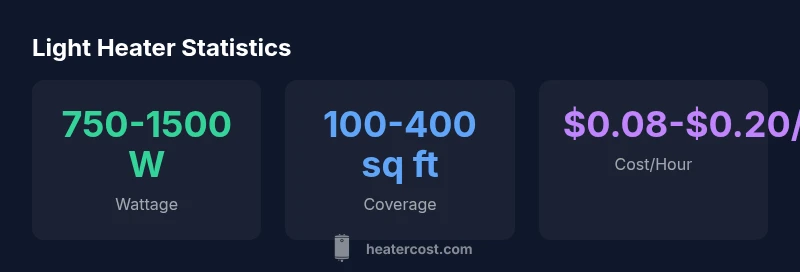
According to Heater Cost, light heater costs vary by wattage, space, and electricity rates. For typical portable electric heaters, expect 750–1500 watts and coverage of about 100–400 square feet. Running costs hinge on local electricity prices, which Heater Cost analysis shows can vary by region. When shopping, balance upfront price, operating costs, and built-in safety features.
What is a light heater?
There is no official HVAC category called 'light heater.' In consumer language, the term usually refers to small electric heaters or radiant panels designed for localized warmth. According to Heater Cost, these devices are typically used as a supplemental heat source in bedrooms, home offices, or chilly corners, rather than as a primary heating system. In practice, a light heater may be a compact fan-forced heater rated around 750–1500 watts, or a low-profile infrared panel that emits heat with minimal bulk. The key idea is that it provides quick, focused warmth without large footprint or installation complexity. The Heater Cost team found that shoppers often weigh three factors: how much heat is needed (room size and insulation), how much electricity they’re willing to use, and what safety features are built in. This article will demystify the category, compare typical models, and outline cost-conscious strategies for buying, operating, and maintaining a light heater.
How light heaters differ from traditional heaters
Light heaters are designed to deliver heat to a small, defined area rather than to heat an entire house. They typically run on 750–1500 watts, offering rapid heat-up but short runtime if the space is not insulated well. In contrast, central heating uses a single boiler and a network of ducts to distribute warmth, which can be less efficient for occasional use in unoccupied rooms. The efficiency of a light heater is highly dependent on room size, insulation, and the heater's ability to maintain a comfortable setpoint with minimal energy. For well-insulated spaces, a light heater can provide the bulk of needed warmth during the shoulder seasons, reducing the need to run the main system. The Heater Cost analysis notes that the cost-effectiveness hinges on keeping the heater in the right space and turning it off when the room is no longer occupied.
Key features to look for in a light heater
When shopping for a light heater, prioritize models with features that protect people and property while delivering dependable warmth. Look for:
- Adjustable thermostat and multiple heat settings to match room size and comfort
- Safety features such as tip-over switch and core overheating protection
- Auto shut-off timers for extended use without over-heating spaces
- Low noise operation for bedrooms or offices
- Energy-efficiency indicators (Energy Star where available)
- Convenient cord management and stable bases to prevent tipping
These features help balance comfort with energy costs, especially in small apartments or rooms that aren’t well insulated.
Cost considerations: buying, operating, and maintenance
Upfront costs for light heaters vary with feature set and build quality. Basic models can start around the lower end of the price spectrum, while feature-rich units with advanced controls or infrared panels can command higher prices. Broad estimates from Heater Cost Analysis (2026) place common price ranges in the low hundreds for mid-range units and lower tens to low hundreds for basic models. Operating costs depend on wattage, usage, and electricity rates. As a rough rule of thumb, running a 1000 W heater for several hours daily in a space with contemporary electricity prices will incur a modest daily cost, with higher costs in regions with expensive power. Regular maintenance—dust removal, cord inspection, and keeping vents clear—helps sustain efficiency and longevity. The goal is to balance upfront investment with expected running costs over the heater’s lifetime.
Installation and placement tips
Install a light heater in a safe, stable location away from flammable materials. Always keep at least 3 feet of clearance from curtains, furniture, and bedding. Use a grounded outlet and avoid extension cords for continuous operation. In small rooms, position the heater to maximize air flow and avoid direct exposure to occupants’ faces. If you’re renting, ensure the device does not require permanent mounting; most light heaters are designed for plug-in use. For bathrooms or damp spaces, only use models rated for those locations and follow the manufacturer’s guidelines for moisture exposure.
Safety guidelines and maintenance for light heaters
Safety should be the top priority when using any space heater. Key practices include:
- Always unplug before cleaning or moving the unit
- Regularly inspect cords for wear or damage
- Use the tip-over switch and keep the heater on a firm, non-slip surface
- Do not cover grills or obstruct air intake/outlet vents
- Keep pets and children away from the heater when in use
- Use a timer or auto-shutoff to avoid running it overnight
- Store in a dry location when not in use
With proper usage, light heaters can provide reliable warmth without a full-blown heating system.
Real-world scenarios: renters, homeowners, and spaces
- Renters in small apartments often rely on a light heater to supplement central heat during shoulder seasons. Choose compact models with built-in safety features and easy unplug-and-store convenience. Avoid permanent installations and ensure the unit does not block egress paths.
- Homeowners may use a light heater to supplement bedrooms or home offices, particularly in rooms that aren’t used year-round. Pair heat with good insulation and draft-proofing for best efficiency.
- In spaces like workshops or sunrooms, choose models with higher heat output or infrared panels designed for continual use in cooler seasons. Always plan placement to avoid heat exposure to flammable materials and to maintain safe distances from walls and furniture.
Verdict and recommendations
For most homes, a light heater serves as a cost-effective supplement when used with proper sizing and safety. The Heater Cost team recommends selecting models with a clear thermostat, reliable safety features, and certification where available. Always verify room size compatibility before buying, and pair the unit with good insulation to maximize comfort and minimize running costs. The Heater Cost approach emphasizes practical budgeting, thoughtful placement, and proactive maintenance to ensure every watt counts. Learn more about model comparisons, safety guidelines, and cost planning at Heater Cost.
Light heater performance ranges
| Aspect | Low range | High range |
|---|---|---|
| Wattage | 750 W | 1500 W |
| Coverage per unit | 100 sq ft | 400 sq ft |
| Operating cost per hour | $0.08 | $0.20 |
| Typical price range | $25 | $150 |
Got Questions?
What exactly qualifies as a 'light heater' in consumer terms?
There is no official HVAC category with that name. In practice, it usually refers to small electric heaters or radiant panels designed for localized warmth. They are typically used as a supplemental heat source rather than a primary system.
A light heater is just a small, portable heat source used for a quick warm-up in a single room.
Are light heaters safe to use in bedrooms?
Yes, when used correctly. Choose models with tip-over and overheat protection, avoid placing near bedding, and never leave them running unattended in bedrooms. Use in well-ventilated spaces and follow the manufacturer’s safety guidelines.
Yes, if you pick a heater with safety features and use it as directed.
Can a light heater replace central heating for a space?
A light heater is designed for supplemental warming of small spaces. It should not be relied on as a replacement for a well-functioning central heating system in larger areas or poorly insulated spaces.
It’s best as a supplement, not a full replacement for central heating.
How do I estimate running costs for a light heater?
Multiply the heater’s wattage by hours of use and multiply by your electricity rate. For example, a 1000 W unit used for 4 hours a day at $0.15 per kWh costs about $0.60 per day. Actual costs vary by rate and usage.
Calculate wattage times hours times your rate to estimate daily cost.
What maintenance does a light heater require?
Keep the grills and vents clean, inspect the cord for wear, and store the unit in a dry place when not in use. Routine maintenance is typically minimal but important for safety and performance.
Keep it clean and check the cord occasionally.
“A well-chosen light heater can complement a home's existing heating without a major upgrade, as long as you prioritize safety, efficiency, and appropriate sizing.”
The Essentials
- Choose wattage based on room size and insulation.
- Prioritize safety features (tip-over, overheat protection).
- Estimate running costs using local electricity rates.
- Place heaters with at least 3 feet clearance from combustibles.
- Opt for energy-efficient models to reduce bills.