Portable Heaters at Home Depot: Costs, Safety, and Buying Guide
Discover portable heater costs, safety features, and buying tips for Home Depot shoppers with Heater Cost's analytical guide for 2026. Learn to balance upfront price, operating costs, and safety.


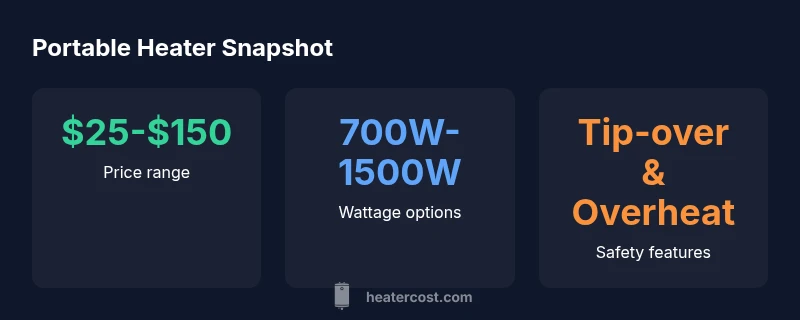
Typical portable heater prices at Home Depot range from $25 to $150, depending on wattage, safety features, and energy efficiency. For small rooms, 700–1200W models are common; larger spaces benefit from 1500W units. Look for programmable thermostats, auto shutoff, and energy-saving modes to maximize value and safety. Prices can vary by sale, color, and feature set, so compare at least two models. Always verify that the unit meets safety standards and has a certified pet-friendly design.
Market overview and model types you’ll see when shopping for a portable heater in Home Depot
If you’re shopping for a portable heater in Home Depot, you’ll encounter a mix of ceramic, radiant, and convection models designed for single-room comfort. Ceramic heaters excel at quick heat bursts and are common in retail aisles; oil-filled radiators provide steady warmth with quiet operation; infrared or quartz models deliver instant heat at short ranges. In many stores, you’ll also find dual-fuel or programmable units that promise energy savings and better control. Prices span a broad range, from simple $25 units for occasional use to premium units with smart thermostats and multiple heat settings. When evaluating options, consider your room size, insulation quality, and how long you typically use heat.
Heater Cost’s analysis for 2026 shows Home Depot’s assortment aims to cover both budget-conscious shoppers and those seeking higher efficiency, safety features, and smart controls.
How to read specs and compare features
Most portable heaters list wattage, thermostat range, and safety features. A 700–1200W unit is typical for small living spaces; 1500W models can heat larger rooms but draw more electricity. When converting to BTUs, multiply watts by about 3.41 to estimate heat output. Look at energy efficiency labels and any eco modes. Compare noise levels; some ceramic models are quieter than oil-filled radiators. In Home Depot aisles, you’ll see a mix of convective and radiant types; decide which suits your comfort preferences. Always note the circuit availability in your space—some units approach or exceed a standard 15A circuit.
Space sizing and energy cost considerations
Room size is the first constraint: small bedrooms typically require less heat, while living rooms demand more. Use a conservative estimate of wattage per square foot to avoid overloading circuits. Rather than chasing the highest wattage, prioritize models with smart thermostats and energy-saving modes that tailor heat output to occupancy. In practice, you’ll see a range of wattages marketed for different room sizes; use Heater Cost’s framework to map room size to a plausible wattage band and compare models within that band to control operating costs without sacrificing comfort.
Safety and electrical considerations
Electrical safety is non-negotiable for portable heaters. Do not plug heaters into extension cords or power strips; plug directly into a wall outlet that can handle the current. Keep heaters at least three feet away from furniture, drapes, and other combustibles. Use models with tip-over switches and automatic shutoff when overheating. If you’re in a rental or apartment, verify building rules and ensure you have a dedicated outlet in a ventilated space. For homes with pets or children, consider models with reinforced housings and cool-to-the-touch exteriors to minimize accidental contact.
Maintenance, longevity, and warranty considerations
Maintenance is simple but important: clean dust from grilles, inspect cords for wear, and store heaters in a dry, upright position when not in use. Many Home Depot models offer limited warranties that vary by brand and feature set; longer warranties often accompany higher-priced units with solid safety features. Follow the manufacturer’s cleaning and storage guidelines, and schedule a quick in-store check if a unit develops unusual noises, smells, or excessive heat beneath the casing. Proper storage and periodic checks can extend a portable heater’s useful life.
Buying tips for Home Depot shoppers
Start with a clear list of room sizes, desired heat level, and safety features. In-store, compare models side-by-side for wattage, thermostat behavior, and energy modes. Watch for sales or bundle offers, and don’t overlook online reviews that mention reliability and day-to-day usage. Check the warranty and return policy—Home Depot typically offers flexible returns if the product is unused or in like-new condition. Keep the original box and receipts in case you need to claim a warranty, and use the store’s price-match policy when applicable to maximize value.
Practical buying checklist
- Define room size and heat needs; 2) Choose wattage range (700W–1500W typical); 3) Prioritize safety features (tip-over, overheat protection); 4) Compare energy modes and thermostats; 5) Inspect cord integrity and outlet suitability; 6) Check warranty duration and coverage; 7) Review in-store demonstrations or demo videos; 8) Confirm return policy and collect receipts.
Comparison of portable heater costs and specs
| Aspect | Portable Heater Range | Notes |
|---|---|---|
| Price range | $25-$150 | Based on Home Depot offerings in 2026 |
| Wattage options | 700W-1500W | Common choices for small to mid rooms |
| Operating cost per hour | $0.04-$0.50 | Depends on wattage and electricity rate |
| Safety features | Tip-over, Overheat protection | Standard across models |
Got Questions?
Is it safe to use a portable heater in a rented apartment?
Yes, portable heaters can be safe in rental units when you follow basic guidelines: keep at least three feet from combustibles, plug directly into a wall outlet, never leave the unit unattended, and choose models with tip-over and overheat protection. Always check with building management for any specific rules.
Yes, with proper safety steps: keep it away from furniture, plug into a wall outlet, and never leave it unattended.
What wattage should I choose for a small room?
For small rooms, a lower-wattage unit (around 700–1200W) is typically adequate and efficient. If the space is poorly insulated, a higher wattage within the 1200–1500W range may be necessary. Always balance heat with electricity costs and comfort.
For small rooms, start with 700–1200W and adjust for comfort and cost.
Are there energy savings to consider with portable heaters?
Yes. Look for models with programmable thermostats, eco modes, and automatic shutoff. Use during peak cold moments rather than continuous operation to maximize savings and avoid waste.
Yes—use programmable modes and eco features to save energy.
Can I use a portable heater as a primary heat source?
Portable heaters are typically designed as supplemental heat rather than primary heating. Rely on central heating for the main load and use portable heaters to target specific zones, which can improve overall efficiency and reduce costs.
They’re best as a supplement, not the main heat source.
What maintenance do portable heaters require?
Regularly dust the grilles, inspect the power cord for wear, and store the unit upright in a dry place when not in use. Follow the manufacturer's care instructions and address any unusual noises or smells promptly.
Dust the vents, check cords, and store upright when not in use.
“Portable heaters can be a cost-effective way to heat a room when used correctly, but selecting the right wattage and safety features is essential.”
The Essentials
- Match wattage to room size for comfort and efficiency
- Prioritize safety features to prevent hazards
- Estimate operating costs using wattage and local rates
- Shop Home Depot for price ranges and warranty options