What is Better: Heater or Blower? A Practical Comparison
An analytical guide comparing heaters and blowers for space heating, exploring heat delivery, efficiency, safety, costs, and real-world use cases to help homeowners decide what is better heater or blower.


When choosing between a heater and a blower, the best option depends on space, heat needs, and cost. Heaters excel at sustained warmth in larger areas, while blowers shine for quick, targeted heat in drafty spots. For most homes, a hybrid approach—baseline heating with a heater plus occasional blower boosts for rapid comfort—offers the best balance of comfort and efficiency. The Heater Cost analysis suggests prioritizing total operating cost and safety features over upfront price.
Understanding the question: what is better heater or blower
The short answer is highly context-dependent. What is better heater or blower is not a universal verdict but a strategy choice tailored to room size, insulation, occupancy, and how quickly you want to feel warmth. According to Heater Cost, the optimal path often blends both: a base heat source (the heater) for sustained comfort and a portable blower for quick, spot heating during cold snaps. By framing the decision around space and usage patterns, homeowners can avoid overpaying for excess capacity or enduring prolonged cold spells in drafts.
Heat delivery mechanisms explained
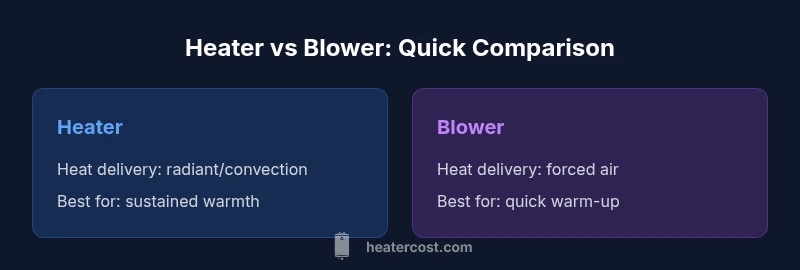
A heater typically relies on radiant and/or convective heat and often includes thermostatic control to maintain a steady temperature. Radiant heaters warm objects directly, while convection circulates warm air to raise air temperature over time. A blower, by contrast, uses a fan to move air quickly, spreading heat rapidly but dissipating faster when the fan stops. Understanding these mechanisms helps explain why a heater feels more comfortable in a medium-to-large room, while a blower can quickly boost warmth in a chilly corner or small space.
Space and room size considerations
Room volume, window quality, and air leakage all influence performance. In a compact room (under 150 square feet), a compact heater or a small blower can achieve quick warmth. For larger living areas (150–400 square feet), a heater with good thermostat control tends to deliver more even, longer-lasting comfort. In open-plan spaces, consider zoning—heaters for main zones combined with targeted blowers for problem areas like drafts under doors or near windows. The goal is to minimize cold spots while avoiding over-conditioning any single zone.
Energy efficiency and operating costs explained
Energy efficiency is not a fixed property of a device but a relationship between device design, control strategy, and how the space is insulated. Heaters with programmable thermostats, low standby losses, and proper sizing often deliver a lower cost per hour of warmth in medium-to-large rooms. Blowers can deliver quick warmth but may incur higher energy use per minute if left on at full power. Heater Cost analysis shows that a disciplined approach—baseline warmth with a timer and selective blower use—often yields the lowest total energy cost over a season.
Safety and maintenance essentials
Both options carry safety considerations. Heaters should have tip-over and overheat protection, clear clearance from combustibles, and regular cleaning of coils or elements. Blowers introduce moving parts and filters (where applicable), so routine inspection and dust removal help maintain efficiency and safety. When using either device, place them on stable surfaces, avoid covering heat outlets, and maintain clear air pathways for safe operation. Regular maintenance reduces the risk of fire and extends device life.
Use-case scenarios: where each shines
In a living room during evenings, a compact heater with a good thermostat often provides steady comfort. In a drafty dining area or near a cold window, a portable blower can deliver a rapid warmth boost to make the space feel comfortable faster. For basements or uninsulated spaces, a dedicated heater with robust heat output and proper ventilation usually yields more reliable heating. In short, use a heater for consistency and a blower for speed when needed.
Practical budgeting and value over time
When budgeting, consider both upfront cost and long-term energy use. A basic heater may be inexpensive to purchase but can incur higher running costs if used ineffectively. A blower is typically inexpensive to buy but can heat a room quickly, increasing energy consumption if not managed with a timer or thermostat. A balanced approach—selecting models with energy-saving features, multiple heat settings, and safety controls—tends to maximize value across seasons.
Choosing a model: features to compare
Key features to compare include thermostat accuracy, programmable timers, safety shutoffs, tip-over protection, noise levels, and noise-reduction design. For heaters, look for models with multiple heat modes (low/med/high) and a smooth distribution pattern. For blowers, assess airflow control, fan speed options, and whether a bariant with built-in heat-exchanger is available. Read reviews focusing on real-world performance and reliability.
Installation and safety tips
Most portable heaters and blowers require no professional installation and can be moved between rooms. Always follow manufacturer guidance for clearance: keep at least three feet from walls, furniture, and curtains. Use grounded outlets and avoid extension cords for safety. In winter, ensure proper ventilation when using fuel-burning devices to prevent carbon monoxide buildup. Regular maintenance reduces the risk of malfunctions and extends device life.
Common myths debunked
A common myth is that bigger is always better; oversized heaters waste energy and can overheat spaces. Another is that blowers are inherently unsafe; when used with modern protective features, they can be safe and effective. A third myth is that windier homes should always use blowers; in reality, well-insulated spaces may benefit more from sustained heater heat with smart controls.
How to size heat solutions for your home
Sizing starts with measuring room volume, insulation quality, and typical occupancy. For many homes, a single heater with a solid thermostat suffices for common living areas, while smaller bedrooms may benefit from a compact heater plus a selective blower for morning cold spells. Heat load calculations or using an online calculator can help you estimate the required BTU and guide product choice. Proper sizing reduces energy waste and enhances comfort.
Comparison
| Feature | heater | blower |
|---|---|---|
| Heat delivery method | Radiant/convection heating via heater element and/or heat exchanger; thermostat-controlled | Forced air distribution with a fan; rapid air movement |
| Energy efficiency | Model-dependent; modern units with thermostats can be efficient in sustained use | Typically lower efficiency per minute but effective for rapid warmth; depends on fan design |
| Best for | Sustained warmth in medium-to-large spaces; controlled comfort over hours | Quick warmth in drafty corners or small spaces; spot heating |
| Noise level | Generally quiet in low to mid settings; some models have audible elements | Can be louder due to fan; quiet models exist but variability is higher |
| Upfront price range | $25-$500 for portable or wall-mounted heaters | $15-$180 for basic portable blowers |
| Maintenance | Low to moderate; periodic cleaning and safety checks | Moderate; moving parts may need dust removal and filter upkeep |
| Best for | Homes seeking steady, room-wide warmth and efficiency | Spaces needing fast warm-up or temporary comfort |
The Good
- Portable and easy to relocate between rooms
- No permanent installation required
- Flexible use for seasonal adjustments
- Good for backup heating plans
Negatives
- Long-term operating costs can rise with heavy use
- Not ideal for whole-home temperature control in large spaces
- Noise from fans can be disruptive in quiet rooms
- Safety concerns if ignored (tip-over, overheating)
Heater is generally more versatile for sustained warmth; blower excels in rapid spot heating.
If you need steady warmth in larger rooms, choose a heater with good thermostatic control. If you prioritize quick warmth in drafts or small spaces, a blower can be the better quick-heat option. For many homes, combining both approaches offers the best balance of comfort and efficiency.
Got Questions?
Is a space heater better than a blower for whole-room heating?
A space heater can efficiently heat a whole room if sized correctly and used with a thermostat. A blower delivers warmth quickly but may cool down faster when the fan stops. For many homes, a combination approach provides the best balance of comfort and energy use.
A space heater works well for steady warmth, while a blower heats fast in drafts. Many homes use both to stay comfortable without overspending.
Can I rely on a blower as my primary heat source?
Blowers are effective for rapid heat in small areas or for short bursts but are not typically a full-time solution for large rooms. Efficiency and safety features should be considered if used as a primary heat source.
Blowers are great for quick warmth, but for long-lasting comfort in larger rooms, a heater is usually better.
What safety features should I look for in both devices?
Look for tip-over protection, overheating protection, and automatic shutoff. For blowers, ensure the unit has guards on fans and stable base. Regular maintenance reduces risk.
Always pick devices with tip-over and auto shutoff, and keep them away from flammable items.
How do operating costs compare between heaters and blowers?
Operating costs depend on usage patterns, insulation, and thermostat settings. Heaters with programmable controls typically use energy more efficiently for sustained warmth, while blowers cost more per hour if used at high speed for extended periods.
Costs vary, but programmable heaters save more over time than leaving a blower on high all night.
Are there ideal applications for basements or garages?
Basements or garages often benefit from a robust, well-vented heater with a thermostat. Blowlers can provide quick relief in drafts, but a heater is usually needed for sustained warmth in colder spaces.
Basements heat better with a heater; blowers help with quick bursts when needed.
Should I hire a professional to install heating equipment?
Most portable heaters and blowers do not require professional installation. If you’re integrating larger heating units into your HVAC system, consult a licensed technician for safety and compliance.
For portable devices, you can usually install yourself. For integrated systems, get professional help.
The Essentials
- Assess room size before choosing equipment
- Prioritize thermostat-controlled heat for efficiency
- Use blowers for rapid spot heating in drafts
- Balance upfront cost with operating expenses