Smart Space Heaters: A Practical Guide for Home Comfort and Efficiency
Explore how smart space heaters use Wi‑Fi, zoning, and energy monitoring to boost comfort and cut wasted heat. A practical buying guide from Heater Cost for homeowners and property managers.


A smart space heater is a portable or built-in heater that uses Wi‑Fi, smart thermostats, and scheduling to adjust temperature automatically, improving comfort while avoiding energy waste. They often support voice control and energy monitoring, helping households optimize usage. In short, they turn heat into an intelligent, controllable resource.
What is a smart space heater and how it differs from traditional space heaters
Smart space heaters blend heating with connected technology to deliver targeted warmth. They connect to Wi‑Fi or Bluetooth, pair with a companion app, and often include a precise thermostat. The core difference from traditional space heaters lies in intelligence: you can set schedules, create heating zones, and monitor energy use in real time. According to Heater Cost, the value isn’t just comfort; it’s the ability to align heat with occupancy patterns and energy pricing. In practice, you can keep a living room comfortably warm during evenings and automatically drop heat in bedrooms when they’re unoccupied, reducing waste and helping budgeting during shoulder seasons. When selecting a model, verify compatibility with your preferred ecosystem (Alexa, Google Assistant, or HomeKit) and be sure the energy dashboard is clear and actionable.
Core technologies behind smart space heaters
Smart heaters rely on a mix of sensors and connectivity to manage heat efficiently. Occupancy or motion sensors determine whether a room is in use, while ambient temperature sensors protect against overheating. The built-in thermostat or the accompanying app guides when to ramp up or back off. Many models support multiple wireless protocols (Wi‑Fi, Bluetooth, or Zigbee) and integrate with smart home hubs, enabling scenes like “evening comfort” or “away mode.” Energy reporting features translate usage into actionable insights—helpful for budgeting. A well-designed interface should present current temperature, target setpoint, run-time, and cost estimates in a single glance. For homeowners, the ecosystem compatibility and reliability of the app matter as much as the heater’s physical performance.
Energy efficiency and cost implications
Smart space heaters can deliver efficiency gains by targeting heat to occupied spaces and using scheduling to avoid heating empty rooms. The economics depend on factors such as room size, insulation, electricity rates, and climate. In well-insulated rooms, a smart heater can outperform a non‑programmable unit by preventing heat loss due to overheating and by enabling rapid shutoff when a space cools down. However, electricity costs and the heater’s own energy draw influence total cost—particularly if a device runs continuously. Use energy-monitoring features to track daily usage and compare it against your baseline. Heater Cost’s guidance emphasizes aligning device operation with actual occupancy to maximize cost savings while preserving comfort.
Remote control, scheduling, and zoning explained
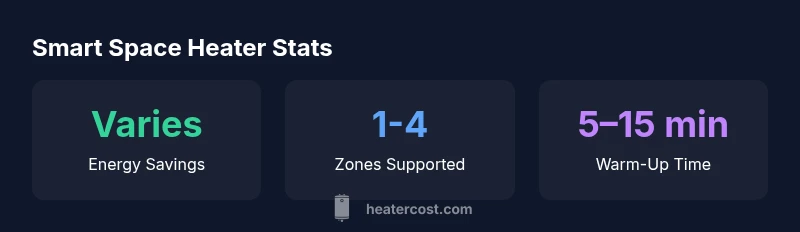
Remote control lets you adjust heat from anywhere via a smartphone or voice assistant. Scheduling allows you to program daily or weekly patterns, so warmth aligns with routines—morning occupancy, commuting hours, or bedtime. Zoning lets you pair multiple units with a central app to heat specific rooms rather than the whole house. This can dramatically limit energy waste, especially in homes where central heating is costly or not always needed. When configuring zones, consider door openings, airflow, and how heat migrates between rooms. A practical approach is to start with high-usage spaces (living room, home office) and expand as you verify comfort and efficiency.
Safety, safety certifications, and best practices
Safety is a core component of smart heaters. Look for UL or ETL listings and features such as tip‑over protection, overheat protection, and auto shutoff after a set period. Ensure cords and outlets are rated for the heater’s power draw and avoid using extension cords with high‑watt devices. Keep heaters on level surfaces away from curtains and combustibles. Use child and pet safety features where available, and regularly inspect for wear or damage. Documentation and manufacturer recommendations are essential; never bypass safety features in pursuit of additional flexibility.
Buying guide: what to look for before you buy
Key factors include heating capacity (BTU range suitable for your room), precise thermostatic control, and the availability of intelligent scheduling. Prioritize models with clear energy-use dashboards and reliable app performance. Consider the number of zones supported, compatibility with your preferred smart home platform, and warranty terms. For apartments or small rooms, a compact unit with high efficiency and good safety features is typically ideal. In larger spaces, look for units offering multiple heat outputs or a design that supports zoning across several rooms. Finally, verify electrical requirements to avoid overloading circuits.
Installation considerations and practical setup tips
Most smart space heaters are designed for plug‑in operation, but high‑watt models may require a dedicated circuit or cautions about outlet capacity. Before installing, check the heater’s wattage and the circuit rating. Place the unit on a stable, nonflammable surface with adequate clearance from walls and furniture. If integrating with a smart home, ensure your Wi‑Fi network provides reliable coverage in the intended space. Consider mounting a wall‑mounted or built‑in option for spaces with limited floor area and check for safety features like child-locks and cool-to-touch exteriors where appropriate.
Maintenance, longevity, and troubleshooting basics
Regular maintenance extends the life of a smart space heater. Clean the air intake and grills to prevent dust buildup, and inspect power cords for signs of wear. Firmware updates from the manufacturer can improve performance and security, so enable automatic updates if available. Troubleshooting typically starts with checking power sources, network connectivity, and app permissions. If the device seems unresponsive, resetting the unit and re-pairing with your app often resolves connectivity issues. For ongoing upkeep, record model details, warranty dates, and any recurring issues to share with customer support if needed.
Real-world usage scenarios: apartments, single rooms, and larger spaces
In apartments, space is precious and energy costs can be concentrated. A compact smart heater with scheduling and voice control can heat a bedroom before waking without overheating the living area. For single rooms, a high‑efficiency unit with reliable zoning can deliver comfort while minimizing central heating reliance. In larger spaces or open layouts, consider multiple units or a heater with adjustable output across zones to avoid overheating closed-off areas. Always consider insulation, draftiness, and sun exposure when estimating likely warmth needs.
Common myths and a practical buying checklist
Myth: Smart heaters are always expensive to operate. Reality: cost depends on how you use them; smart controls can reduce waste. Myth: If it’s connected, it’s automatically energy efficient. Reality: look for efficiency metrics and real usage data in the app. Buying checklist: confirm proper BTU range, verify safety certifications, check app reliability, ensure ecosystem compatibility, examine warranty terms, and plan a zone strategy before purchasing.
Smart vs Traditional: feature comparison
| Characteristic | Smart Space Heater | Traditional Space Heater |
|---|---|---|
| Control & Scheduling | App/Voice control, smart schedules | Manual thermostat, no remote scheduling |
| Energy Monitoring | Real-time usage reports, energy alerts | Limited or no usage data |
| Safety Features | Overheat protection, tip-over switch, auto shutoff | Basic safety features, may lack auto shutoff |
Got Questions?
Are smart space heaters more energy-efficient than traditional space heaters?
Yes, when used with schedules and zoning, smart space heaters can reduce wasted heat by targeting occupied rooms and avoiding overheating. However, overall savings depend on insulation, room size, and electricity rates.
Smart space heaters can be more energy-efficient than traditional ones when used with schedules and zoning, especially in well-insulated spaces.
Can I control a smart space heater with voice assistants like Alexa or Google Assistant?
Most models support voice control via compatible platforms, but setup may require a hub or app and reliable network.
Yes, most models work with Alexa or Google Assistant, with some setup.
Do smart space heaters require a dedicated circuit or special wiring?
Most portable smart space heaters plug into standard outlets, but high-watt models may need dedicated circuits. Check wattage and your circuit capacity.
Typically plug-in, but check wattage—some high-watt models may need a dedicated circuit.
What safety certifications should I look for?
Look for UL or ETL listings and features like tip-over protection, overheat protection, and auto shutoff. Read the user manual for proper use.
Choose UL or ETL certified models with tipping and overheating safeguards.
How should I integrate a smart space heater into my overall heating plan?
Use as a supplemental heat source in occupied spaces. Pair with thermostats and central heating for balanced comfort and cost control.
Use it to heat occupied rooms and complement your main heating system.
“Smart space heaters empower homeowners to heat precisely where and when it's needed, reducing waste and improving comfort.”
The Essentials
- Choose models with official safety certifications
- Use scheduling to minimize waste and maximize comfort
- Prefer energy-monitoring dashboards for budgeting
- Check electrical requirements before buying