Home Space Heater Guide for 2026
A data-driven guide for homeowners on home space heater costs, efficiency, safety, and best usage practices in 2026.


According to Heater Cost, space heaters can be a cost-effective way to warm small areas when used properly. A well-chosen home space heater paired with good insulation can reduce reliance on central heating in shoulder seasons while maintaining safety and efficiency. Compare models by wattage, safety features, and running costs to suit your room size and climate.
What is a home space heater and when should you consider one?
A home space heater is a portable device designed to heat a single room or a defined zone. They come in several technologies, including ceramic fans, infrared (quartz) heaters, and radiant panel heaters. The Heater Cost team notes that these devices can be cost-effective supplements to central heating, particularly in transitional seasons or in spaces without forced-air ducts. In rental units or small apartments, a well-chosen space heater can deliver warmth quickly without the burden of installing or upgrading a central system.
When evaluating options, start with your room size and insulation quality. A poorly insulated room loses heat quickly, negating the benefits of a high-wattage heater and driving up energy costs. Always check the product’s safety features—tip-over shutoffs, overheat protection, and certification labels—and ensure it has a stable base and an accessible cord. By selecting the appropriate wattage for the space (and avoiding oversized models), you can maintain comfortable temperatures without wasting energy.
How to compare models: key metrics and energy use
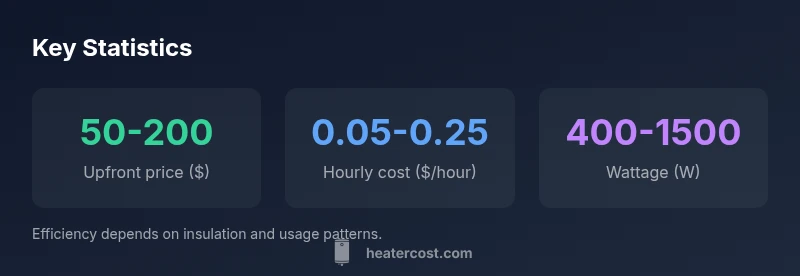
Space heater buyers should look at several metrics that directly affect cost and comfort. Wattage indicates the maximum heat output; most portable models operate in a range from about 400 to 1500 watts. Infrared and ceramic heaters have different heat delivery patterns—infrared warms objects and people directly, while ceramic units heat air and circulate it. Evaluate safety features first: tip-over protection, automatic shut-off after a period of inactivity, and certifications (UL, CE). Consider thermostat control, noise level, and mobility (casters, compact size).
A practical approach is to estimate running costs: watts divided by 1000 gives kilowatts; multiply by hours of use and by your local electricity rate to estimate per-hour and daily costs. Smart plugs or built-in thermostats can improve efficiency by preventing constant operation. Finally, ensure compatibility with your home’s layout and electrical panel capacity to avoid overloading circuits.
Cost considerations: upfront price and operating costs
Upfront prices for space heaters vary because of size, features, and build quality. Budget models can be affordable, while premium units offer faster heat, smarter controls, and more durable components. The cost to operate a space heater is tied to wattage and electricity prices; lower wattage models consume less energy, but you may need longer run times to achieve the same comfort. Insulation matters—well-sealed spaces require less heating, reducing both the number of watts needed and the total running time. When choosing, weigh upfront price against potential operating costs over the heater’s expected life. If possible, pick a model with an adjustable thermostat and energy-saving modes to maximize efficiency.
Safety guidelines and best placement
Place space heaters on a hard, level surface away from curtains, furniture, and bedding. Maintain at least three feet of clearance on all sides and avoid high-traffic areas where tripping or tipping is more likely. Never leave a space heater unattended, especially around children or pets, and unplug when not in use. Use a dedicated outlet and avoid running heaters through extension cords, which can overheat. If possible, pair a space heater with good insulation and a programmable thermostat for safer, more economical heating.
Practical use cases and room sizing guidelines
Infrared heaters are often best for open-plan spaces where people stand or sit in one zone, while ceramic fan heaters work well for compact rooms requiring quick warmth. For spaces under 200 square feet, a 1000-watt unit is commonly sufficient; larger rooms may require 1500 watts or more. Always width-match the heater to the room’s dimensions and exposure, and consider layering heat with the room’s existing central system. In mixed climates, use a space heater as a supplement rather than a replacement for central heating to avoid high energy costs.
Maintenance, durability, and longevity
Keep the heater’s intake and vents free of dust, and inspect the power cord regularly for wear. Clean with a dry cloth and avoid water exposure. Store in a dry, well-ventilated area when not in use. Replace damaged cords immediately and avoid using the device if a plug or outlet becomes hot to the touch. With proper care, most space heaters provide dependable heat for several seasons, especially when you select a model with durable components and a reputable safety certification.
When to avoid relying on space heaters and how to optimize safety
A space heater should not replace your primary heating system in cold climates or poorly insulated homes. If you notice damp windows, cold drafts, or consistently high energy bills, improve insulation or consider upgrading your main heating system. Always follow manufacturer guidelines and electrical codes, and have a licensed professional verify wiring capacity if you plan to run multiple heaters simultaneously. The safer approach is to use space heaters sparingly, in well-insulated spaces, and with proper safety precautions.
Common space heater types and specs
| Category | Details |
|---|---|
| Type | Infrared / Ceramic / Quartz / Panel |
| Typical Wattage | 400-1500 Watts |
| Safety Features | Tip-over switch, overheat protection, certification |
| Heat Delivery | Direct (infrared) vs. convective heat |
| Placement | Minimum 3 feet from combustibles; level surface |
Got Questions?
What are the most common types of home space heaters?
The most common types are infrared (quartz), ceramic convection, and radiant panel heaters. Infrared heats objects and people directly, ceramic models warm the surrounding air quickly, and radiant panels provide steady warmth with low noise.
Common types include infrared, ceramic convection, and radiant panels. Each has distinct heat patterns and noise levels.
Are space heaters cost-effective compared to central heating?
Space heaters can be cost-effective for heating small zones, especially during shoulder seasons or in spaces that don’t require full-house heating. They are less efficient for entire homes due to higher electricity use per square foot compared with centralized systems.
They're often cost-effective for small areas, but not ideal for heating an entire house.
What safety features should I look for?
Look for tip-over switches, overheat protection, automatic shut-off, a sturdy base, and certifications such as UL or CE. Avoid models with frayed cords or exposed heating elements.
Make safety features a must-have when shopping, especially tip-over protection and overheating protection.
How should I place a space heater for safety?
Place heaters on hard, flat surfaces away from curtains, furniture, and water. Maintain at least three feet of clearance on all sides and never leave running heaters unattended.
Keep it away from fabrics and kids; give it room to disperse heat.
Can space heaters heat an entire house?
Generally not. Space heaters are designed for one room or zone. For whole-home comfort, rely on your central system and use space heaters only as supplemental heat in well-insulated spaces.
Usually not enough to heat an entire house; use as a supplement.
Do I need permits or professional installation for a space heater?
Most portable space heaters don’t require permits, but follow local electrical codes and manufacturer guidelines. If you’re upgrading wiring or installing fixed heaters, consult a licensed electrician.
Portable heaters don’t usually need permits, but follow the rules and safety guidelines.
“Space heaters are most effective when used as targeted, supplementary heat sources with strong safety features and proper placement. Always prioritize insulation and controlled operation.”
The Essentials
- Assess room size and insulation before buying.
- Prioritize safety features and proper placement.
- Weigh upfront price against operating costs for true payback.
- Use space heaters as supplementary heat, not primary heating.
- The Heater Cost team recommends model variety and thermostat control for efficiency.