Space Heater Smart: Costs, Efficiency and Practical Guides
Explore space heater smart options, compare costs and efficiency, and learn how to choose, install, and maintain smart space heaters for safer heating and energy savings across budgets.


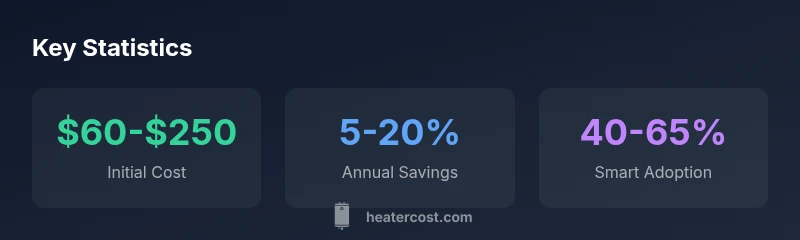
Space heater smart devices combine heating with Wi‑Fi connectivity, mobile apps, and voice assistant control. They let you schedule, monitor, and customize heat patterns for comfort and efficiency, often reducing idle energy use. Typical price ranges from about $60 to $250 depending on features like sensors, thermostats, and safety certifications. When used with proper sizing and routines, they can improve comfort and cut costs over time.
What space heater smart is and how it works
Space heater smart refers to compact heaters with built-in Wi‑Fi or Bluetooth, app control, and often compatibility with voice assistants. They do not change the heater's heat output concept, but add sensing for occupancy, temperature, and eco modes. The Heater Cost team found that the core value is reliability and programmability: you can set schedules, enable automatic shutoff, and monitor energy use from your phone. Most units rely on a small firmware that can be updated; choose models with robust security and secure connections; ensure the device supports common ecosystems (Alexa, Google, or Apple HomeKit). For homeowners, the benefit is not just convenience but the potential for consistent comfort while avoiding overheating or silent energy waste. The typical user scenario involves a poorly insulated room, a quick heat boost in the morning, or spot heating in a home office. When you choose space heater smart devices, consider the space, insulation, and whether you want remote control versus autonomous routines. The Heater Cost analysis, 2026, emphasizes that cost-to-benefit depends heavily on how you deploy these devices within a heating plan.
Energy savings in practice: how smart controls help
Smart controls are designed to respond to real-time conditions: occupancy, target temperatures, and adaptive scheduling. If a room is empty, a smart space heater can pause or reduce heat output, while a pre-set timer warms a room just before you arrive. The combination of a temperature sensor, timer, and eco mode can translate into meaningful energy reductions, especially in intermittent-use spaces such as home offices or guest rooms. Real-world performance depends on insulation quality, drafts, and window placement. Users who create routine heat windows—preheating a room for 15–30 minutes before use—tend to see the most noticeable gains. For kitchens, living rooms, and bedrooms, pairing a smart space heater with a larger central system can smooth fluctuations without leaving rooms chilly.
Must-have features and safety considerations
When evaluating models, prioritize the following features: (1) precise temperature control with a responsive thermostat, (2) reliable occupancy sensors or timers, (3) app-based energy reporting and usage history, (4) compatibility with major ecosystems (Alexa, Google, HomeKit), (5) safety certifications (UL, ETL) and (6) automatic shutoff/overheat protection. A sturdy build with a stable base and tip-over switch is crucial for households with children or pets. Some models offer child lock, noise level data, and filter maintenance reminders. Remember that even with smart features, the heater should be used as a supplementary heat source, not a primary heater for whole-home warming. Always follow manufacturer instructions for safe operation and avoid covering vents or obstructing airflow.
Plug-in vs hardwired: installation considerations
Most space heater smart models are designed for standard 120V outlets and plug-and-play use. Hardwired units exist but are rarer in consumer models and require electrical work and permits in some jurisdictions. If you rent, plug-in devices are typically the safer choice since they don’t alter electrical wiring or violate lease terms. For larger spaces or frequent use, consider dedicated circuits if a unit is intended to run for extended periods. Always avoid daisy-chaining heaters or using extension cords, which can become a fire hazard. If you’re unsure about wiring, consult a licensed electrician and verify that your circuit can handle the added continuous load without tripping breakers.
Sizing, placement, and heat distribution
Correct sizing is essential to avoid under-heating or overheating a room. Use conservative estimates of BTU requirements based on room size, insulation, window area, and climate. Place heaters on a flat, stable surface with at least a few inches of clearance on all sides for airflow. Avoid corners and areas where drafts funnel cold air directly into the unit. For open-plan spaces, use one unit in a smaller sub-room rather than trying to heat a large area with a single device. In well-insulated rooms, smaller heaters with smart controls can deliver comfortable warmth while minimizing energy waste. Regularly inspect seals and weatherstripping on windows and doors, since drafts often negate the benefits of a space heater.
Costs, ROI, and maintenance planning
Beyond the sticker price, consider ongoing energy costs, app subscriptions (if any), and maintenance. A typical smart space heater requires little ongoing maintenance beyond occasional dusting and filter cleaning if applicable. ROI improves when the unit is used to supplement a central system during shoulder seasons or in rooms with sporadic usage. When calculating ROI, factor in the cost of potential energy savings, the device’s lifespan, and any rebates or incentives from utilities or local programs. Keep a maintenance log and set calendar reminders for annual checks of safety features, plug cleanliness, and firmware updates. The Heater Cost team notes that prudent sizing and disciplined usage considerably influence long-term value.
Smart home integration: ecosystems and automation
The convenience of space heater smart devices multiplies when integrated with a broader smart home setup. Look for compatibility with your preferred ecosystem (Google, Alexa, HomeKit) and features like routines or scenarios that trigger heat based on time, location, or other devices (e.g., turning on a heater when you unlock the door or when a motion sensor detects occupancy). Some models offer IFTTT compatibility for more complex automations. If you already have a smart thermostat, ensure the heater can work in concert with it so you don’t double-heat or create conflicts in scheduling. In practice, a well-tuned setup uses smart heating to maintain comfort while reducing energy waste.
Safety, maintenance, and best practices
Safety remains paramount with any space heater, smart or not. Regularly inspect cords and plugs for wear, never run a heater unattended for long periods, and keep it away from fabrics or combustibles. Use the auto shutoff and tip-over features as defaults, and consider a dedicated outlet on a protected circuit for extended use. Clean the heater’s air intake or vents to prevent overheating. Firmware updates should be installed to keep security features current. If you notice unusual smells, sounds, or performance changes, power down the unit and seek service. Practicing good safety habits reduces risk and ensures the device serves as a reliable comfort tool.
Comparison of plug-in vs smart space heaters
| Feature | Plug-in Space Heater | Smart Space Heater | Notes |
|---|---|---|---|
| Control method | Manual knob/switch | App and voice control | Intuitive interfaces improve usage decisions |
| Heat distribution | Convection/radiant | Convection with sensors | Smart sensing helps balance warmth |
| Energy reporting | Limited or none | App-based reporting | Useful for ROI calculations |
| Safety features | Basic protections | Auto shutoff, overheat, tip-over | Higher safety with smart integration |
Got Questions?
What is a space heater smart?
A space heater smart is a compact heater with built-in connectivity, enabling app and voice control, scheduling, and energy monitoring. It augments traditional warmth with automation and remote management.
A smart space heater is a small heater you control from an app or voice assistant, letting you schedule heat and monitor energy use.
Are smart space heaters energy efficient?
They can be more energy-efficient than traditional heaters when used to heat only occupied spaces with proper sizing and scheduling. Efficiency gains depend on usage patterns and insulation.
Yes, when used in the right space with smart schedules, they save energy compared to keeping a whole-house heater running.
Can I use a space heater smart with a thermostat?
Many models integrate with standard thermostats or smart home routines. If you already have a thermostat, verify compatibility to avoid conflicting heating signals.
Check that your thermostat and the heater can coordinate schedules so they don’t heat at the same time.
Do smart space heaters require special installation?
Most plug-in models require no specialized installation. Hardwired units exist but are uncommon for consumer spaces and may require permits or professional help.
Most plug-in models are easy to set up; hardwired options are rare and may need an electrician.
What safety features should I look for?
Look for tip-over switches, automatic shutoff, overheat protection, and certification marks. Safety features are crucial for homes with children or pets.
Choose models with auto shutoff and tip-over protection for safer use.
What is the typical cost range for space heater smart devices?
Prices generally range from budget models to premium designs. Expect a broad spread that reflects features like sensors, app reporting, and ecosystem compatibility.
Prices vary widely; plan for a broad range depending on features.
“Smart space heaters are most effective when used as targeted heating tools within a well-insulated space and a coherent heating plan. They offer practical comfort while enabling measurable energy savings.”
The Essentials
- Assess room needs before buying a smart space heater
- Prioritize safety features and ecosystem compatibility
- Leverage schedules to maximize energy savings
- Factor in total cost of ownership, not just sticker price
- Heater Cost's verdict: smart space heaters suit targeted heating in insulated spaces