Shop Heater Propane: Costs, Installation & Maintenance
Explore propane heater shopping basics, costs, installation steps, and maintenance ideas. Heater Cost guides homeowners in 2026 to compare models, estimate long-term expenses, and shop smart for propane-powered heat.


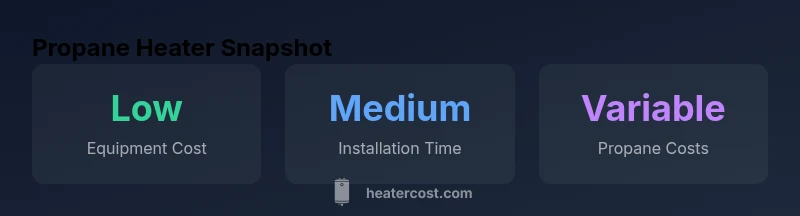
Upfront costs for a propane heater cover the unit price and professional installation, with ongoing fuel costs varying by utilization and propane prices. Key cost drivers include sizing, venting, permits, and potential electrical work for controls. Regional prices and seasonal demand can influence the total. This quick answer helps homeowners plan by outlining typical expenses and major variables to compare when shopping.
Why propane remains a practical choice for many homes
Propane continues to be a reliable energy source for homes, cabins, and spaces that lack convenient access to natural gas or steady electricity. When you shop heater propane, you gain the flexibility to heat without relying on a fixed gas line, and you can maintain comfort during power outages when linked to a dependable storage supply. Propane heaters also offer quick heat response and reliable operation in a wide range of climates. In 2026, homeowners commonly compare propane systems to electric or natural gas options to balance upfront costs with long-term fuel efficiency and safety considerations. The Heater Cost team reminds readers to think beyond sticker price: sizing, venting requirements, space constraints, and service availability in your area all influence value. A well-chosen propane heater delivers steady warmth with predictable operating costs aligned to your budget.
Key factors when shopping for a propane heater
When evaluating options, focus on sizing, efficiency, venting, and installation needs. Start with the heating load of the space to determine the BTU range that fits your room without overheating or underheating. Look for high-efficiency models with sealed combustion for safer operation and better fuel usage. Decide between vented and vent-free configurations based on room size and ventilation. Consider installation constraints, such as clearance and ductwork, and verify warranty terms and the availability of local service technicians. Finally, assess how the unit will integrate with existing thermostats or smart controls for precise temperature management and energy savings.
Sizing and heating load: getting these right
Correct sizing is essential for comfort and efficiency. A unit that is too large will cycle on and off, wasting fuel and causing uneven temperatures, while an undersized heater will struggle to maintain warmth during cold snaps. Professionals often use standard load calculations or simplified guidelines to identify an appropriate range of input when you shop heater propane. Pay attention to the heater’s rated output, efficiency, and the climate of your location. A properly sized propane heater will respond quickly to changes in demand, maintain consistent comfort, and minimize wear on components over time.
Installation basics and permitting considerations
Proper installation is critical for safe operation and optimal performance. Most installations require a licensed professional to handle gas connections, venting, and dual fuel controls. Local codes may mandate permits for gas lines and venting configurations, so check with your city or county early in the planning process. A qualified installer should verify proper venting, clearances, and smoke/CO detector placement. Discuss all electrical work, potential upgrades to your home’s service panel, and any required venting routes before committing to a propane heater purchase.
Operating costs and propane price fluctuations
Propane prices can fluctuate based on season, supply, and regional market conditions. Operating costs depend on how often you use the heater and the efficiency of the unit. Compare model efficiency, insulation levels, and thermostat integration to minimize fuel use. Seasonal demand and delivery logistics can affect propane availability and price, so consider budgeting for price volatility. By evaluating different models and maintenance plans, you can estimate a realistic annual range for fuel costs and better forecast long-term expenses.
Safety considerations and CO detectors
Safety is paramount when using propane heaters. Ensure proper ventilation, avoid obstructing exhaust outlets, and install CO detectors in nearby living areas. Regularly inspect for gas leaks, check connections, and verify that venting paths remain clear. Follow manufacturer guidelines for startup and shutdown, and never modify fuel lines or seals. Keeping a safety plan and working det Winners CO alarms can significantly reduce risk and give you peace of mind throughout the heater’s life.
Maintenance and lifespan: keeping performance high
Routine maintenance extends the life of propane heaters. Schedule annual professional inspections to test safety devices, clean burners, and verify venting integrity. Periodic cosmetic checks and timely replacement of worn components help prevent unexpected breakdowns. Keeping the area around the heater clean and free of obstructions also improves efficiency and reliability. With diligent care, a propane heater can provide dependable warmth for many winters.
Buying guide: model comparison and getting the best deal
Create a side-by-side checklist for the units you’re considering: efficiency, input range, venting type, warranty coverage, service network, and installation requirements. Request estimates that itemize equipment, labor, permits, and any needed electrical upgrades. Look for models with sealed combustion, reliable safety features, and positive reviews from homeowners. Always verify local rebates or tax incentives that may apply to propane heating equipment and installation.
Propane heater type comparison
| Propane Heater Type | Typical Efficiency | Install Time | Notes |
|---|---|---|---|
| Compact vent-free | Moderate | Short | Good for small spaces; ventilation is essential |
| Wall-mounted radiant | High | Medium | Efficient heat; ensure proper clearance and mounting |
Got Questions?
What costs are included when shopping for a propane heater?
Costs typically include the unit price, installation, venting components, permits, and any required electrical work for controls. Accessories or upgrades may add to the total. Always request a detailed, itemized quote.
Expect to budget for the heater, installation, venting, and permits.
Do I need permits for propane heater installation?
Local codes may require permits for gas connections and venting. Check with your municipal authority and hire a licensed professional to ensure compliance and safety.
Most areas require a permit for gas heater work.
How often should propane heater maintenance be performed?
Schedule an annual professional inspection to test safety devices, check vents, and optimize burner performance. Routine checks by a pro help prevent costly surprises.
Have a yearly professional check.
How do propane heaters compare with natural gas or electric heat?
Propane offers flexibility where gas lines aren’t available and can operate during power outages, but fuel costs and delivery depend on market prices and local supply.
It depends on fuel availability and costs.
What features indicate higher efficiency in propane heaters?
Look for high efficiency ratings, sealed combustion, and proper certifications. A model with good insulation and an efficient burner will reduce fuel usage and heat loss.
Seek high efficiency and proper certification.
“Propane heaters deliver flexible warmth, but their true value comes from correct sizing, professional installation, and diligent safety practices.”
The Essentials
- Assess space and size before buying.
- Compare upfront costs with long-term fuel use.
- Plan for permits and ventilation requirements.
- Choose high-efficiency, sealed-combustion models when possible.
- Budget for maintenance and professional installation.