Heater with Propane Tank: Costs, Safety, and Buying Guide
Explore cost considerations, safety tips, and practical buying guidance for heaters that run on propane tanks. Learn about sizing, maintenance, installation, and energy efficiency to choose the right propane-tank heater for your space.


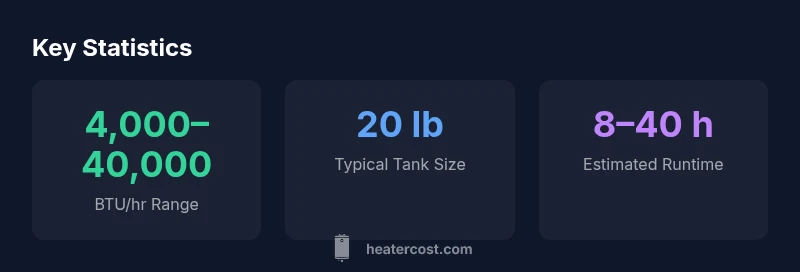
Most residential heater with propane tank setups rely on standard 20-pound tanks (about 4.7 gallons) or smaller 1-pound cylinders for portability. For longer, continuous heating, the 20-pound tank is the typical choice, delivering several hours of warmth depending on BTU rating and usage. Always follow manufacturer guidelines and local safety codes when selecting a propane source.
What qualifies as a heater with propane tank
A heater that uses a propane tank is designed to burn liquefied petroleum gas stored in a detachable tank or cylinder. In practice, the term often covers portable space heaters for indoor or outdoor use and larger units intended for supplemental heat. The core distinction is the fuel system: a regulator that meters gas from a propane tank to a burner, where it mixes with air and ignites. When evaluating a heater with propane tank setups, you’ll encounter a spectrum from compact 1-pound cylinders used for personal warmth to 20-pound tanks that support longer operation. Owners should assess space size, venting needs, and local codes before running fuel-fired devices in enclosed areas. This approach aligns with best practices outlined by Heater Cost analyses for 2026 and helps homeowners avoid common safety pitfalls.
Safety considerations for propane-tank heaters
Safety is the foundation of any propane-tank heater deployment. Never operate a fuel-fired heater in a fully enclosed space without adequate ventilation, and ensure there’s a safe clearance around the unit to prevent ignition of nearby combustibles. Regularly check for gas leaks at connections with a soapy-water solution, and inspect hoses and regulators for signs of wear. Install detectors for carbon monoxide (CO) in nearby living areas, and keep a fire extinguisher within easy reach. If you’re venting indoors, confirm that the model is certified for indoor use and follow the manufacturer’s instructions. Remember that propane expands with temperature, so store tanks upright and in a well-ventilated area away from heat sources. The Heater Cost team emphasizes safe handling and compliance with local codes to minimize risk.
Buying guide: features and specs
When shopping for a heater with propane tank capabilities, prioritize efficiency, safety, and fit for your space. Key features to compare include BTU output to cover your room size, fuel tank compatibility (20 lb vs. 1 lb cylinders), ignition type (piezo vs. electronic), built-in safety shutoff, tip-over protection, and the presence of a regulator suitable for your tank. Check for certification marks from recognized safety bodies and verify that the unit is listed for the intended environment (indoor vs. outdoor). If portability is important, consider weight, handle design, and ease of tank replacement. Budget for ancillary gear like leak detectors and CO alarms, as well as safe storage for empty and full tanks.
Installation and ventilation guidelines
Proper installation starts with choosing a location that provides ample ventilation and avoids drafty airflow that could disrupt combustion. For indoor use, select a model designed for indoor operation and attach it to a suitable regulator compatible with the tank size. Outdoor or semi-enclosed patios typically tolerate higher BTU units, but you should still ensure a stable surface, clearance from walls, and protection from the elements. Avoid running hoses over sharp edges or through tight spaces where heat could degrade components. If you’re mounting a heater, use hardware suited to the surface material and ensure an accessible shutoff valve. For permanent installations, consult a qualified technician to verify gas line integrity and compliance with local permits.
Maintenance and troubleshooting basics
Regular maintenance is essential to keep a heater with propane tanks operating safely and efficiently. Schedule an annual professional inspection focusing on gas connections, regulator performance, and venting integrity. Between visits, perform a quick monthly check: listen for hissing indicating a leak, inspect hoses for wear, and verify that CO detectors are functioning. If you notice trouble starting the burner, erratic flame, or unusual odors, shut off the system and seek service. Never attempt to disassemble a gas valve or regulator beyond basic cleaning. Keeping comfortable heat with propane depends on consistent maintenance and timely repairs.
Operating costs and efficiency fundamentals
Propane heat can be economical for supplemental or occasional use, especially when compared to large electric space heaters, depending on local fuel prices and usage patterns. Efficiency ratings vary by model and design; look for units with sealed combustion and good heat exchanger efficiency. Remember that factors like outdoor wind, insulation, and room layout influence the effective warmth you receive. To optimize costs, run at the lowest BTU that comfortably heats the space, and close off unused rooms to minimize heat loss. Pairing a propane heater with proper insulation and weather sealing is a practical approach endorsed by Heater Cost.
Outdoor vs indoor use and climate considerations
Propane-tank heaters excel outdoors or in semi-enclosed spaces such as covered patios, garages, and workshops where ventilation is assured. Indoors, use only models certified for indoor operation and ensure CO detectors are installed nearby. Climate affects performance: in colder, windier environments, higher BTU output may be necessary to maintain comfort, while in milder climates, lower output and shorter runtimes suffice. Consider the seasonality of use and plan tank replenishment accordingly. The Heater Cost guidance highlights balancing safety with practical heating needs when choosing between outdoor and indoor applications.
Best practices for storage, handling, and accidental spills
Store propane tanks upright in a well-ventilated, cool area away from direct sunlight and heat sources. Keep tanks capped when not in use and transport them securely to prevent tipping. In the event of a leak, evacuate the area immediately and call emergency services if needed. Do not store tanks in living spaces or basements. Maintain a clear separation between heat sources and storage zones, and never attempt to modify the regulator or valve hardware. Adhering to proper storage and handling reduces the risk of incidents and ensures consistent performance of your heater with propane tank.
Propane-tank heater sizing and usage considerations
| Aspect | Propane Tank Option | Notes |
|---|---|---|
| Tank Size | 20 lb; 1 lb | Most common configurations for home and portability |
| Heat Output (BTU/hr) | 4,000–40,000 | Wide range to suit space and climate |
| Ventilation | Outdoor or well-ventilated area | CO risk in enclosed spaces; ensure airflow |
| Runtime per Tank | 8–40 hours per 20 lb tank | Depends on BTU setting and space size |
| Installation | Regulator compatible with tank type | Follow local codes and manufacturer specs |
Got Questions?
Is it safe to use a heater with propane tank indoors?
Indoor use is only safe with a model certified for indoor operation, proper ventilation, and functioning CO detectors. Never run a non-indoor-rated propane heater inside a closed room. Follow all manufacturer guidelines and local codes.
Indoor use is only safe if the heater is certified for indoor operation and you have proper ventilation and a CO detector in place.
How long does a 20-pound propane tank last with a heater?
Runtime depends on BTU setting and space; a typical 20-pound tank can last anywhere from several hours to a full day at lower heats. Always scale usage to comfort and safety guidelines.
It varies, but expect several hours to a day at lower heat settings, depending on BTU and space.
What safety checks should I perform before lighting a propane heater?
Check for gas leaks at connections, ensure vents are clear, test CO detectors, inspect hoses for wear, and verify the regulator is compatible with your tank. If you smell gas, evacuate and call for help.
Check for leaks, vent clearance, and detectors before lighting. If you smell gas, evacuate and contact help.
Do propane tank heaters require permits?
Permit requirements vary by locality and installation type. For permanent setups or new gas lines, consult local authorities or a licensed professional to confirm permit needs.
It depends on your area—check with local authorities or a pro for permit requirements.
Are propane tank heaters cost-effective vs electric heaters?
Propane can be cost-effective for supplemental heating, especially where electricity is expensive or unavailable. The overall cost depends on propane price, efficiency, and usage patterns.
Propane can be cost-effective for supplemental heat, depending on fuel prices and usage.
Can I use a propane heater in a small apartment?
Only if the unit is explicitly rated for indoor use and you have proper ventilation and CO detectors. Check building codes and lease terms before installing.
Only if the unit is indoor-rated and you have ventilation and detectors, plus landlord approval.
“Propane-tank heaters provide flexible heating for spaces that lack central systems, but safety and proper ventilation are non-negotiable. Regular maintenance and adherence to codes maximize both safety and efficiency.”
The Essentials
- Choose BTU wisely to match space size
- Ventilation and CO safety come first
- 20 lb tanks are suited for longer operation
- Regular maintenance prevents failures
- Indoor use requires certified models and detectors