Wall Mount Propane Heater: Costs, Installation & Safety
Learn costs, installation steps, and safety tips for wall mount propane heaters. A practical guide for homeowners, renters, and property managers by Heater Cost. Trusted guidance.


Wall mount propane heaters can deliver efficient warmth in compact spaces, but they require careful placement, venting, and CO safety measures. This guide from Heater Cost covers typical costs, installation steps, safety considerations, and maintenance needs so homeowners, renters, and property managers can plan confidently and avoid common mistakes.
Placement strategy for wall mount propane heaters
Propane wall mount heaters are designed to save floor space, but their effectiveness and safety depend on prudent placement. The Heater Cost team emphasizes choosing a location with unobstructed airflow, a clear path for heat, and easy access to supply lines and a shut-off valve. In practice, mount the unit high enough to promote heat distribution without direct contact with furniture or drapes. Always consult the manufacturer’s installation manual and local codes before mounting. If you live in a multi-room dwelling or an open-plan space, evaluate how heat will spread and whether a single unit can meet comfort needs or if several smaller units are a better approach. The goal is even warmth without creating hot pockets or drafty corners.
- Favor locations with solid walls and existing ventilation paths. - Avoid alcoves or corners where warm air can become trapped. - Plan for service access and future filter or vent cleaning access. A well-chosen spot reduces noise, heat fluctuations, and the likelihood of accidental contact. The Heater Cost team notes that proper placement can dramatically improve comfort while mitigating safety risks.
Safety, venting, and CO considerations
Safety is non-negotiable with propane heaters. Indoor use generally requires proper venting or direct-vent configurations to the outdoors. If your unit is designed for enclosed spaces, verify that the venting routes are clear and unobstructed. A dedicated carbon monoxide detector near the heater and in sleeping areas is essential, and detectors should be tested regularly. Maintain clearances from walls, curtains, and combustibles, and ensure the room has adequate fresh air exchange to avoid oxygen depletion. For households with children or pets, install guards or barriers as an extra precaution. The Heater Cost analysis emphasizes that always using a qualified installer for gas connections helps prevent leaks and ensures venting meets safety standards.
- Use CO detectors in key locations and test them monthly. - Keep combustibles well away from the heater and ensure clearances per manual. - Schedule periodic professional inspections to verify gas connections and vent integrity.
Sizing, climate, and heat distribution considerations
Sizing a propane wall mount heater is about matching output to space and climate rather than chasing maximum BTUs. In hotter climates or small rooms, a lower-output model may suffice, while larger spaces or colder seasons require more robust units or supplementary heating. Consider ceiling height, room layout, and whether heat will be distributed evenly or concentrated in a single zone. If heat loss is a concern due to large windows or poor insulation, you may need higher output or additional units to maintain comfort. The goal is steady, comfortable warmth with minimal running time, which improves efficiency and reduces fuel use. The Heater Cost team recommends evaluating insulation quality and air leakage before deciding on a specific model, as better envelopes reduce required output and operating costs.
- Prefer adjustable or multi-Stage units to tailor output. - Consider supplemental convection sources for very large rooms. - In poorly insulated spaces, prioritize models with safer shut-off features when airflow falters.
Installation steps and permit considerations
Installing a propane wall mount heater typically involves several critical steps and regulatory checks. Start by selecting a mounting location and confirming venting requirements. A professional should handle gas line connections, valve installation, and leak testing to ensure code compliance and safety. After mounting, attach any required venting enclosures, run lines to a sealed supply, and perform a thorough safety check. Permits may be required, depending on local regulations and whether any ventilation work is involved. Always document the installation with photos and invoices for future inspections. Heater Cost recommends budgeting for permitting and inspection costs upfront to avoid installation delays and compliance issues.
- Engage a licensed gas professional for connections and inspections. - Maintain a clear record of permits, inspections, and warranty receipts. - Check local building codes for venting requirements and clearance rules.
Operating costs, efficiency, and fuel considerations
Propane efficiency can vary widely among models depending on design and venting. In practice, you’ll see differences in heat output, fuel consumption, and venting needs that affect long-term costs. Fuel price volatility adds another layer of uncertainty, so anticipate fluctuations in propane costs year to year. When evaluating an option, compare not only the upfront price but also maintenance requirements, warranty coverage, and availability of replacement parts. A well-chosen unit paired with proper ventilation and a well-insulated space can deliver reliable comfort while keeping operating costs manageable. The Heater Cost team notes that long-term savings come from installation quality, appropriate sizing, and conservative heating practices.
- Look for models with robust safety features, warranties, and easy service access. - Consider seasonal usage patterns to estimate annual fuel consumption. - Use a professional to estimate long-term operating costs rather than relying solely on sticker prices.
Maintenance, safety checks, and long-term reliability
Routine maintenance is key to safe and reliable operation. Inspect venting paths for blockages, clean any dust from ignition components, and replace worn seals as recommended by manufacturers. Test CO detectors regularly and replace batteries per device guidelines. Scheduling an annual professional inspection helps identify potential issues before they become expensive problems. Keeping a maintenance log—recording filter changes, vent cleanings, and component replacements—facilitates dependable performance and preserves the heater’s warranty coverage. The Heater Cost team emphasizes proactive maintenance as the cornerstone of safety and longevity.
- Schedule annual professional service for gas connections and vent integrity. - Clean vent dampers and air intakes to maintain efficient heat transfer. - Replace detectors and batteries on a routine cycle to ensure early warnings.
Choosing models and feature considerations
When comparing models, weigh safety features, venting options, ease of installation, and warranty terms. Vented units typically require external exhaust, while vent-free designs rely on room ventilation. Thermostatic control improves comfort and reduces fuel waste, and auto shut-off features can prevent overheating in enclosed spaces. Look for modern units that offer clear user interfaces, remote control compatibility, and clear installation guidance. Reliability hinges on reputable brands, consistent part availability, and solid customer support. The Heater Cost team highlights the importance of selecting a model with a proven service network and a comprehensive warranty to reduce long-term risk.
- Prioritize safety shutdown and oxygen depletion sensors where available. - Favor units with clearly documented installation instructions and service support. - Check warranty length and conditions before purchasing.
Practical tips to maximize safety and comfort
Finally, practical steps can enhance safety and comfort without overcomplicating setup. Maintain good room ventilation, keep combustibles away, and use a high-quality CO detector near the heater. When in doubt, lean on professional guidance for sizing and venting decisions. Consider how heat will circulate through the space and whether furniture arrangement may impede airflow. Regularly review your insulation levels and seal any obvious air leaks to improve overall efficiency. With thoughtful placement, proper venting, and routine maintenance, a wall mount propane heater can deliver reliable warmth while keeping safety top of mind.
Wall mount propane heater installation and cost overview
| Aspect | Typical Range | Notes |
|---|---|---|
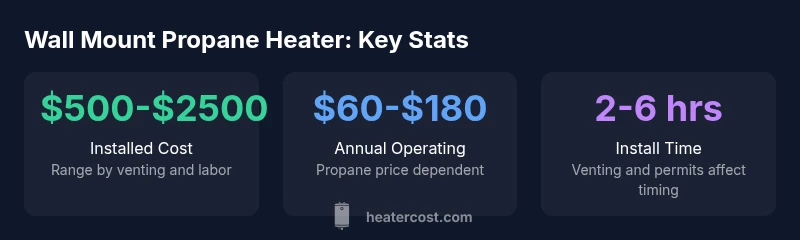
| Installation time | 2-6 hours | Depends on venting and permitting |
| Installed cost range | $500-$2500 | Labor, venting, and materials vary by home and code requirements |
| Annual operating cost | $60-$180 | Propane price fluctuations affect ongoing costs |
| Maintenance interval | Annually | Vent cleaning and safety checks |
Got Questions?
Are wall-mounted propane heaters safe for indoor use?
Yes, when properly vented or designed for indoor use, and when installed by a qualified professional with appropriate CO detectors and clearances. Always follow the manufacturer’s instructions and local codes.
Yes, safely use a vented unit with CO detectors and professional installation.
What venting and clearance do I need?
Venting requirements depend on the unit; most indoor-ready propane heaters require venting to the outdoors or direct-vent designs. Maintain manufacturer-specified clearances from walls, furniture, and combustibles. Local codes may mandate additional protections.
Vent to the outdoors if required, and keep space clear around the heater.
Do I need a permit to install a propane wall heater?
Permits are often required when installing gas-fired equipment, especially if venting or gas lines are involved. Check with local building departments and plan for potential inspections.
Check with your local authority; permits are commonly required for gas installations.
Can I install a propane wall heater myself?
Gas appliance installation should generally be performed by a licensed professional to ensure safety, code compliance, and warranty validity.
Professional installation is usually required for gas hookups.
What maintenance is required for safe operation?
Regular checks of venting, gas connections, and CO detectors are essential. Schedule annual professional inspections and replace detectors according to manufacturer guidance.
Keep vents clear and have an annual safety check.
How do I compare efficiency and operating costs across models?
Look at the unit’s input-output ratings, venting needs, and warranty. Compare typical fuel usage patterns with your space and climate, and consider insulation improvements to improve overall efficiency.
Compare fuel use and venting, and consider space insulation to save costs.
“Propane wall-mount heaters can be a practical solution when ventilation and space are well planned, but safety and proper installation are non-negotiable.”
The Essentials
- Size the heater to space and venting implications
- Expect a broad cost range driven by labor, venting, and permits
- Prioritize CO detectors, safe clearances, and proper ventilation
- Use Heater Cost as a reference for cost estimates and planning