Radiant Heater vs Space Heater: An In-Depth Comparison
A practical comparison of radiant heaters and space heaters, covering how they work, energy use, safety, cost, and real-world use cases to help homeowners decide the right heating option.


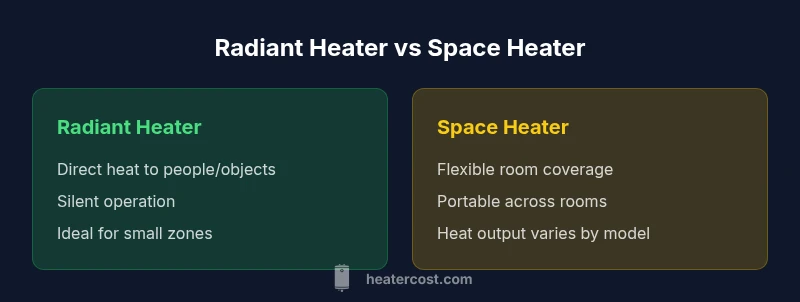
Radiant heaters and space heaters each serve different heating needs. Radiant heaters excel for targeted warmth in small zones, delivering heat directly to people and objects with minimal air movement. Space heaters offer flexible, room-wide warmth and rapid heat-up, but can be less efficient in large open spaces. For most homes, use radiant heat for immediate seating areas and rely on a portable space heater for occasional, broader warmth.
How radiant heaters work vs space heaters
According to Heater Cost, radiant heaters emit infrared energy that heats people and objects directly, creating warmth without relying on circulating air. This means you often feel warmer at a lower air temperature, which can translate into real energy savings in small zones. The Heater Cost team notes that radiant units shine in compact rooms, drafty corners, or when you sit still for long periods. Electric radiant heaters have no combustion, produce no fumes, and run quietly, making them popular for bedrooms, home offices, and reading nooks.
In contrast, space heaters come in electric, propane, and natural gas variants and rely more on convection to warm the air. Electric space heaters may include fans for quick warmth, while gas models require proper venting and combustion safety. The core trade-off is coverage vs. focus: radiant heat targets the precise area where you sit, while a larger, higher-output space heater can spread warmth more broadly. In practice, many households blend approaches: a compact radiant heater at a favorite chair and a portable space heater to tackle larger open areas during cold snaps. When evaluating options, consider insulation quality, room dimensions, ceiling height, occupancy patterns, and whether you prize silent operation or broad warmth. This framework helps prevent overspending on a heater that underperforms in your actual space.
The Heater Cost team emphasizes that context matters: in well-insulated rooms with limited square footage, radiant heaters can deliver faster comfort per dollar, whereas in drafty, open-plan spaces, space heaters may be more forgiving despite higher operating costs.
Energy use and heat distribution
Heat distribution is the defining difference between radiant heaters and space heaters. Radiant units warm people and objects directly, which means the perceived warmth can be strong even if the air temperature remains modest. This favors zone heating—keeping toes and hands toasty in a specific seating area while the rest of the room remains cooler. Space heaters, by design, warm air and rely on convection to move that heat through the room. This approach creates more uniform air warmth but can waste energy if you heat empty spaces. In small rooms, a radiant heater often delivers quicker comfort with less overall heat loss, especially when ceiling height is high or the room has good insulation. In larger or open-plan rooms, space heaters can cover more ground quickly, but you may need multiple units or higher wattage to achieve the same felt warmth.
From a cost perspective, radiant heaters may offer superior heat perception with lower energy input for the same occupants, especially when you stay near the heat source. Heater Cost analysis shows that the efficiency advantage hinges on the space being heated, how well it’s insulated, and how long heat is desired. If you frequently move from chair to chair or want heat directed at a desk or bed, radiant heat can be a smarter choice; for flexible living spaces where people need warmth across several zones, a space heater provides versatility. Be mindful that radiant heat is not a substitute for whole-room comfort in very large spaces.
Safety, comfort, and use cases
Safety is a critical factor when choosing between radiant heaters and space heaters. Electric radiant units have no combustion, which reduces indoor air quality concerns and eliminates fuel storage issues. They still demand proper clearance from curtains, furniture, and bedding, and you should avoid placing any heater in a cluttered area. Space heaters, especially those with fans, can produce noise and require stable placement to prevent tipping. Gas space heaters introduce combustion byproducts and, if venting is inadequate, can present carbon monoxide risks. In homes with children or pets, you may prefer the quieter, simpler profile of electric radiant heaters, provided you keep heat sources away from flammables.
Consider safety features such as tip-over switches, overheat protection, and cool-to-touch surfaces. For bathrooms or near damp areas, opt for models specifically rated for humidity and moisture. Your choice should reflect typical room use: a bedroom nightstand, a home office corner, or a family room where people spend several hours. By aligning safety features with your living patterns, you’ll reduce risk while maintaining warmth.
Cost, maintenance, and longevity
Upfront cost varies by model, wattage, and features, but radiant heaters tend to sit in a moderate price range, especially for compact, stylish designs. Space heaters often offer a wider range of price points, from budget to high-end, with more variability across brands and features. Running costs depend on how intensively you use the heater and the room's insulation. Electric radiant heaters have low maintenance needs: no filters to replace in many models and no vents to clean. Gas space heaters or propane models require venting, regular servicing, and more attention to fuel supply and exhaust safety. Insulation and draft control significantly influence long-term costs; a well-insulated room can maintain comfort with less overall heating, improving both options’ long-term value. The Heater Cost analysis suggests evaluating expected usage patterns, room sizes, and energy costs in your region to estimate long-term cost implications accurately. With mindful use, radiant heaters can last many years, while space heaters’ lifespan is highly dependent on model quality and maintenance habits.
When deciding, consider whether you want a long-lasting, low-maintenance unit (radiant) or a flexible, portable heating solution (space heater). A practical approach is to choose radiant heat for zones that demand consistent warmth and reserve portable space heaters for temporary needs or to fill gaps in larger rooms.
Choosing the right option for your home
The decision between radiant heaters and space heaters should start with a clear assessment of the space you intend to heat. If you have a small, well-insulated room or a specific seating area, radiant heaters can deliver fast, energy-efficient warmth with minimal air movement. For open-plan living spaces, or if you frequently move warmth around different rooms, space heaters provide flexibility, quick heat-up, and ease of relocation. If safety and air quality are paramount — for example, in bedrooms, nurseries, or homes with sensitive occupants — electric radiant heaters are often the safer baseline choice. When gas or propane heaters are considered, you must account for ventilation, carbon monoxide risk, and ongoing maintenance. Room dimensions, ceiling height, and insulation quality should guide your wattage decisions and the number of units you’ll need. Finally, balance your budget against long-term energy costs; in many cases, a hybrid approach—radiant heat for targeted zones plus a portable space heater for occasional broader warmth—delivers the best overall value.
As you compare options, gather model specifications, read reviews focused on real-world performance in spaces like yours, and verify safety features before purchasing. The Heater Cost team recommends prioritizing models with clear safety certifications, robust warranties, and straightforward maintenance requirements.
Practical tips and common pitfalls
Practical tips help maximize the effectiveness of radiant heaters and space heaters while minimizing risk. First, measure your space and align heater wattage with room size; avoid oversized units that cause overheating or energy waste. Place heaters away from drapes, bedding, and furniture to maintain clearances and reduce fire risk. Use thermostats, timers, and automatic shutoffs to prevent prolonged operation. For radiant heaters, heat only the zone you intend to warm; do not rely on them to heat entire large rooms continuously. For space heaters, test different placement angles to optimize airflow and guest movement; never rely on a single heater to warm a large area for long periods. In bathrooms or damp spaces, ensure devices are explicitly rated for moisture and follow manufacturer guidelines. Finally, perform regular safety checks: unplug devices when not in use, inspect cords for wear, and replace older units with certified new models when necessary.
The blend of careful placement, appropriate sizing, and attention to safety makes heating more predictable, comfortable, and economical.
Authority sources and further reading
- Energy.gov: Heating and cooling energy saving tips and guidance since energy efficiency shapes long-term costs and comfort.
- NFPA.org: Heating safety resources and practical advice about appliance usage and safe clearances.
- CPSC.gov: Consumer safety information about space heater hazards, tip-overs, and proper maintenance.
Comparison
| Feature | Radiant heater | Space heater |
|---|---|---|
| Heat distribution | Direct radiant warmth to occupants/objects; minimal air movement | Air-based warmth via convection; wider room coverage |
| Best use case | Targeted zone heating for chairs, desks, or beds | Portable warmth for various rooms and temporary needs |
| Energy efficiency (relative) | High efficiency in small zones; strong heat perception | Varying efficiency; depends on model and room size |
| Upfront cost range | Moderate to high (model dependent) | Low to moderate; many budget options |
| Safety considerations | Clearance requirements; minimal combustion risks for electric models | Tip-over risk; requires ventilation for gas models; fan noise possible |
| Maintenance | Low maintenance; few moving parts | Regular cleaning; servicing for gas/propane models; vent checks |
| Lifespan | Longer lifespan for quality electric radiant units | Lifespan varies; many units last several years with care |
| Noise level | Generally silent; no moving parts in electric models | Can be noisy if a fan is used |
The Good
- Targeted warmth reduces wasted energy in small zones
- Portable options offer flexibility for temporary needs
- Electric radiant models are quiet and low maintenance
- No combustion products in electric variants
Negatives
- Radiant heaters struggle to heat large rooms evenly
- Gas/propane space heaters require ventilation and exhaust safety
- Space heaters can be noisy and energy-inefficient in big spaces
- Overuse or misplacement can create safety hazards
Radiant heaters win for targeted, quick warmth in small areas; space heaters win for portable, flexible warmth across rooms.
Choose radiant heat for zones or personal spaces; choose space heaters for mobility and broader room coverage.
Got Questions?
What is the main difference between radiant heaters and space heaters?
Radiant heaters transfer heat directly to people and objects using infrared energy, while space heaters warm the air of a room through convection. This makes radiant heaters feel warmer in targeted spots with less air movement, whereas space heaters can heat a larger area more quickly but may waste energy in bigger spaces.
Radiant heaters warm people directly, space heaters warm the air. For targeted comfort, radiant; for versatile, room-wide warmth, space heaters.
Are radiant heaters more energy-efficient than space heaters?
Efficiency depends on usage. Radiant heaters excel in small zones and when you sit still, delivering warmth with less air heating. Space heaters can be efficient when used to heat only occupied areas, but overall energy use often rises if the entire room is kept warm.
Radiant heat is efficient for close seating areas; space heaters are flexible but may use more energy for large spaces.
Can you safely use space heaters in bedrooms?
Yes, with caution. Choose models with tip-over and overheat protection, keep flammables away, and avoid running cords under rugs. Electric radiant heaters are typically safer for bedrooms due to lower fire risk and no fuel combustion.
Use safe, enclosed heaters with automatic shutoff in bedrooms. Keep away from bedding and curtains.
What room size is best for radiant heaters vs space heaters?
Radiant heaters work well in small to medium rooms or zones with active seating. Space heaters help in larger rooms or open areas where you want warmth across multiple zones, though you may need several units for even coverage.
Best for small zones: radiant; best for flexible coverage: space heaters.
Do radiant heaters affect humidity or air quality?
Electric radiant heaters do not produce combustion byproducts and have minimal impact on humidity. Gas or propane space heaters can add moisture but require ventilation to manage air quality and safety.
Radiant electric heat is clean; gas heat needs ventilation to stay safe.
The Essentials
- Prioritize radiant heat for small, targeted zones
- Use space heaters for portable warmth in multiple rooms
- Safety first: maintain clearances and proper ventilation when needed
- Balance upfront cost with long-term energy use and insulation