Oil Heater vs Ceramic Heater: A Practical Comparison
Compare oil-filled radiators and ceramic space heaters for heat delivery, efficiency, safety, and long-term costs. Practical guidance for homeowners, renters, and property managers choosing the right heater.


Oil heater vs ceramic heater: which is better for your space? The answer hinges on heat-up speed, heat retention, safety, and long-term costs. Oil-filled radiators provide steady, long-lasting warmth, while ceramic heaters offer rapid warmth for quick comfort. This Heater Cost comparison helps homeowners pick the right type for room size, climate, and usage patterns.
What oil heater vs ceramic heater means for your home
When the Heater Cost team compares oil heater vs ceramic heater, the first question is how each type fits real living spaces. Oil-filled radiators store heat in a fluid-filled reservoir and radiate warmth gradually, producing a steady, long-lasting comfort. Ceramic heaters rely on ceramic elements that heat up quickly and spread warmth through a metal housing and nearby air. The practical takeaway is that there isn't a single 'best' choice for every home; instead, performance hinges on room size, occupancy patterns, and how often you want heat on or off. In the 2026 market, homeowners should appreciate that “oil heater vs ceramic heater” is not a battle of absolute performance but a decision about heat delivery style, energy resilience, and safety in everyday scenarios. For example, a chilly bedroom used overnight may benefit from the slow-cooking warmth of an oil-filled unit that gradually releases heat, while a workshop or home office might gain from the rapid warm-up of a ceramic model during cold mornings. Across these contexts, understanding the core difference helps you tailor your purchase to your climate and schedule, not just to the sticker price.
0
Comparison
| Feature | oil heater | ceramic heater |
|---|---|---|
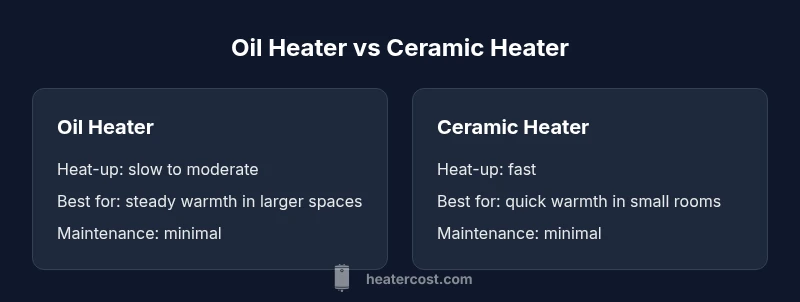
| Heat-up time | slow to moderate | fast |
| Heat retention | long-lasting warmth after shut-off | warms quickly but cools faster when off |
| Best for room size | larger rooms or zones with steady use | smaller to mid-size rooms or quick warmth |
| Operating cost (qualitative) | higher upfront cost but efficient for continuous use | efficient for short sessions but may require more energy per hour |
| Portability/weight | heavier and more stationary | lighter and highly portable |
| Safety features | robust safety options including overheat protection | cool-touch housing and built-in safety protections |
| Noise | very quiet with minimal fan use | quiet operation; may include a fan on some models |
| Maintenance | low maintenance; no fluids to replace | low maintenance; regular dusting of grilles |
The Good
- Helps weigh practical trade-offs between heat delivery and efficiency
- Clarifies how room size shapes value
- Aids budgeting for upfront vs running costs
- Demystifies safety and maintenance expectations
Negatives
- Could overwhelm readers with technical terms
- Exact operating costs vary by local electricity rates
- Model-to-model differences can blur broad claims
Oil heaters are generally better for steady, long-lasting warmth in larger spaces; ceramic heaters excel for quick, targeted heat in smaller rooms.
If your priority is sustained comfort in a living area, oil-filled models tend to perform better over time. For fast, temporary warmth in a bedroom or home office, ceramic heaters often beat oil units on speed. Use this guide to match heat delivery to room size and usage patterns.
Got Questions?
What is the main difference between an oil heater and a ceramic heater?
Oil heaters warm by circulating heated oil inside a sealed reservoir, providing gradual, long-lasting warmth. Ceramic heaters heat ceramic elements quickly, producing rapid warmth that is less persistent once turned off. The choice depends on whether you want steady warmth or fast bursts.
Oil heaters offer steady warmth, while ceramic heaters provide quick bursts of heat.
Which heater is more energy-efficient for long-term use?
Efficiency depends on usage patterns. Oil heaters are often economical for continuous warmth in larger spaces, whereas ceramic heaters shine when you need fast warmth for short periods. In long-term steady use, oil heaters may offer better perceived efficiency.
Efficiency depends on how you use it: steady heat favors oil, quick bursts favor ceramic.
Are ceramic heaters safer than oil heaters?
Both types typically include safety features like tip-over and overheat protection. Ceramic units often have cool-touch housings, while oil heaters remain safe due to low surface temperatures after turning off heat. Always use a heater with recognized safety certifications and follow placement guidelines.
Both are safe with the right features; safety also depends on placement and usage.
Can oil heaters heat a large room quickly?
Oil heaters heat more gradually, so they are less ideal for instant warmth in large rooms. They excel at maintaining comfort over time in bigger spaces. For rapid uplift, ceramic heaters are typically the better option.
Oil heaters take longer to warm large spaces; ceramics warm up faster.
Do these heaters require maintenance?
Both require minimal ongoing care, mainly regular dusting and annual inspection of cords and plugs. There are no consumable fluids to replace in either option, but check user manuals for model-specific maintenance. Proper cleaning helps maintain efficiency.
Low maintenance overall, with simple cleaning to keep airflow clear.
Can I use either heater in a bedroom?
Yes, both can be used in bedrooms if placed away from bedding and curtains and used with timers or thermostats to avoid overheating. Consider noise, flux in temperature, and personal comfort when deciding which type to use in a sleeping space.
Both can work in a bedroom with proper placement and safety checks.
The Essentials
- Assess room size before choosing.
- Prioritize heat-up speed for quick warmth needs.
- Factor heat retention into energy efficiency.
- Check safety features and maintenance expectations.
- Estimate total cost of ownership beyond upfront price.