Oil Radiator Heater: A Practical Guide to Cost and Performance
A data-driven guide to oil radiator heaters covering operation, costs, safety, sizing, and buying tips for homeowners, renters, and property managers.


Oil radiator heaters deliver steady, long-lasting warmth with minimal standby loss, making them suitable for bedrooms or small offices. They heat quietly and retain heat due to the oil, but they warm up slowly, require clear space around units, and can be less responsive than ceramic or infrared heaters. For budget-conscious, localized heating, they’re a solid option.
What is an oil radiator heater?
An oil radiator heater is a portable electric heater that uses a sealed reservoir of mineral oil inside a finned enclosure. The heating element warms the oil, which stays hot for a long time and circulates slowly through the fins. As the oil releases heat, the surrounding metal fins radiate warmth into the room. The oil does not need to be replaced, so the unit can provide steady heat without continuous energy input beyond the element’s load. This design makes oil radiator heaters well-suited for localized, overnight, or daytime use in smaller living spaces. According to Heater Cost, the technology balances quiet operation with reliable warmth, helping homeowners and renters manage comfort without relying on central systems.
How oil radiator heaters work
Oil-filled radiators rely on a simple yet effective thermal cycle. An electric element heats the oil inside a sealed chamber, and the oil’s high heat capacity means it stores energy. As the heater runs, conduction and convection transfer heat from the fins into the room. When the thermostat reaches the set temperature, the element cycles on and off, maintaining a steady warmth without frequent cycling. Because there are no moving parts like fans, these units operate quietly, which is a key advantage for bedrooms and study areas. For safest use, keep the unit on a flat, stable surface away from drapes or furniture and never attempt to refill the oil or open the housing.
Efficiency and operating costs for oil radiator heaters
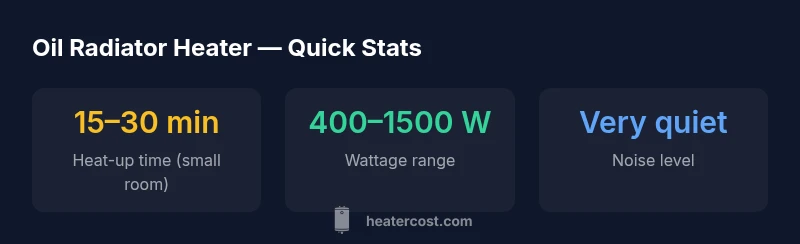
From a pure conversion standpoint, electric heating is 100% efficient at turning electrical energy into heat. However, the running cost depends on wattage, how long you run the heater, and your local electricity rates. Oil radiator heaters in typical room scenarios fall into a broad wattage range, often between 400 and 1500 watts. Because the oil stores heat, you may feel warm more quickly after turning the unit off, which can reduce the perceived cost of brief, intermittent use. Heater Cost Analysis, 2026 suggests that the cost advantage tends to be strongest when you heat only occupied zones rather than the entire home.
Pros and cons relative to other heating options
Oil radiator heaters offer several advantages: quiet operation, excellent heat retention, and effective zone heating for small spaces. They are relatively inexpensive to purchase and require minimal setup. The downsides include slower heat-up times, larger footprint compared to compact ceramic units, and a reliance on electricity that can be costly in areas with high rates. Compared with ceramic heaters, oil radiators typically deliver smoother, longer-lasting warmth but take longer to respond to changes. Infrared heaters heat occupants directly rather than warming the air, which can feel different in a drafty room. Your choice should match how you plan to use heat, not just initial price.
Sizing, placement, and best practices
Proper sizing ensures comfort without wasting energy. Measure the room, assess insulation, and compare the heater’s wattage to the space. For a 100–200 square foot room with average insulation, a 400–800 watt unit is usually sufficient, while larger or poorly insulated spaces may require more power. Place the heater on a hard, flat surface and keep a minimum clearance from walls, furniture, and fabrics. Do not obstruct the heat outlet or cover the unit, as this can overheat components. Use a thermostat with an adjustable range to prevent overheating and to extend the unit’s life.
Safety considerations and maintenance
Safety is essential when using any space heater. Ensure the unit has a tip-over switch and an automatic overheat protection feature. Keep children and pets away from the heater, especially when it is powered on, and never leave it unattended in a wheelchair-accessible or high-traffic area. Clean the exterior surfaces with a damp cloth and periodically inspect the cord for signs of wear. Do not attempt to open the reservoir or handle the oil; if the unit leaks or presents a hazard, discontinue use and contact the manufacturer. Regular maintenance can extend the life of the heater and keep performance stable.
Real-world scenarios: when to choose an oil radiator heater
Oil radiator heaters work best when you need steady, localized warmth in a single room for extended periods. They’re ideal for bedrooms, home offices, guest rooms, and small studios where quiet operation is valued. In rented spaces or homes with modular layouts, they offer a flexible heating solution without the complexity of permanent installations. For rooms that require rapid warming or immediate comfort after turning on a heat source, other technologies like ceramic or infrared heaters may be more appropriate.
Common myths about oil radiator heaters
A common myth is that all electric heaters cost the same to run; in reality, wattage and use patterns drive costs. Another misconception is that oil needs frequent replacement, which is not true—the oil is sealed and lasts the life of the unit. Some people worry about safety; while every heater can pose risks if misused, certified models with safety switches and proper cables provide robust protection when used as directed. Finally, some assume oil radiators are fragile; well-made units with proper care can endure years of daily use.
How to compare models and buy wisely
When selecting an oil radiator heater, start with room size and insulation. Look for adjustable thermostats, multiple heat settings, and a clear, easy-to-read display. Check safety features, including tip-over and overheat protection. Consider energy efficiency and running costs by calculating the expected hours of use and local electricity rates. Read reviews focusing on longevity and reliability. If you plan to move the unit between rooms, choose a compact model with carrying handles.
Installation and portable usage guidelines
Portable oil radiator heaters are designed for plug-and-play use and generally require no professional installation. Ensure you plug into a properly rated outlet, ideally one on its own circuit for high-wattage units. Avoid using extension cords, which can overheat and pose a fire risk. When not in use, store the heater upright in a dry area away from extreme temperatures. For renters, make sure the unit is stable and cannot be knocked over by children or pets. Always follow the manufacturer’s guidance for maintenance and replacement intervals.
Portable heater comparison: oil radiator vs ceramic vs infrared
| Feature | Oil Radiator Heater | Ceramic Heater | Infrared Heater |
|---|---|---|---|
| Heat-up Time | Slow to warm | Fast | Fast |
| Noise Level | Very low (fanless) | Low to moderate | Low to moderate |
| Heat Retention | Excellent due to oil reservoir | Moderate | Lower heat storage |
| Safety Features | Tip-over switch, overheat protection | Tip-over switch, guard | Overheat protection |
Got Questions?
Are oil radiator heaters energy-efficient?
They convert electricity to heat with high efficiency, but operating cost depends on wattage and usage.
Oil radiators convert electricity to heat with high efficiency; costs depend on usage.
How long does it take to heat a room with an oil radiator heater?
Heat-up depends on room size and insulation; small rooms may warm in 15–30 minutes, larger spaces longer.
Heat up depends on room size; a small room warms in minutes.
Are oil radiator heaters safe for children and pets?
Yes, when used with proper clearance, stable placement, and safety features like tip-over and overheat protection.
Keep it away from kids and pets with safety features.
Do I need professional installation or a dedicated circuit?
No permanent installation; plug into a standard outlet. Use a dedicated circuit only for very high-watt models.
No install needed for portable units; check wattage.
Can an oil radiator heater replace central heating?
Generally not; they're best for supplemental, room-specific heating rather than whole-house heating.
They’re for supplemental heat, not full-house replacement.
What should I look for when buying an oil radiator heater?
Look for adjustable thermostat, multiple heat levels, safety features, and a compact footprint for your space.
Choose one with thermostat, safety features, and right size.
“Oil radiator heaters offer reliable, low-noise heat suitable for targeted spaces, but effectiveness hinges on correct sizing, placement, and safe use.”
The Essentials
- Choose wattage by room size and insulation.
- Oil radiators excel at zone heating and quiet operation.
- Expect slower heat-up, but stable warmth once hot.
- Maintain safe clearances and avoid covering the unit.
- Compare energy costs using wattage and usage patterns.