How to Make a Cheap Heater: Safe, Budget-Friendly Heating for Homes
Discover safe, affordable heating strategies. Learn how to cut costs with insulation, energy-efficient devices, and a smart, budget-minded approach to warmth.


Goal: heat your space cheaply and safely. Rather than fabricating a risky DIY heater, you can achieve warmth with affordable, proven methods. This quick guide outlines a safe, budget-friendly approach: seal drafts, improve insulation, choose certified heaters, and optimize operation. According to Heater Cost, safe, low-cost heating hinges on efficiency, proper sizing, and vigilant maintenance.
How to make a cheap heater safely: an affordable approach
Learning how to make a cheap heater in a safe, responsible way starts with accepting that low cost does not mean unsafe or improvised. The goal is to warm your living space without creating fire risks or emissions. This section frames a budget-friendly path that relies on proven principles—reducing heat loss, using certified heating devices, and optimizing usage. According to Heater Cost analysis (2026), safety and efficiency trump brute force when warmth is the objective. We’ll walk through practical, legal, and safe methods to reach comfort without taking on unnecessary risk. The approach here emphasizes a plan, not a reckless build, so you stay cozy without compromising safety.
Safety first: why a real DIY heater is risky and how to avoid unsafe options
Building or improvising a heater from scratch can introduce serious hazards, including fire, electrical faults, and carbon monoxide. Even seemingly simple DIY solutions can create hidden dangers in home environments. The Heater Cost team stresses that legitimate, budget-friendly heat relies on certified devices, proper ventilation where applicable, and thoughtful placement. By avoiding high-risk experiments and focusing on safer strategies, you protect your home while achieving steady warmth. Always follow manufacturer instructions and national safety guidelines when heating your space. This is not about a risky DIY furnace; it’s about smart, affordable heat through proven methods.
Budget-friendly insulation and sealing to cut heat loss
Heat loss is the enemy of cheap warmth. Simple, affordable improvements—draft sealing, weatherstripping, upgrading attic insulation, and using thermal curtains—can dramatically reduce the amount of energy needed to stay warm. These measures are cost-effective, quick to implement, and compatible with most heating devices. Prioritizing insulation work first often yields bigger savings than selecting a marginally cheaper heater. A well-sealed space makes any heating solution work harder for you, lowering overall energy consumption and costs.
Choosing safe, cost-effective heating devices
When you look for devices, prioritize safety features such as automatic shut-off, tip-over protection, and properly rated plugs. Electric space heaters with Energy Star or equivalent efficiency labeling tend to deliver reliable warmth with lower running costs. Avoid open flames, propane heaters indoors, or any device that lacks a clear safety standard. The goal is to pair safe devices with efficient operation, not to substitute a dangerous DIY method for warmth. Heater Cost analysis shows that well-chosen equipment paired with good insulation yields the best long-term results.
Airflow and heat distribution tips
Even in smaller rooms, heat distributes unevenly without proper airflow. Use ceiling fans in reverse mode during colder months to push warm air downward, and keep furniture away from heat sources to prevent blocking convective flow. Strategic placement of a compact, certified heater away from drafts optimizes comfort while minimizing risk. Circulation aids, such as portable fans used safely, can help maintain uniform temperatures without increasing risk. Good airflow also reduces cold spots that make rooms feel drafty, contributing to a more comfortable environment.
Step-by-step planning to evaluate your space
Begin with a simple audit: measure the room dimensions, note major heat losses (large windows, poor door seals), and list occupants’ warmth needs. Next, survey available safe heating options that fit the space, and compare baseline running costs by estimating usage hours per day. Create a plan that combines insulation improvements with one or two certified heaters for supplemental heat. The plan should include a safety check list and a schedule for maintenance. This structured approach keeps costs predictable and warmth reliable.
Cost comparison: upfront vs running costs
Upfront costs for safe, budget-friendly heating solutions typically range with the size and type of device selected, but focus on devices that offer built-in safety features and energy efficiency. Running costs depend on wattage, usage duration, and electricity rates. In practical terms, investing in insulation and draft sealing often reduces the required heater size and running hours, leading to lower ongoing expenses. Heater Cost analysis emphasizes balancing initial purchase with long-term energy savings for the best value.
Troubleshooting common issues and safety checks
If you notice unusual smells, excess heat, or scorched cords, unplug immediately and inspect the device. Regularly test smoke and CO alarms, check for frayed cords, and ensure outlets are not overloaded. Keep space around heaters clear and avoid running cords under rugs or furniture. Routine inspections catch problems before they become hazards, preserving safe warmth throughout the season.
Long-term maintenance and when to upgrade
Warmth stability depends on ongoing maintenance: clean dust from heaters, replace filters if applicable, and calibrate thermostats as seasons change. If you notice decreased efficiency or more frequent cycling, it might be time to upgrade to newer, safer technology with better energy performance. Regular checks also help you plan budgeting for future upgrades, aligning safety with affordability.
How to monitor temperatures and maintain safety
Use a digital thermometer to track room temperature and set consistent comfort targets. Schedule periodic checks to verify that heat sources are not overheating rooms or outlets. Establish a simple routine: brief daily checks, a deeper weekly review, and a seasonal inspection before heavy heating begins. Consistent monitoring ensures warmth without compromising safety.
Tools & Materials
- Digital thermometer with max/min(To monitor room temperature accurately)
- Weatherstripping kit(Seal gaps around doors/windows to reduce heat loss)
- Draft stoppers/door sweeps(Block cold air at thresholds to minimize drafts)
- Insulated curtains or window film(Reduce heat loss through windows)
- Smoke alarm and CO detector(Fire and carbon monoxide safety essentials)
- Energy audit checklist(Identify efficiency improvements and opportunities)
- Smart or programmable thermostat(For efficient scheduling and temperature control)
- Surge-protected power strip(Avoid daisy-chaining heaters; use controlled outlets)
- Reflective radiator panels or foil backing(Improve heat reflection from radiators)
Steps
Estimated time: 4-6 hours
- 1
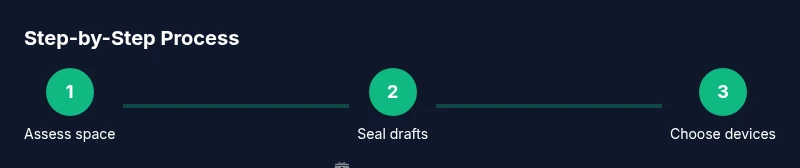
Assess space and heat needs
Measure room dimensions, count occupants, and note heat loss areas such as large windows or doors. Establish a target comfortable temperature range and a daily heat-usage plan.
Tip: Start with the room you use most and expand later if needed. - 2
Seal drafts and insulate
Apply weatherstripping to doors, seal gaps around windows, and consider heavy curtains. Insulation upgrades in key areas yield substantial long-term savings.
Tip: Even modest draft sealing can cut heat loss by a meaningful amount. - 3
Choose safe, energy-efficient devices
Select certified heaters with automatic shut-off and tip-over protection. Prioritize devices with ENERGY STAR or equivalent efficiency ratings and proper sizing for the room.
Tip: Avoid devices without safety certifications or outdoor-use-only labeling. - 4
Plan safe placement
Place heaters on stable surfaces, away from combustibles, and with clear space on all sides. Maintain at least a 3-foot radius around heat sources.
Tip: Never run devices under cabinets or behind furniture. - 5
Set up thermostat and scheduling
Install a programmable thermostat or smart thermostat to align heat with occupancy. Create a daily schedule that minimizes wasteful heating while keeping comfort.
Tip: Program time blocks for peak warmth when you are home. - 6
Use supplementary, safe heat strategically
If necessary, use a small, certified heater in a room with good airflow rather than heating the whole house. Combine with insulation for best results.
Tip: Avoid redlining temperatures in unoccupied spaces. - 7
Monitor and adjust
Check temperatures regularly and adjust settings to prevent overheating or excessive cycling. Keep a log of usage patterns to identify savings opportunities.
Tip: Small daily adjustments add up over a season. - 8
Safety checks and maintenance
Inspect cords, outlets, alarms, and devices before heavy use periods. Replace worn parts promptly and follow manufacturer maintenance guidance.
Tip: Keep a fire extinguisher accessible and active alarms in every living area. - 9
Budget and plan upgrades
Track your costs and plan future improvements like better insulation or newer efficient devices. A clear budget helps you sustain warmth without overspending.
Tip: Review cost savings quarterly to guide upgrades.
Got Questions?
Is it safe to build a DIY heater at home?
Building a heater at home is generally not recommended due to fire and carbon monoxide risks. Instead, opt for certified heaters and insulation improvements that provide warmth with lower risk.
DIY heaters are risky; use certified heaters and proper insulation for safe warmth.
What is the cheapest way to heat a small room safely?
Improve insulation first, seal drafts, and use certified, energy-efficient space heaters with safety features. This combination typically provides the lowest overall cost and safest warmth.
Insulation first, then safe, efficient heaters.
Do space heaters save money over central heating?
Yes, for small or intermittently heated spaces, compact, certified heaters with good safety features can be cheaper to operate than running a central system for short periods.
In some cases, space heaters can be cheaper for small spaces.
How do I size a heater for a room?
Size is based on room dimensions, insulation quality, and climate. Use the heater’s wattage rating as a guide and avoid undersized or oversized units, which waste energy or fail to keep you comfortable.
Match wattage to room size and insulation.
What safety steps should I take before using a heater?
Inspect cords, keep flammables away, use a grounded outlet, never leave unattended, and ensure alarms. Follow manufacturer instructions precisely.
Check cords and keep things away from heaters.
When should I upgrade insulation or a heating device?
If you notice persistent cold spots, high energy bills, or frequent heater cycling, it’s a good time to upgrade insulation or switch to more efficient devices.
Upgrade when comfort or bills don’t improve with current setup.
Watch Video
The Essentials
- Assess heat needs before buying or implementing options
- Seal drafts and insulate to maximize efficiency
- Choose certified devices with safety features
- Program smart controls for energy savings
- Maintain safe setups and monitor temperature regularly