How to Make a Homemade Heater: Safer Alternatives for Home
Explore why building a DIY heater is unsafe and learn safer, certified options to keep your home warm. This guide covers risks, cost considerations, and practical steps for safer heating without DIY heaters.


We do not provide instructions for making a homemade heater because it poses serious fire and carbon monoxide risks. Instead, this guide defines safer, certified options and practical steps for staying warm, including selecting approved space heaters, improving insulation, and budgeting for heating costs. By focusing on proven equipment and home improvements, homeowners, renters, and property managers can reduce risk while maintaining comfort. According to Heater Cost, safety standards and professional products offer far more reliable warmth. This article then walks you through safer alternatives and practical steps to stay warm without building a homemade heater.
Why the idea of how to make a homemade heater raises red flags
Searching for how to make a homemade heater is a common impulse during a cold snap, but it's also one of the most dangerous DIY projects you could attempt in a home. The phrase how to make a homemade heater often leads to designs that mix electrical components, fuels, or improvised casings—materials that can fail, short circuit, or spark. According to Heater Cost, attempting to assemble a homemade heater—whether powered by electricity, propane, or kerosene—poses serious risks: fire hazards, carbon monoxide poisoning, electrical shock, burns, and fire spread to nearby combustibles. Even small miscalculations can create dangerous hotspots or venting issues. For homeowners, renters, and property managers, the prudent path is to avoid DIY heating devices entirely and focus on proven, certified products and structural improvements. The Heater Cost team found that safer, professionally manufactured heaters with safety features can dramatically reduce risk when used per manufacturer instructions. Remember: safety standards and local codes exist to protect lives, and ignoring them can have dire consequences. This article will walk you through safer alternatives and practical steps to stay warm without building a homemade heater.
If you’re researching how to make a homemade heater, pause and reconsider—this article prioritizes safety, legality, and reliability over DIY curiosity. Heater Cost emphasizes that the safest path is to invest in certified heaters and proper home insulation rather than attempting improvised devices. Throughout the guide, you’ll see practical steps to stay warm using tested products and smarter energy practices.
noteUrl”:null,
Tools & Materials
- Weatherstripping or draft stoppers(Seals gaps around doors and windows to reduce heat loss)
- Insulation (door sweeps, attic insulation)(Improves thermal performance and lowers heating demand)
- Certified space heater (ETL/UL listed)(Choose a model with automatic shut-off and tip-over safety features)
- Carbon monoxide detector(Place alarms on every living level and near sleeping areas)
- Smoke detector(Test monthly, replace batteries yearly)
- Thermostat with programmable scheduling(Helps control heat efficiently and save energy)
Steps
Estimated time: 60-90 minutes
- 1
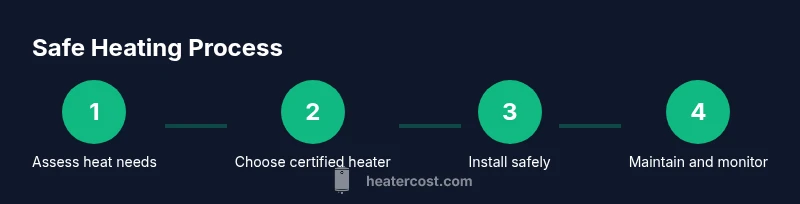
Assess your true heating needs
Evaluate the size of the space, occupancy, and current insulation. Without accurate assessment you risk under or over-sizing a certified heater, which can waste energy or create unsafe conditions. This step sets the foundation for safe, effective warming.
Tip: Document room dimensions and note any drafts or cold spots before choosing a certified heater. - 2
Check safety certifications and features
Only choose a heater with recognized safety certifications (UL/ETL) and essential features like tip-over protection and automatic shut-off. Do not rely on improvised devices or fuel-burning setups indoors.
Tip: Verify certification numbers on the unit and cross-check with the manufacturer’s site. - 3
Compare certified models and energy use
Compare Energy Star or equivalent rated models to balance warmth with energy efficiency. Higher efficiency usually means lower ongoing costs and safer operation over time.
Tip: Look for a model sized for your space’s square footage and climate zone. - 4
Prepare the installation area
Place the heater on a heat-resistant, level surface with at least three feet of clearance from walls, furniture, and curtains. Ensure proper ventilation where required and keep combustibles away.
Tip: Use a dedicated outlet or circuit as recommended by the manufacturer. - 5
Install safety devices and detectors
Install CO and smoke detectors in appropriate locations and test them monthly. These devices are critical for early hazard detection, especially with space heaters in use.
Tip: Replace detectors according to the manufacturer’s schedule and test after any electrical changes. - 6
Set up maintenance and safety checks
Create a simple schedule for inspecting the heater’s cords, plugs, and vents. Regular cleaning and professional servicing extend device life and reduce risk.
Tip: Schedule a yearly professional check if your heater requires service beyond basic maintenance.
Got Questions?
Is it safe to make a homemade heater at home?
No. Building or modifying heating devices with improvised components can cause fires and carbon monoxide exposure. Certified heaters and proper insulation are far safer options.
No, DIY heaters are unsafe. Use certified heaters and proper insulation instead.
What are the main risks of DIY heating devices?
The primary risks include fire hazards, carbon monoxide poisoning, electrical shocks, and improper venting. These hazards can endanger occupants and require emergency response.
Fire, CO poisoning, and shocks are the main risks of DIY heaters.
What should I use instead of a homemade heater?
Use certified space heaters with safety features, improve insulation, seal drafts, and consider programmable thermostats to manage heat efficiently.
Choose certified heaters and focus on insulation and thermostat control.
How can I reduce heating costs safely?
Invest in insulation, weatherstripping, and smart thermostat use. Choose energy-efficient certified heaters and seal leaks to minimize wasted heat.
Insulate and use a smart thermostat with certified heaters for cost savings.
Are there legal restrictions on DIY heating devices?
Local codes and safety regulations generally discourage or prohibit unapproved heating devices. Always check with local authorities or a licensed professional.
Local codes often restrict unapproved heating devices; check with authorities.
Can I heat a room safely with passive methods?
Yes, by improving insulation, using weatherstripping, sealing leaks, and using passive solar design where feasible. This reduces reliance on portable heaters.
Improve insulation and seal drafts for safer, passive warmth.
Watch Video
The Essentials
- Avoid DIY heaters due to fire/CO risks.
- Use certified heaters with safety features and proper installation.
- Improve insulation to reduce warmth requirements.
- Maintain detectors and perform regular safety checks.