How Much Is a Heater for an Above-Ground Pool? Costs, Types, and Buying Guidance
Learn realistic price ranges for above-ground pool heaters, installation costs, energy considerations, and how to pick the right heater for your pool, with data-backed guidance from Heater Cost.


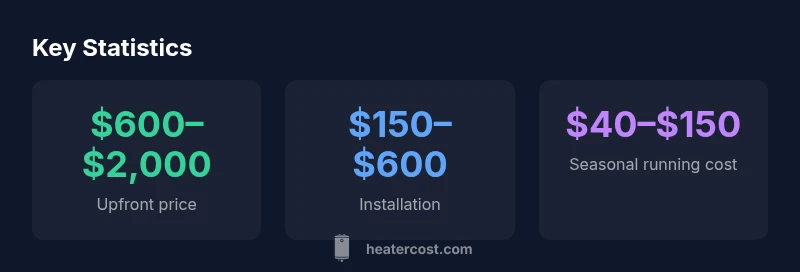
According to Heater Cost, upfront costs for above-ground pool heaters vary widely by type, pool size, climate, and installation complexity. In 2026, equipment prices typically range from the low hundreds to a few thousand dollars, with installation adding a similar amount. The total cost depends on whether you choose gas, electric heat pump, or solar, and how many hours you heat per season.
Costs, time, and how to think about the total price
If you are budgeting for an above-ground pool heater, the total price includes three core components: the equipment price, installation, and ongoing energy costs. The Heater Cost team emphasizes that the exact figure depends on your pool size, climate, desired heating rate, and the energy source you select. In practice, most households see a broad price spectrum, driven by type (gas, electric heat pump, or solar) and the complexity of installation. For many yards, this means a combined upfront spend that can range from the hundreds to several thousands of dollars. The key is to model your seasonal heating needs and energy costs in your local area to forecast your long-term cost of ownership. The 2026 Heater Cost Analysis shows that the choice of heater type matters most for long-term running costs, not only the upfront price.
Comparing heater types on price and performance
The most common options for above-ground pools are gas-powered heaters, electric heat pumps, and solar heaters. Gas heaters typically offer rapid heating and broad climate compatibility but can incur higher fuel costs and venting requirements. Electric heat pumps tend to be more energy-efficient and have lower operating costs, though their performance can be climate-dependent and upfront costs are higher. Solar heaters have the lowest ongoing costs but rely heavily on sun exposure and may require supplemental heating on cloudy days. Your location, pool size, and how you plan to use the pool should guide the selection to balance upfront investment with long-term savings.
Installation and permits: what to expect
Installation is rarely a simple plug-and-play task for pool heaters. Gas installations may require venting, piping upgrades, and gas-line permits; electric heat pumps need appropriate outdoor clearance and electrical connections; solar setups require mounting in a sunny area and plumbing integration. Local codes vary, so check whether permits are required in your city or county. A licensed installer can provide a precise quote that includes equipment, mounting, electrical work, and any required permits.
Operating costs and efficiency: energy use, climate, and usage patterns
Operating costs depend on how often you heat the pool, the heater's efficiency, and energy prices in your region. In general, heat pumps use electricity more efficiently than direct gas heaters, while solar options minimize ongoing energy costs but depend on sunny conditions. If you plan long-season swimming or year-round use, factor in potential seasonal energy use and any need for backup heating during shoulder seasons. Efficient operation can also be achieved through proper pool insulation, a well-sealed cover, and optimized thermostat settings.
Sizing and selection: matching heater to pool characteristics
Sizing a heater correctly requires considering the pool size, desired temperature rise, climate, and typical solar gain. Oversizing can waste energy and money, while undersizing leads to slow heating and higher runtimes. A professional can calculate the heating load and recommend a unit that delivers practical performance without excessive energy use. When evaluating options, compare not just the upfront price but the long-term cost of ownership, warranty terms, and ease of maintenance.
Gas vs electric vs solar: pros and cons for above-ground pools
Gas heaters excel at quick heating and are less dependent on climate but incur ongoing fuel costs and venting needs. Electric heat pumps are highly energy-efficient and cheaper to run over time, yet their performance may drop in very cold or very cloudy environments. Solar heaters offer the lowest operating costs and are most effective in sunny climates, though they require a larger upfront footprint and may need supplemental heating in non-peak sun periods. Consider climate, pool usage, and budget when choosing among these options.
Maintenance, warranties, and long-term savings
Regular maintenance—checking connections, cleaning filters, and inspecting for leaks—extends a heater’s life and maintains efficiency. Warranties vary by manufacturer and installation quality; confirm coverage for parts and labor and understand what voids a warranty (such as improper installation). A properly maintained heater with a favorable warranty can offer meaningful long-term savings through lower energy consumption and fewer repairs.
Quick checklist for homeowners
- Identify pool size and expected heating goals.
- Compare upfront price ranges and long-term operating costs.
- Consider climate and sun exposure when selecting a heater type.
- Check permitting requirements and select a licensed installer.
- Review warranties and maintenance needs before purchasing.
Comparison of common above-ground pool heater types by price and considerations
| Heater Type | Typical Price Range | Key Considerations |
|---|---|---|
| Gas-powered heater | roughly $600–$2,000 | Fast heating; higher fuel costs; venting required |
| Electric heat pump | roughly $1,000–$3,000 | Energy efficient; climate dependent; electrical hookup needed |
| Solar pool heater | roughly $500–$2,000 | Low operating costs; sun-dependent; may require boost heat |
Got Questions?
How much does an above-ground pool heater cost upfront?
Upfront prices typically range from the low hundreds to a few thousand dollars, depending on heater type and installation complexity. Expect to pay more if venting or electrical work is needed. Always factor in installation costs in your total budget.
Upfront heater costs usually range from a few hundred to a few thousand dollars, depending on type and installation.
Do I need a professional to install an above-ground pool heater?
Yes. A licensed installer ensures safe gas or electrical connections, proper venting if required, and compliance with local codes. They can also help with sizing and permit requirements.
Yes—hire a licensed installer for safety and code compliance.
What factors affect total cost beyond the heater price?
Pool size, climate, energy source, installation complexity, and permits all influence total costs. Larger pools or harsher climates generally require larger, more expensive units and possibly longer installation work.
Pool size, climate, energy source, and permits all affect total cost.
Are solar heaters a good option for above-ground pools?
Solar heaters can dramatically reduce operating costs but depend on sun exposure and may require supplemental heating during cloudy days or in colder seasons.
Solar heaters save on energy but need sun exposure and possible backup heating.
What is the typical lifespan of an above-ground pool heater?
Most heaters last several years with regular maintenance, though lifespan varies by type and climate. Higher-quality units and professional maintenance extend life.
Heaters last several years with good maintenance and proper use.
Do heaters come with warranties?
Yes, most heaters include warranties covering parts and sometimes labor. Read terms closely and verify what maintenance actions affect coverage.
Most come with warranties; check terms and coverage details.
“The right heater balances upfront investment with long-term energy use and comfort. Proper sizing and professional installation are essential for optimal performance.”
The Essentials
- Budget upfront and installation together for total cost
- Choose heater type based on climate, pool size, and usage
- Heat pumps excel in efficiency, gas in speed, solar in operating cost
- Permits and professional installation can affect total price
- Maintenance and warranties influence long-term savings