Heaters for Sale: Costs, Options, and Buying Guide
Explore heaters for sale with practical cost insights, energy considerations, and buying guidance for homeowners, renters, and managers. Compare upfront prices and long-term savings to make smarter decisions.


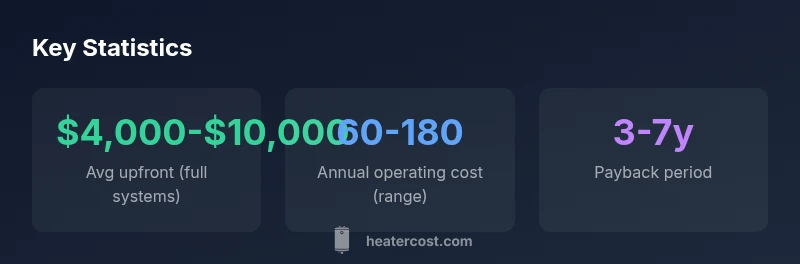
For heaters for sale, expect upfront prices that vary by type: portable electric heaters are typically $30-$150, while whole-house systems run $4,000-$10,000 before installation. In 2026, the best value combines moderate upfront cost with efficient energy use and solid warranties. Always compare energy-efficiency ratings and projected operating costs to find the best long-term value.
Market overview: heaters for sale in 2026
The landscape for heaters for sale has grown more diverse as manufacturers push higher efficiency, smarter controls, and safer designs. Homeowners, renters, and property managers now weigh not just sticker price but total cost of ownership. Portable electric space heaters remain a practical first purchase for supplemental heat, especially in small rooms or during shoulder seasons. For whole‑home comfort, heat pumps and high‑efficiency furnaces offer better long‑term value, particularly in regions with moderate to cold winters. In 2026, the Heater Cost team observes a noticeable shift toward hybrid solutions that combine heat pumps with supplemental electric resistance zones to balance upfront cost and performance. Budgeting should consider not only purchase price but installation, warranty terms, and the cost of energy over the system’s life. According to Heater Cost, a smart buyer compares systems by efficiency ratings, climate suitability, and expected maintenance needs, using a long horizon of energy costs to gauge value.
How to assess upfront costs vs long‑term savings
When evaluating heaters for sale, framing the decision around total cost of ownership (TCO) helps. Upfront costs are only the beginning. Efficient units typically cost more initially but save on monthly energy bills and reduce maintenance over time. Create a side‑by‑side comparison: list purchase price, installation cost, annual energy usage, maintenance fees, and expected lifespan. Use standardized efficiency metrics such as SEER/HSPF for heat pumps and AFUE for furnaces to compare apples to apples. A quick rule of thumb is to target models with higher efficiency ratings that offer dependable warranties; the payback period will be shorter when energy savings accumulate annually. Heater Cost analysis suggests focusing on models with readily available parts and reputable service networks to minimize future expenses.
Popular heater types for sale and typical price ranges
Understanding the common categories helps buyers navigate the market. Portable electric space heaters are inexpensive upfront and ideal for spot heating—costing roughly $30–$150. Whole‑home solutions, like heat pumps and gas furnaces, require larger investments but deliver broader comfort and energy efficiency. Heat pumps typically range from about $4,000 to $10,000 before installation, depending on capacity and climate considerations; gas furnaces can fall in the $2,500–$6,000 range, with higher end options offering better efficiency and durability. For homes with existing ductwork, upgrading to a high‑efficiency furnace or a ducted heat pump can maximize long‑term savings, while smaller spaces benefit from compact radiators or electric baseboard solutions. In all cases, ensure the unit meets local codes and comes with a reliable warranty, because post‑purchase costs are often a meaningful portion of lifetime ownership.
Installation considerations and warranty impact on price
Installation complexity affects total cost and system performance. Portable heaters require minimal setup, but whole‑home systems demand licensed installation, proper venting, and in some cases electrical upgrades. The warranty often hinges on professional installation and adherence to manufacturer guidelines. When budgeting, include potential electrical work, duct sealing, thermostat upgrades, and surge protection. A robust warranty (covering parts and labor for multiple years) reduces long‑term risk and can translate to lower maintenance costs over time. Heater Cost notes that investing in proper installation and a solid warranty can improve perceived value even if the upfront price is higher.
Energy efficiency and long‑term operating costs
Efficiency determines long‑term energy spend more than any single purchase price. Look for Energy Star qualified models where possible, and compare the efficiency ratings across the same climate zone. Heat pumps, when paired with resistive backup, can offer superior year‑round performance in many regions, while gas furnaces shine in extremely cold climates if fuel costs are favorable. Over a 5–10 year horizon, models with higher AFUE or SEER ratings tend to deliver noticeable energy savings, offsetting higher initial costs. Regular maintenance—like air filter changes and duct inspections—also sustains efficiency and compounds savings over time. Heater Cost emphasizes choosing a system whose efficiency aligns with your local energy costs and seasonal needs.
Buying tips and common pitfalls
To avoid buyer’s remorse, use a structured checklist before purchase. Verify safety certifications (UL/ETL), confirm contractor licensing when installation is required, and compare manufacturer warranties. Beware aggressive discounting on under‑powered units or models with marginal efficiency ratings. Avoid oversized units that cycle on and off frequently, increasing wear without delivering real comfort. Maintain a pricing record and set alerts for seasonal promotions, especially in shoulder seasons when retailers clear stock. Finally, factor energy cost projections into your decision rather than relying solely on up‑front price.
Seasonal buying strategy and promotions
Seasonality drives heater promotions. Late summer to early fall is often a window for favorable pricing on portable heaters and pre‑season discounts on whole‑home systems. Use price tracking tools and sign up for retailer newsletters to catch flash sales. Consider bundled promotions that include installation discounts or extended warranties. If you’re in a climate with shifting electricity rates, timing your purchase to lock in lower energy costs can improve overall value. By aligning your purchase with seasonality, you can maximize savings while still securing reliable performance.
Comparison of common heater options and typical costs
| Heater Type | Typical Upfront Cost | Estimated Annual Operating Cost | Ideal For |
|---|---|---|---|
| Portable electric space heater | $30-$120 | $60-$120 | Spot heating, small rooms |
| Whole-home heat pump | $4,000-$10,000 | $500-$1,500 | Year‑round efficiency in temperate climates |
| Gas furnace | $2,500-$6,000 | $1,200-$2,000 | Cold climates, ducted homes |
Got Questions?
What is the typical price range for heaters for sale?
Prices vary widely by type and features. Portable heaters are generally affordable, while whole‑home systems involve larger upfront investments but offer greater long‑term savings. Always compare efficiency and warranty terms alongside the purchase price.
Prices vary by type and features. Portable heaters are affordable, while whole‑home systems cost more but save more over time.
Is it cheaper to buy a space heater vs a full HVAC upgrade?
For primary heating needs, a full HVAC system can be cheaper over the long term due to energy efficiency, but initial costs are higher. Space heaters are cost‑effective for supplemental heat or targeted zones but won’t replace a central system in most homes.
A full HVAC system can be cheaper over time for whole-home heating, but space heaters work well for supplemental heat.
What should I consider besides price?
Energy efficiency ratings, warranty length, safety features, and installation requirements are critical. A higher upfront price can be justified by lower energy costs and stronger warranties.
Look at energy efficiency, warranty, safety features, and installation needs in addition to price.
How long do heaters typically last?
Lifespan varies by type but many efficient models provide 10–15 years with proper maintenance. Lifespan depends on usage, service quality, and regional climate.
Most efficient heaters last about 10–15 years with good upkeep.
Are there safety tips when buying and using heaters for sale?
Buy models with safety certifications and automatic shutoff. Keep clearances around combustibles, use surge protection, and never run heaters unattended for extended periods.
Choose certified models, keep space clear, and never leave heaters on unattended.
When is the best time to buy heaters for sale?
Look for off‑season promotions in spring or late summer, then compare pre‑season deals in fall. Seasonal promotions can substantially reduce total costs.
Shop during off‑season promotions to save money.
“Choosing a heater for sale isn’t just about the lowest sticker price; it’s about balancing upfront cost with long-term energy savings and a solid warranty.”
The Essentials
- Compare total ownership cost, not just upfront price
- Prioritize energy efficiency to cut long-term costs
- Match heater type to climate and space
- Include installation and warranty in budgeting
- Track seasonal promotions for extra value