heater for house: Costs, Types, and Practical Guidance
A practical guide for homeowners to compare heater options for a house—central systems, heat pumps, and space heaters—focusing on sizing, energy costs, installation, and maintenance.


heater for house refers to any device or system that raises indoor temperatures to maintain comfortable living spaces. Common options include central furnaces, heat pumps, boilers, and portable space heaters. The right choice depends on climate, home size, and energy costs. For most homes, a properly sized, energy‑efficient system with zoning delivers consistent warmth and lower monthly bills.
What is a heater for house and how it works
A heater for house is a device or system designed to raise and maintain indoor temperatures, creating comfortable living spaces during cold weather. In residential settings, heating is typically provided by central systems that distribute heat through ducts or pipes, or by standalone devices that heat individual rooms. According to Heater Cost, the best approach balances comfort, energy efficiency, and upfront costs, while accounting for climate, insulation, and occupancy patterns.
Most homes rely on one of four broad categories: central furnaces (gas, electric, or oil), heat pumps, boilers with radiators, and portable space heaters for supplemental warmth. Central systems usually rely on a primary heat source that warms air or water and then circulates it through the house. Space heaters offer flexibility but can be less efficient per square foot than a properly sized central system. When evaluating options, homeowners should consider seasonal needs, existing ductwork or radiators, and future maintenance costs.
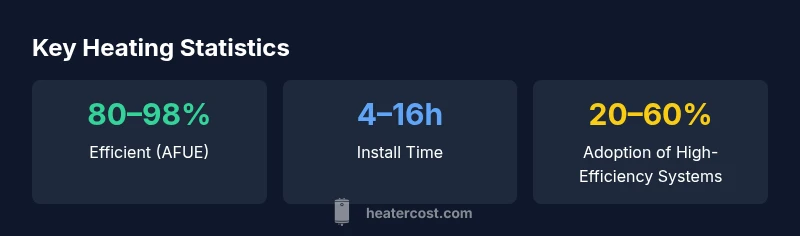
Key considerations include efficiency ratings (AFUE for furnaces, SEER for heat pumps), noise levels, thermostat compatibility, and zoning capabilities. Additionally, ongoing operating costs depend on energy prices and climate. While a heater for house provides warmth, it also represents a significant share of a home’s energy budget; choosing the right system requires a clear assessment of goals: max comfort, lower bills, and reliability across seasons.
Central heating vs space heaters
Central heating systems and space heaters each have advantages and trade-offs. Central systems distribute heat evenly across large areas, use forced-air or hydronic networks, and often integrate with smart thermostats for precise control. They excel in climate zones with cold winters and larger homes, but upfront costs and ductwork requirements can be barriers. Space heaters, by contrast, offer targeted warmth, quick installation, and flexibility for spot heating or in older homes lacking ductwork. They’re ideal for warming a single room or for supplemental comfort when a main system is underpowered or offline.
When deciding, consider how often rooms are used, the home's insulation quality, and safety needs. For extended use, a central system with good zoning and a programmable thermostat can reduce energy waste. For occasional use or seasonal homes, high-quality space heaters with tip-over and overheat protection can be cost-effective, provided occupants are vigilant. In practice, many homes combine both approaches: a primary central system for baseline warmth and space heaters to zone out drafts or to provide extra heat on the coldest days.
Overall, the choice hinges on climate, budget, and how you live in your space.
Fuel sources and energy efficiency
Heaters can run on electricity, natural gas, propane, oil, or district heating, and each fuel has distinct cost implications and emissions profiles. Electric resistance heaters are simple to install but typically have higher operating costs in colder climates, while gas furnaces offer strong heat output with potentially lower energy bills where natural gas is affordable. Heat pumps represent a modern alternative that extracts heat from outside air or ground loops, delivering both heating and cooling in many setups. They are especially efficient in moderate climates but can require backup when temperatures plunge.
Efficiency is expressed differently across technologies: AFUE measures furnace efficiency, SEER indicates cooling efficiency for heat pumps, and HSPF covers heat pump heating performance. Efficiency gains often come with higher upfront costs, but they translate into lower operating costs over time. Weatherization, insulation, and duct sealing further affect a system’s real-world performance. For mission-critical spaces such as bedrooms or home offices, a well-designed mix of appliances and strategic zoning can maximize comfort without unnecessary energy use. According to Heater Cost, a combination of high-efficiency equipment and proper insulation yields the best long-term value.
Sizing, climate, and home layout
Accurate sizing matters more than the brand or model you choose. An oversized heater wastes energy and comfort; an undersized one struggles to reach the desired temperature. The sizing process typically relies on a heat-load calculation, often called Manual J in the contracting world, which accounts for insulation levels, window efficiency, air leakage, and occupancy patterns. Climate also drives choices: in milder regions, a heat pump or electric boiler might suffice, while in extreme cold, a gas furnace with a high AFUE rating often performs better.
Home layout matters too. Open floor plans distribute heat differently than compartmentalized spaces, and high ceilings or large south-facing windows can cause heat loss or gain. Duct design, radiator layout, and permits or code requirements should be considered early. A careful assessment of these factors helps you avoid overpaying for capacity you don’t need and reduce the frequency of temperature fluctuations from room to room.
Installation, maintenance, and safety
Professional installation ensures correct sizing, proper venting, safe electrical connections, and optimal ductwork or piping alignment. DIY installation is rarely appropriate for central systems due to safety and code compliance. After installation, routine maintenance—filter changes, refrigerant checks, vent cleaning, and thermostat calibration—preserves efficiency and extends equipment life. Regular inspections help detect problems such as leaks, unusual noises, or uneven heating before they become costly repairs.
Safety considerations include combustion byproducts, carbon monoxide risks from gas and oil systems, and electrical hazards with high-power equipment. Install detectors, ensure adequate ventilation, and follow manufacturer guidelines for clearance around heaters. For portable space heaters, follow strict safety rules: keep flammable materials away, never leave unattended, and power down when leaving the room or going to sleep. A professional contractor should review your system annually to ensure peak performance and safety.
Cost considerations and long-term value
Upfront costs vary widely by system type, home size, and local labor rates. Expect a range of installation expenses from a few thousand dollars for smaller electric upgrades to more substantial outlays for gas furnaces or heat pumps with zone controls. Operational costs depend on energy prices, climate, and how well the house is insulated. High-efficiency equipment can reduce monthly bills and increase resale value, but the payback period depends on local energy costs and usage patterns.
To maximize long-term value, prioritize equipment with high efficiency ratings, proper sizing, and reputable warranties. Weatherization and duct sealing should accompany any new installation to ensure you reap the full benefits of the investment. The Heater Cost team recommends pairing a durable, efficient heater for house with ongoing maintenance, smart controls, and a realistic plan for seasonal use to balance comfort and cost.
Comparison of common residential heater types
| Heater Type | Typical Size (BTU) | Fuel Type | Estimated Installed Cost Range (USD) |
|---|---|---|---|
| Furnace (gas) | 60,000–100,000 | Natural gas | $4,000–$8,000 |
| Heat pump (air source) | 12,000–60,000 | Electric | $3,500–$9,000 |
| Propane furnace | 60,000–100,000 | Propane | $4,500–$9,000 |
Got Questions?
What is the most energy-efficient heater for a typical home?
In many climates, a properly installed heat pump offers the highest efficiency since it moves heat rather than generating it. For extremely cold climates, a high-efficiency gas furnace with good insulation can be a viable alternative. Always compare SEER, HSPF, and AFUE ratings for apples-to-apples comparisons.
Heat pumps are often the most energy-efficient option for many homes, especially in milder climates, but check ratings.
How do I determine the right size for a heater for house?
A professional load calculation (Manual J) considers insulation, windows, air leakage, and climate to specify capacity. Do not rely on square footage alone. Correct sizing improves comfort and efficiency.
Get a professional size check; wrong size wastes energy and money.
Are space heaters safe for long-term use?
Space heaters can be safe if used as intended, with tip‑over and overheat protection, proper clearance, and supervision when children or pets are present. Never leave them running unattended.
Space heaters are handy but require caution.
What are the upfront costs of installing a new heater?
Costs vary by system type and home specifics. Electric upgrades tend to be less expensive upfront than gas or heat-pump installations. Get multiple quotes and factor in ductwork, permits, and future energy savings.
Costs vary; shop around and factor in energy savings.
Does climate affect which heater is best?
Yes. Warmer climates benefit from heat pumps, while colder regions may rely on high-efficiency gas furnaces. Insulation and ventilation also influence effectiveness.
Climate matters: choose a system suited to your winters.
Should I repair or replace an aging heater?
If your system is older than 15–20 years or requires frequent repairs, replacement with a high-efficiency model is often more economical long term. Consider energy costs, reliability, and available incentives.
If it's old or costly to fix, replacement can save money.
“A well-chosen heater for house balances upfront cost with long-term savings, delivering reliable comfort year-round.”
The Essentials
- Define your heating goals before shopping.
- Prioritize high-efficiency models aligned with climate.
- Get professional sizing to avoid waste.
- Plan for installation, maintenance, and safety.