Heater or Blower Which Is Healthier: A Practical Guide
Compare non-blower and blower heaters for indoor health, focusing on air quality, humidity, ventilation, and safety. Practical guidance from Heater Cost to help homeowners choose healthier heating options.


For health, a heater without a blower (radiant or oil-filled) is typically better because it heats without moving air, reducing dust spread and humidity shifts. If you must use a blower, select electric, sealed units with good filtration and maintain clean filters; ensure adequate ventilation to minimize combustion risks in spaces with any fuel-burning appliance. According to Heater Cost, prioritize air-quality-friendly options when health is a primary concern.
Health-centric Heating: What matters for indoor air quality
When homeowners assess heater options, the impact on indoor air quality stands alongside warmth and comfort. The choice between a blower-based heater and a non-blower design has tangible health implications: moving air can spread dust, allergens, and humidity shifts, while combustion byproducts can introduce contaminants if ventilation is inadequate. According to Heater Cost, the healthiest approach for sensitive occupants is to minimize air movement and avoid combustion byproducts where possible. Understanding how heat delivery interacts with air quality, humidity, and ventilation helps you pick a system that keeps occupants comfortable without compromising health.
How heaters work and health implications
Electric heaters convert electricity into heat and typically heat spaces through convection, radiant heat, or a combination of both. Those with built-in blowers circulate warm air, which can raise indoor comfort quickly but also distributes dust and particulates present in the room. Non-blower models, such as radiant panels and oil-filled radiators, emit steady warmth with little air movement, which often benefits people with allergies or asthma. The health impact hinges on design choices, maintenance, and how well the space is ventilated and cleaned. Heater Cost analyses emphasize that simple, well-sealed electric heaters tend to pose fewer indoor-air risks than combustible or badly filtered units.
Blower-based heaters: health trade-offs
Blower heaters deliver rapid warmth by circulating air with a fan. This can be advantageous in drafty rooms or larger spaces where quick heat is desirable. However, moving air can pick up dust, pet dander, and pollen, potentially irritating airways for sensitive individuals. If you choose a blower heater, prioritize models with high-quality filtration (filters that are easily accessible and replaceable), sealed enclosures that reduce noise and dust leakage, and regular cleaning schedules. Proper ventilation remains essential to minimize humidity swings and ensure fresh air exchange.
Radiant and non-blower heaters: health-friendly options
Non-blower heaters, including radiant panels and oil-filled radiators, deliver heat with minimal air movement. This reduces the distribution of dust and allergens, and can lead to steadier humidity levels, which benefit nasal passages and respiratory comfort. While these units may heat more slowly in very large spaces, they excel in bedrooms, living rooms, and compact apartments where quiet operation and air quality matter most. For households with occupants who are particularly sensitive to irritants, non-blower designs often represent a healthier baseline option.
Ventilation, filtration, and CO risks: essential practices
Even with well-chosen heaters, indoor air quality depends on ventilation and filtration. In spaces with gas or propane heaters, ensure proper venting and functional carbon monoxide detectors. Electric systems avoid combustion byproducts but still benefit from good air exchange and clean filters. Replacing or cleaning filters regularly, using portable air purifiers with HEPA filters, and opening windows when weather and safety allow can markedly improve air quality. These practices complement any heater choice and help reduce health-related concerns.
Humidity and heat: balancing comfort and health
Temperature control interacts with humidity. Excessive dryness can irritate mucous membranes, while overly moist air can promote mold growth and worsen respiratory symptoms. Non-blower heaters often create gentler air movement, which helps stabilize humidity. If you use a blower system, monitor humidity with a hygrometer and consider a humidifier or dehumidifier to maintain a healthy range. Balanced humidity supports nasal and throat comfort, reduces static, and can improve perceived warmth without overloading the HVAC system.
Real-world scenarios: renters, small homes, and multi-room setups
Renters and small-space households benefit from compact, energy-efficient units with straightforward maintenance. In multi-room layouts, strategically placing non-blower heaters in bedrooms and living rooms can minimize dust circulation while providing consistent comfort. For shared spaces, consider a blower model only if you can manage filtration and ventilation effectively. The key is to tailor heat delivery to room size, occupancy patterns, and existing air-quality concerns.
Features to look for in health-conscious heaters
When evaluating options, prioritize features that support health: adjustable heat with low air movement, sealed or cyclone-like air pathways to limit dust recirculation, easy-to-clean filters, quiet operation, and clear safety certifications. Look for units with automatic shutoff, durable housings, and designs that minimize dust traps. User-friendly maintenance schedules promote long-term air quality and reliability.
Maintenance and air-quality practices
Regular maintenance has a direct impact on health outcomes. Clean or replace filters on blower units as recommended by the manufacturer, vacuum heater grilles to remove dust buildup, and ensure vents are unobstructed. Keep floors and surfaces free of dust, wash bedding and curtains periodically, and use air purifiers in high-traffic rooms. These practices reduce irritants and improve overall air quality, allowing any heater choice to perform more healthily over time.
Myths and misconceptions debunked
A common misconception is that all electric heaters are equally safe for health. In reality, the health impact depends on air movement, filtration, and maintenance. Another myth is that louder means healthier because it implies more power; health benefits come from clean air, stable humidity, and minimal contaminants, not from the sheer intensity of warmth. Understanding the trade-offs helps homeowners make informed decisions.
Safer setups: combining heat with air quality devices
A prudent health-focused approach combines a heater with air-quality devices and good habits. Use portable air purifiers with HEPA filters, vacuum regularly, and keep surfaces clean to reduce allergens. Pair non-blower heaters with a small fan-assisted purifier in rooms where air quality concerns persist. For spaces with occupants who smoke or have gas-fired appliances, ensure ventilation and monitor air quality regularly to maintain a healthy environment.
Practical decision guide by space and needs
Your choice should reflect room size, occupant health considerations, and maintenance capacity. In small, quiet rooms where air quality matters most, non-blower electric heaters are typically the healthiest default. In larger rooms or areas requiring rapid warmth, a blower unit can be acceptable if you implement filtration and ventilation measures. The optimal solution balances health priorities with practical heat delivery and upkeep.
Comparison
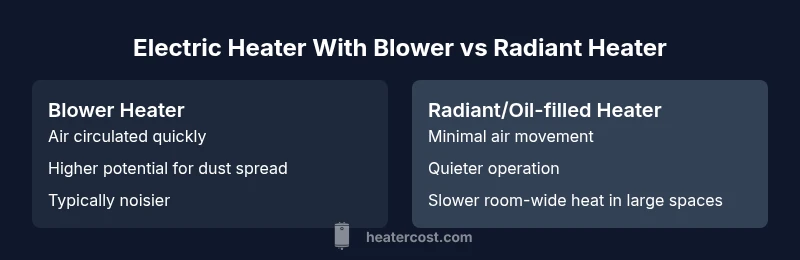
| Feature | Electric heater with blower | Radiant/oil-filled heater (no blower) |
|---|---|---|
| Airflow/Heat Distribution | Moves air rapidly via a built-in blower | Heats spaces with radiant warmth and minimal air movement |
| Air Quality Impact | Can distribute dust and particulates | Lower air movement reduces dust spread |
| Noise Level | Typically louder due to fan operation | Quieter operation, especially at low settings |
| Energy Use / Cost | Fast warm-up but can consume more energy during peak operation | Steady heat with potentially lower ongoing consumption |
| Best For | Small spaces needing quick warmth with filtration and ventilation | Bedrooms or living rooms prioritizing air quality and quiet |
| Health Considerations | Watch for dust recirculation; ensure filters are clean | Favored for sensitive occupants when used with filtration |
The Good
- Blower heaters provide rapid warmth in small spaces
- Non-blower heaters offer gentler air quality and quieter operation
- Electric options avoid combustion byproducts
- Compact models fit in tight spaces
Negatives
- Blower-based models can distribute dust and allergens
- Non-blower heaters may heat more slowly in larger rooms
- Gas or combustion heaters require ventilation and monitoring
Non-blower electric heaters are generally healthier for indoor air quality, with blower units offering faster warmth but higher air movement
Choose non-blower options to minimize air movement and dust circulation. If heat-up time matters, select a blower model with filtration and ensure adequate ventilation.
Got Questions?
Which heater type is healthiest for indoor air quality?
Non-blower electric heaters usually minimize air movement and reduce dust spread. Pairing them with proper filtration further enhances indoor air quality. Consider ventilation strategies to maximize health benefits.
For the healthiest option, choose a non-blower electric heater and keep filters clean with good ventilation.
Do blower heaters spread allergens?
Blower units can move dust and allergens if filters are dirty or airflow is unrestricted. Regular filter maintenance and room cleaning help minimize this effect.
Yes, but you can minimize it with clean filters and regular cleaning.
Are gas heaters safer for health if vented properly?
Ventilated gas heaters reduce but do not eliminate combustion byproducts. Ensure proper venting, CO detectors, and avoid enclosed spaces for extended use.
Gas heaters require good ventilation and CO monitoring to stay safe.
What maintenance steps improve health outcomes?
Regularly replace or clean filters, vacuum heater grilles, and ensure vents are unobstructed. Combine with periodic air-quality checks and cleaning routines to minimize irritants.
Keep filters clean, vents clear, and air fresh with routine checks.
Can humidity affect heating health?
Yes. Very dry air can irritate airways; overly humid spaces promote mold. Use humidifiers or dehumidifiers to maintain a comfortable humidity range while heating.
Balance humidity to keep airways comfortable.
Is it safe to use heaters in bedrooms?
Yes, with caution. Prefer non-combustion electric heaters, maintain clearance, and ensure proper ventilation. A quiet, clean option supports better sleep and air quality.
Yes, but choose safe electric options and ventilate as needed.
The Essentials
- Prioritize air-quality features like sealed combustion or filtration
- Choose non-blower options for sensitive occupants
- Maintain filters and ventilate to improve indoor air quality
- Balance humidity to support respiratory comfort
- Match heater type to room size and usage pattern