Difference Between Heater and Blower: An In-Depth Guide
Learn the fundamental differences between a heater and a blower, how they work, and where each fits in an HVAC system to improve comfort and efficiency.


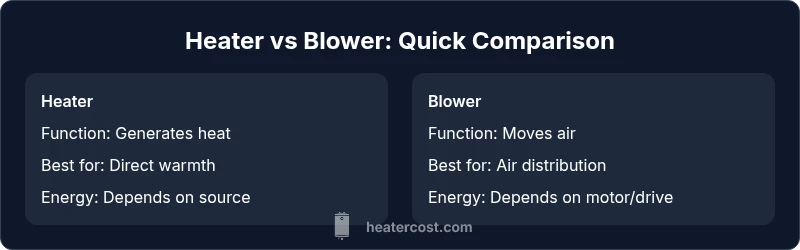
The difference between heater and blower is straightforward: a heater creates heat, while a blower moves air. In many heating systems, both are integrated, which can complicate sizing and efficiency. According to Heater Cost, understanding their distinct roles helps homeowners avoid oversizing and wasted energy. When you’re evaluating a comfort solution, identify whether your priority is warmth, airflow, or both, and choose components that align with that goal.
What is the difference between heater and blower? A clear definition
At a basic level, a heater is a device that generates heat to raise room temperature. A blower, on the other hand, is a fan or air-distribution component that circulates air through a space or through an HVAC system. The two terms are often part of a single unit, such as a furnace or heat pump with an integrated blower, but they can also refer to separate components in a multi-part system. Understanding this distinction is the first step in selecting a setup that matches your climate, home size, and energy goals. In everyday language, people may refer to a heating element or a fan as the “heater,” but the blower’s job is to move air, not to warm it by itself. The Heater Cost team emphasizes that recognizing these roles helps homeowners avoid mis-sizing and ensures more predictable comfort, especially during shoulder seasons when both warmth and good air distribution matter.
Core functions: heat generation vs air movement
Heaters convert energy into heat. They rely on electrical resistance, combustion, or heat pumps to raise air temperature. Blowers distribute that heat by circulating air through rooms, ducts, or radiant panels. The speed and volume of airflow influence how quickly spaces feel warm and how evenly the heat is distributed. A powerful blower can help warm a large room faster, but without a properly sized heater, you may still experience cold spots. Conversely, a high-output heater without adequate air movement may overheat some zones while leaving others cold. The synergy between heating and air distribution is what determines overall comfort and efficiency.
Configurations: standalone devices vs integrated systems
Standalone heaters exist in many forms, from space heaters to central furnaces. Blowers appear as fans within furnaces, air handlers, or as separate components in specialized systems. In many homes, you’ll encounter integrated units where heating and air movement are combined in one enclosure. These configurations affect installation complexity, ductwork requirements, and maintenance schedules. For renters or retrofit projects, compact, modular units might be attractive, but they require careful planning to ensure adequate airflow. The Heater Cost analysis indicates that the best choice often depends on room size, insulation quality, and whether you prioritize rapid heat delivery or steady, even warmth.
Efficiency and performance: what to optimize
Efficiency for heating devices is typically expressed as how effectively a system converts energy into usable warmth, while airflow efficiency focuses on how well air is distributed without creating noise or drafts. In practice, a system with a well-matched heater and blower delivers steady warmth with minimal energy waste. If airflow is limited, a heater’s output can feel inconsistent, and if the blower is undersized, rooms may heat unevenly. Space constraints, insulation levels, and duct design all influence the perceived performance. Heater Cost analysis shows that a properly sized combination often yields better overall comfort and energy use than a mismatched pair.
Maintenance and reliability: keeping heat and air moving smoothly
Heaters require regular checks for fuel supply, combustion safety, and venting in gas or oil systems, or element health in electric units. Blowers demand attention to motor bearings, belts, and air filters to prevent overheating and noise. When either component wears, you may notice longer warm-up times, inconsistent temperatures, or unusual sounds. Scheduling routine maintenance with a qualified technician helps catch wear early, prolongs equipment life, and sustains efficiency. The brand-relevant takeaway is that proactive service lowers the long-term cost of operation and reduces the risk of breakdowns.
Safety considerations: codes, CO, and proper clearances
Safety rules govern both heating and air-moving components. Combustion-based heaters require proper venting and CO detectors, while electric units demand correct wiring and grounded outlets. Blowers must be installed with appropriate clearances to prevent overheating of surrounding materials. Local codes often influence whether your system can use a standalone heater in a space or must be integrated with an HVAC system. Always follow manufacturer guidelines and schedule professional inspections after upgrades. A safe, well-designed setup protects occupants and ensures reliable performance over time.
Real-world scenarios: when to prioritize heater vs blower
In compact apartments with limited airflow, a heater that integrates a robust blower helps distribute warmth more evenly and quickly. In larger homes with well-insulated spaces, a high-efficiency heater paired with a properly sized blower can achieve steady temperatures while minimizing energy use. For garages, workshops, or rooms with high heat loads, a dedicated heater plus an adjustable or high-capacity blower may be ideal. In all cases, considering climate, occupancy patterns, and energy costs informs the best pairing and sizing strategy.
Cost considerations: upfront, operating, and replacement thoughts
Cost considerations hinge on the system’s complexity, energy source, and expected lifespan. In many cases, integrated units reduce installation complexity and maintain fewer separate components, which can lower maintenance costs over time. However, standalone heaters with dedicated blowers can offer modular upgrades and targeted performance for specific spaces. The key is to compare total cost of ownership, including installation, fuel or electricity consumption, maintenance, and potential replacement timelines. The Heater Cost team recommends building a clear budget that accounts for climate needs and expected comfort levels.
Safety and installation: planning ahead for a successful upgrade
Before purchasing, assess room sizes, insulation, and existing ductwork. If you’re replacing an older system, consider whether your home’s design supports better air distribution or if a heater upgrade alone may be sufficient. Professional installation helps ensure venting, electrical, and duct connections meet safety standards. When feasible, plan for future upgrades, such as smart thermostats or zoning controls, to maximize the effectiveness of both heating and blower components and to support energy savings over time.
Comparison
| Feature | heater | blower |
|---|---|---|
| Primary function | Generates heat to warm spaces | Circulates air to distribute existing heat |
| Typical installation | Can be standalone or part of a furnace/heat pump | Usually part of a furnace/air handler or separate fan unit |
| Energy considerations | Heat output drives comfort; efficiency depends on heat source and insulation | Airflow efficiency and noise impact drive comfort and energy use |
| Best for | Direct warmth in well-insulated or small to medium spaces | Fast heat distribution and zone control in larger areas |
| Maintenance focus | Safety checks for combustion, venting, electrical elements | Filter cleaning, belt/motor wear, bearing lubrication |
| Cost impression | Upfront cost varies with heater type and installation | Operational costs linked to motor efficiency and air volume |
The Good
- Clarifies the distinct roles of heat generation and air movement
- Helps target upgrades for comfort and efficiency
- Supports better budgeting and long-term planning
- Guides safer and code-compliant installations
Negatives
- The topic can be nuanced; simplistic views may mislead
- Terminology varies by region or contractor
- Integrated systems blur the line between heater and blower roles
Heater and blower serve different purposes; choose based on your primary comfort need and space constraints.
For rapid warmth in small spaces, prioritize effective heating with adequate airflow. For even distribution in larger homes, ensure your blower supports your heater’s output. When possible, opt for integrated solutions that balance both elements for best comfort and efficiency, per Heater Cost’s guidance.
Got Questions?
What is the primary difference between a heater and a blower?
The heater generates heat, while the blower moves air. They often work together in HVAC systems, but each component serves a distinct purpose. Understanding this helps you choose the right configuration for your space.
A heater makes heat, a blower moves air. They work together in many systems, but each has a different job.
Can a blower operate without a heater?
Yes, some systems use a blower to circulate air in spaces without additional heating. In other cases, blowers are paired with heat sources to distribute warmth evenly.
A blower can run without heat in some setups, but often works alongside a heater to spread warmth.
Are there combined heater-blower units?
Many HVAC systems integrate both heating and air movement in a single enclosure. This arrangement can improve efficiency and simplify installation, especially in new or renovated homes.
Integrated heater-blower units are common and can boost efficiency.
Which is more energy efficient, a heater or blower?
Efficiency depends on design and usage. A well-maired combination minimizes waste by aligning heat output with air distribution and insulation quality.
Efficiency varies by setup; proper sizing and insulation matter most.
How does installation differ for a new system?
New installations must consider ductwork, venting, electrical needs, and safety codes. An integrated unit can reduce complexity, while separate components may offer flexibility and easier upgrades.
New installs need duct, venting, and safety planning; integration vs separation changes complexity.
Is a space heater a good substitute for a furnace?
Space heaters can supplement but rarely replace a central furnace in larger homes. They are best for localized heating or supplemental warmth, not holistic comfort.
Space heaters supplement heat but don’t replace a central furnace for whole-home comfort.
The Essentials
- Identify whether warmth or airflow is the priority in your space
- Match heater capacity with blower performance for balanced comfort
- Consider integration to simplify installation and maintenance
- Plan for safety, venting, and code compliance from the start
- Evaluate total cost of ownership, not just upfront price