Heater Like Fireplace: Comprehensive Side-by-Side Guide for 2026
An objective, data-driven comparison of fireplace-like heaters (electric inserts, gas heaters, infrared, and pellet stoves) for homeowners. Learn costs, efficiency, safety, and installation considerations to choose the best heat source for your living space in 2026.


According to Heater Cost, a heater like fireplace can deliver the cozy look of a traditional hearth with modern safety and control features. The best choice depends on room size, climate, and how you prioritize upfront cost vs ongoing energy bills. This comparison looks at electric inserts, gas-fired options, infrared, and pellet stoves, focusing on heat delivery, efficiency, and maintenance. The verdict favors a balanced option that matches your space and budget.
What a heater like fireplace means in a modern home
A heater like fireplace combines the visual appeal of a traditional fireplace with the safety and control features of contemporary heaters. These devices mimic the look of real flames, embers, and a mantel while using electricity, gas, or pellets as heat sources. For homeowners, this category offers a way to achieve ambiance without the labor of tending a wood fire. The phrase heater like fireplace is used to describe electric fireplace inserts, gas fireplace heaters, infrared fireplace-style units, and pellet stove inserts that are designed to be a focal point in living rooms or family rooms. As you evaluate options, consider how important authentic flame aesthetics are, how much heat you need, and whether you want independent room-by-room zoning or a single central unit. Our analysis at Heater Cost emphasizes practical trade-offs in aesthetics, safety, and ongoing costs, so you can decide without guessing.
The main option categories in this space
There are four common routes to get a fireplace-like heat without a real wood fire:
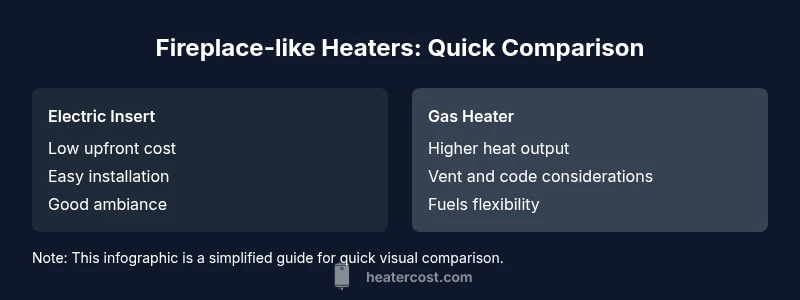
- Electric fireplace inserts: These units fit into existing mantels or recessed areas and use electric elements to produce heat and a simulated flame. They are highly versatile, easy to install, and generally inexpensive upfront. They work well for supplemental heat and ambiance, especially in spaces where running gas lines or venting is impractical.
- Gas fireplace heaters: Gas options often deliver faster, higher heat output and can feel more like a true fireplace. They require proper venting or ventless configurations, depending on the model and local codes. Gas heaters can be fueled by natural gas or propane, offering strong performance with realistic flame effects.
- Infrared quartz heaters (fireplace-like): Infrared units radiate heat directly to objects and people in a room. They provide immediate warmth and are efficient for targeted heating. The flames are more cosmetic unless the unit includes additional heat elements beyond the decorative flame.
- Pellet stove inserts: Pellet stoves burn compressed wood pellets and typically require venting. They offer a natural fuel source with efficient heat and a distinctive flame aesthetic, but they demand ongoing pellet logistics and regular maintenance.
In choosing among these, weigh aesthetics, the need for independent zoning, fuel availability, and installation constraints. Heater Cost’s approach centers on realistic costs, energy efficiency, and safety considerations that matter for families and property managers alike.
How heat delivery and efficiency differ across options
Heat delivery is not one-size-fits-all. Electric inserts typically provide steady, but moderate, heat output that’s excellent for supplemental warming. Gas heaters deliver higher BTUs and quick heating, making them better for larger rooms or colder climates. Infrared heaters prioritize comfort by warming people and objects directly, reducing air turnover and sometimes saving energy in short sessions. Pellet stoves combine ambience with robust heat, but their efficiency hinges on pellet quality and stove design. Efficiency metrics, maintenance needs, and energy costs vary by model and fuel, so it’s essential to compare representative ranges rather than relying on a single feature.
Quick orientation: upfront costs and operating costs (typical ranges)
Upfront costs can vary widely by type, installation complexity, and whether you’re retrofitting an existing mantle or starting from scratch. Electric fireplace inserts often come in the $300–$1,500 range for the unit itself, excluding installation. Gas fireplace heaters can range from $1,500 to $4,000 or more, depending on venting requirements and labor. Infrared fireplace-like units generally fall between electric insert costs and specialty gas options, roughly $200–$1,200 for a standalone unit. Pellet stove inserts often run $1,000–$2,500, plus ventilation and installation. Operating costs depend on local energy prices, fuel type, and usage patterns, with electric units typically cheaper to run in milder seasons and natural gas or pellets offering higher heat output for larger spaces.
Installation, safety, and code considerations
Installation considerations differ by option. Electric inserts usually require less invasive installation and can be a DIY-friendly enhancement in many spaces, but still benefit from a professional for optimal placement and safety. Gas options require venting, gas line work, and compliance with local codes; improper installation can pose safety risks and inefficiencies. Infrared units often need space planning to ensure safe clearance, while pellet stoves involve venting and ash management. Regardless of type, maintain clearances around the unit, verify proper ventilation, and install carbon monoxide detectors as required by local regulations. This is where a professional assessment from Heater Cost can help identify risks and build a compliant plan.
Energy efficiency and long-term operating costs for 2026
Energy efficiency is a moving target influenced by climate, insulation quality, and occupancy patterns. Electric fireplace-like options generally have lower installation friction but depend on electricity for heat. Gas options often deliver higher heat per hour, but gas prices affect running costs. Infrared heaters shine in spot-heating scenarios with quick warmth, though long-term savings depend on usage patterns. Pellet stoves can be economical where pellets are affordable and stable, but maintenance and pellet logistics influence total cost. Heater Cost analyzes typical trade-offs and highlights scenarios where each category provides the best value, such as apartments needing compact aesthetics or larger living rooms seeking robust heat.
Maintenance and lifespan expectations
Maintenance frequency and lifespan depend on the fuel type and build quality. Electric inserts typically require occasional cleaning of the firebox and air pathways, with long lifespans if purchased from reputable brands. Gas heaters may need vent inspection, burner cleaning, and gas line checks; neglect can reduce efficiency and safety. Infrared units have few moving parts, offering low maintenance but requiring periodic cleaning of reflectors and ensuring the heating elements remain in good condition. Pellet stoves require ash removal, pellet quality checks, and periodic cleaning of the burn chamber. A disciplined maintenance schedule can significantly extend the life of any fireplace-like heater.
Real-world scenarios: apartment, single-family home, and open-plan spaces
In apartments or rentals, electric inserts often win for simplicity, safety, and noise considerations. In single-family homes with cold winters, gas or pellet configurations can deliver more heat per hour and greater warmth on demand. For open-plan spaces, consider a heater with higher BTU capacity and the option to zone heat nearby, reducing energy waste. In all cases, balance the desired ambience with practical constraints like venting, electrical capacity, and maintenance commitments. Heater Cost emphasizes evaluating not just initial price but total cost of ownership over 5–10 years.
Common pitfalls and misperceptions to avoid
Smart shoppers frequently misjudge heat requirements, conflating flame realism with actual warmth. A fashionable flame does not guarantee the best room heating efficiency. Underestimating ventilation needs, clearance requirements, or electrical load can lead to unsafe installations or higher operating costs. Another pitfall is assuming tax credits or incentives apply equally to all options; verify local programs and eligibility. Finally, neglecting maintenance can cause reduced efficiency and shorter lifespans, especially for pellet stoves and gas models that rely on venting and combustion efficiency.
Feature Comparison
| Feature | Electric Fireplace Insert | Gas Fireplace Heater | Infrared Quartz Fireplace-like Heater | Pellet Stove Fireplace Insert |
|---|---|---|---|---|
| Heat Output (typical BTU) | 5,000–8,000 BTU | 20,000–40,000 BTU | 4,000–6,000 BTU (direct heat) | 8,000–25,000 BTU |
| Fuel Type | Electricity | Natural gas/Propane | Electrical infrared element + optional heat source | Wood pellets |
| Installation Difficulty | Low to moderate; mantle-ready options | Moderate to high; venting required | Low to moderate; standalone unit | Moderate; venting and clearance needed |
| Operating Cost (range context) | Low to moderate (depends on electricity rates) | Moderate to high (gas prices vary) | Low to moderate (electricity with targeted warmth) | Moderate (pellet price and consumption) |
| Maintenance Frequency | Low; periodic cleaning | Moderate; burner and vent checks | Low; occasional cleaning | Moderate; ash and hopper management |
| Best For | Supplemental heat and ambience in smaller rooms | Large rooms, high heat demand, gas suitability | Spot heating with ambient flame effect | Affordability and renewable fuel in mid-size spaces |
The Good
- Provides ambiance and warmth without wood handling
- Low upfront friction for electric options
- Flexible placement with modern venting options
- Wide range of aesthetics to match decor
Negatives
- Heat distribution may be uneven in large spaces
- Gas and pellet options require venting and ongoing fuel handling
- Electric-only models depend on electricity reliability
Electric or gas-fireplace-like heaters offer the best balance for most homes; choose electric for ease and safety, gas for high heat in cold climates.
For compact spaces or rental scenarios, electric inserts excel. For larger rooms or where rapid heat is needed, gas options deliver more warmth. Pellet stoves are ideal where biomass fuel is convenient, but require more maintenance.
Got Questions?
What is a fireplace-like heater and how does it differ from a real fireplace?
A fireplace-like heater delivers heat with a realistic flame visual, but uses electricity, gas, or pellets as a fuel source. Unlike a real wood fireplace, it does not require burning wood or producing smoke, and it often includes built-in safety features and remote controls. The main differences are heat output, fuel source, maintenance, and installation requirements.
A fireplace-like heater mimics the look of a fire while delivering heat through electricity, gas, or pellets, with easier maintenance and safer operation than a traditional wood fire.
Which option is best for small apartments?
Electric fireplace inserts are typically the best fit for small apartments due to easy installation, low venting needs, and reliable ambient heat. They provide ambiance without the complexity of gas lines or pellet logistics. If more warmth is needed, consider infrared models that can target occupants directly.
Electric inserts are usually the simplest and safest choice for small apartments, with reliable ambiance and easy setup.
Are fireplace-like heaters safe for households with kids or pets?
Yes, when installed properly and maintained, fireplace-like heaters incorporate safety features like tip-over protection, cool-touch surfaces, and automatic shutoffs. Gas models require venting compliance and professional installation to ensure safety. CO detectors should be installed in occupied spaces.
They’re generally safe with proper installation and ongoing maintenance, including CO detectors and routine inspections.
What maintenance routines are typical across options?
Electric inserts need occasional cleaning of the firebox and air pathways. Gas heaters require burner and vent checks. Pellet stoves demand ash removal and hopper cleaning. Infrared units have minimal maintenance but should be cleaned of dust and checked for heat element integrity.
Maintenance typically includes cleaning, vent checks, and ensuring safety features function correctly.
Can I install these myself, or should I hire a pro?
Electric inserts are often DIY-friendly with manufacturer guidance, but professional installation is recommended for optimal placement and electrical safety. Gas and pellet options usually require licensed professionals for venting, gas lines, and code compliance. Infrared units vary, but safety clearances are essential regardless.
DIY might work for electric inserts, but gas and pellet options usually need a pro.
Do these heaters count toward energy efficiency ratings or tax credits?
Some fireplace-like heaters may be eligible for energy efficiency programs or tax credits depending on local policy and fuel type. Check with local energy agencies and consult a professional to confirm eligibility and availability in your area.
Some models qualify for energy credits; verify local programs before purchasing.
The Essentials
- Assess room size and insulation before choosing a heater like fireplace
- Electric inserts are easiest to install and maintain
- Gas options deliver high heat but require venting and safety checks
- Pellet stoves balance ambience with higher maintenance
- Always install CO detectors and follow local codes