Electric Fireplace Heaters: Cost, Comfort, and Care
A practical guide to electric fireplace heaters covering cost ranges, installation tips, energy use, and maintenance for homeowners, renters, and property managers seeking efficient, safe heat without venting.


Electric fireplace heaters offer ambient warmth with the look of a real flame and the convenience of plug‑in heat. According to Heater Cost, they deliver efficient zone heating for living rooms and bedrooms without emissions or venting. Typical costs range from a few hundred dollars for basic models to over a thousand for premium units with realistic flames and smart controls.
What is an electric fireplace heater?
Electric fireplace heaters combine a realistic flame display with integrated heating elements to provide supplemental warmth. Unlike wood- or gas-fired fireplaces, they do not burn fuel or require venting. Most units are plug-in models that use standard 120V outlets, though some premium setups can run on higher-voltage circuits. For many homes, they offer a practical balance of ambiance and comfort, especially in bedrooms, living rooms, and sunrooms. Throughout this guide, we reference the Heater Cost analysis for typical price ranges and performance expectations. As Heater Cost notes, these devices are designed to be safe for everyday use and can be a practical addition to a broader heating plan, particularly when used as a zone heater to reduce overall energy costs.
Costs and value
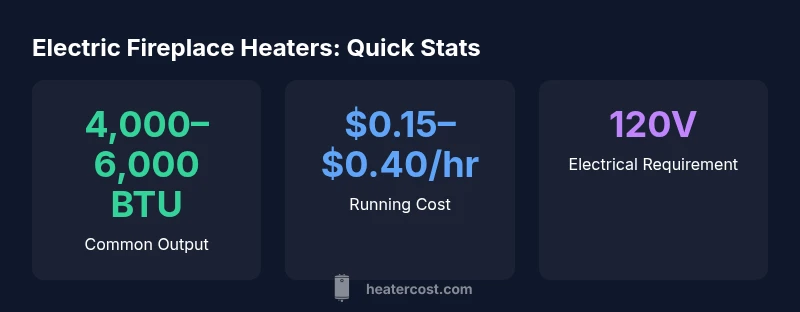
Electric fireplace heaters come in a wide price range. Basic plug-in units typically cost a few hundred dollars, while premium models with high‑fidelity flames, larger displays, or smart features can exceed the low thousands. In addition to the upfront price, consider operating costs—usually tied to how many hours you run the unit and your electricity rate. On average, a small to medium room may see a modest monthly impact if the heater is used for a few hours per day in shoulder seasons. The Heater Cost analysis (2026) highlights that the cost per hour can be a reasonable choice for targeted heating, especially when used alongside a primary furnace. Be mindful of energy efficiency, thermostat control, and the ability to schedule heating to maximize savings.
Sizing, installation, and safety
Sizing matters: a typical living room may benefit from a heater output in the 4,000–6,000 BTU range, while a smaller bedroom might do well with the lower end. Most electric heaters run on standard 120V outlets, but larger rooms or built‑ins may benefit from a dedicated circuit. When installing, ensure proper clearance from combustibles and follow the manufacturer’s instructions. Venting is not required, which simplifies placement, but consider room layout and heat distribution. For safety, choose models with overheat protection, a stable base, and cool-touch exteriors. Regular cleaning of vents and remote batteries helps maintain performance and safety.
Operating modes and comfort
Electric fireplaces offer multiple heat settings, thermostats, and often a timer or smart controls. You can run the flame effect for ambiance with or without heat, or pair efficient heat with a mild flame display for comfort during milder evenings. A quiet blower helps distribute warm air without creating disruptive noise. In smaller spaces, enabling lower heat settings and an automatic shutoff timer prevents unnecessary energy use. The ability to pair warmth with visual flame realism makes these setups appealing for renters and homeowners alike.
Maintenance and longevity
Maintenance for electric fireplace heaters is relatively simple. Periodically wipe exterior surfaces with a damp cloth, vacuum or dust vents to minimize airflow obstruction, and replace any batteries in remotes. Avoid using harsh chemicals on the control panel. If your unit includes a fan or blower, ensure it runs smoothly without unusual grinding sounds. Regular inspection of cords and plugs helps prevent electrical issues. With basic care, an electric fireplace heater can provide reliable heat for many seasons.
Energy efficiency and environment
Electric heater units convert electricity directly into heat with high efficiency. The environmental impact is tied to the local electrical grid and overall home insulation. When used as a supplemental heat source, electric heaters can reduce the need to run a central furnace at full capacity. For households aiming to minimize energy costs, pairing the heater with good insulation, seal checks, and mindful scheduling can yield meaningful savings. If your home uses renewable electricity, the emissions associated with electric heating decline further.
Choosing the right model and buying guide
Choose between console/free‑standing models, wall‑mounted units, and built‑in inserts. Console models offer portability and a prominent flame display; wall mounts save space; inserts retrofit existing fireplaces for a traditional look with modern heat. Key features to compare include heat output range, thermostat accuracy, flame realism, remote control, timer options, and warranty length. Check for UL or equivalent safety listings and read user reviews for noise levels and reliability. Before purchasing, assess your room size, desired ambience, and whether you want a standalone unit or an insert. As with any heating device, plan for a safe placement and consider a model with smart controls if you want to integrate with a home automation system.
Authority sources
- ENERGY. GOV: https://www.energy.gov/energysaver/space-heating
- NFPA: https://www.nfpa.org
- Consumer Product Safety Commission: https://www.cpsc.gov
Electric fireplace heater model overview
| Model Type | Typical Heating Output (BTU) | Electrical Requirement | Best For |
|---|---|---|---|
| Console/Free-Standing | 5,000–6,000 | 120V | Living rooms and larger bedrooms |
| Wall-Mounted | 4,000–5,000 | 120V | Slim spaces and apartments |
| Insert/Recessed | 4,000–5,500 | 120V | Retrofit in existing fireplaces |
| Ceiling-mounted/Case | 3,500–4,500 | 120V | Open-plan spaces |
Got Questions?
What is an electric fireplace heater, and how does it work?
An electric fireplace heater uses electric resistance elements to generate heat while simulating a flame with LEDs or halogen lighting. It does not burn fuel and does not require venting, making it a safe, ventless option for supplemental heating. The heater can be controlled with thermostats, remote controls, and timers to match room conditions.
Electric flame heaters use electric resistance to heat air and LED flames for ambiance, with adjustable thermostats and timers for comfort.
Are electric fireplace heaters expensive to run?
Running costs depend on room size, insulation, and how often you use the unit. They’re typically affordable for intermittent use but can add to electricity bills if left on high for long periods. Using it as a supplemental heat source rather than the primary heater can maximize cost savings.
Costs depend on use and insulation; they’re generally economical for short periods and as a supplement.
Can I install an electric fireplace heater myself, or do I need a professional?
Many electric fireplace heaters are designed for easy installation and can be plugged into a standard outlet. Built-in or insert configurations may require professional installation, especially if wiring or wall modifications are involved. Always follow manufacturer instructions and local codes.
Basic plug-in units are usually DIY-friendly; built-ins may require a pro.
Do electric fireplace heaters require venting or permits?
Most plug-in models do not require venting or permits. If you’re integrating a built-in insert into an existing structure, check local building codes and appliance permits per your area. Always verify with a local professional before major modifications.
Most plug-ins don’t need venting, but built-ins may require permits.
What safety features should I look for?
Key features include overheat protection, tip-over switch, cool-touch surfaces, and sturdy cabinets. Look for certifications like UL listing and a reliable remote or timer. Regular maintenance reduces risk and prolongs life.
Choose units with overheat protection and tip-over sensors.
How should I maintain and clean an electric fireplace heater?
Power down the unit before cleaning. Wipe surfaces with a damp cloth, vacuum air vents to remove dust, and clean the flame display as recommended by the manufacturer. Replace batteries in remotes and check seals occasionally.
Dust and wipe the exterior; avoid wetting controls; check for dust buildup.
“Electric fireplace heaters offer reliable, ventless warmth with realistic flame effects. Properly sized and installed, they can complement a home's primary heating without introducing combustion risks.”
The Essentials
- Choose a model in the 4,000–6,000 BTU range for typical rooms.
- Plug-in units usually require only a standard 120V outlet.
- Factor energy costs; electric heaters can be economical in small spaces.
- Look for safety features like overheat protection and tip-over sensors.
- Regular maintenance reduces risk and prolongs life.