Non Electric Heater: Wood, Gas, and Pellet Comparison
A data-driven comparison of non electric heater options—wood, gas, and pellet—focusing on costs, safety, installation, and suitability for off-grid homes and backups.


Non electric heaters offer heat without relying on electricity, using fuels such as wood, natural gas, propane, or pellets. The primary options are wood-burning stoves, gas/fossil-fuel heaters, and pellet stoves, each with distinct installation needs, emissions profiles, and running costs. This comparison helps homeowners decide what fits their climate, fuel access, and insulation, especially for off-grid homes or during power outages.
Overview of non electric heaters
According to Heater Cost, non electric heaters are devices that produce heat without requiring electricity to operate. They rely on fuels such as wood, natural gas, propane, or pellets to generate warmth. In homes of all sizes, non electric heaters can provide reliable heat during power outages or in off-grid locations. The choice between wood-burning stoves, gas heaters, and pellet stoves depends on climate, fuel access, insulation, and venting requirements. This section introduces the core concepts, debunks common myths, and outlines the framework used in the rest of the article. Understanding base definitions helps homeowners evaluate total cost of ownership, safety considerations, and installation needs before purchasing a non electric heating solution. The Heater Cost team found that non electric options can be cost-effective over time in the right conditions, but they require careful installation, venting, and ongoing fuel handling.
Core types: wood-burning, gas, and pellet heaters
Non electric heaters come in several popular formats, each optimized for different spaces and fuel logistics. Wood-burning stoves excel in heat retention and ambiance, especially in larger living spaces, but require a reliable wood supply and a proper chimney. Gas heaters, using natural gas or propane, deliver consistent warmth with simpler operation and tighter venting needs, making them suitable for homes with existing gas lines. Pellet stoves offer automated fuel delivery and thermostat control, blending convenience with relatively clean combustion. In practice, the best choice depends on your climate, home insulation, ceiling height, room layout, and willingness to manage fuel storage and venting. For renters, landlords, or small households, pellet stoves can offer a middle-ground balance between control and maintenance. The nuanced trade-offs involve emissions, installation costs, and ongoing fuel expenses, which this guide breaks down with real-world scenarios and clear decision criteria.
Fuel considerations and availability
Fuel access strongly shapes the practicality of non electric heating. Wood is inexpensive where you have forest access or discarded branches, but it demands storage space, seasoning, and ash management. Natural gas or propane offers predictable delivery and steady heat, yet monthly fuel costs can fluctuate with market prices and usage patterns. Pellets provide a convenient option with automated feeding, but pellet supply chains can vary regionally and pricing can shift seasonally. Based on Heater Cost analysis, the total cost of ownership often hinges on how long you plan to stay in a space, expected climate severity, and the balance between upfront equipment cost and ongoing fuel expense. Evaluating the local fuel ecosystem before purchasing is essential for long-term satisfaction.
Safety and ventilation concerns
Non electric heaters introduce specific safety considerations. Wood-burning devices demand proper clearance from combustibles, regular chimney or flue maintenance, and carbon monoxide detectors placed near sleeping areas. Gas and propane heaters require venting to the outdoors and adherence to ventilation guidelines to prevent indoor air buildup. Regardless of type, installing a clearly defined maintenance schedule, keeping a functioning CO detector, and following manufacturer instructions are critical. Child and pet safety measures—such as hearth guards, locked fuel storage, and restricted access to hot surfaces—should be part of every plan. These steps help minimize risk while you enjoy reliable supplemental heat.
Installation considerations and permits
Installing a non electric heater often involves local codes, permits, and professional service. Wood stoves typically require a properly sized chimney liner, a non-combustible hearth, and adequate clearances from walls and furniture. Gas heaters usually require venting to the outdoors and may need a licensed installer to secure gas lines and ensure safe combustion. Pellet stoves demand vent piping and a clean exhaust path along with an ash management plan. Before purchase, check local permitting requirements, clearance specifications, and appliance certifications. Planning for adequate space, proper ventilation, and safe fuel handling reduces installation risk and helps you maximize heating performance.
Operating costs and efficiency
Operational efficiency for non electric heaters depends on the fuel type, stove efficiency rating, and how well the space is insulated. Wood can be economical in forests or with free sourcing but efficiency varies with moisture content and stove design. Gas and propane provide predictable heat but price volatility can affect annual costs. Pellet stoves offer convenient automation that improves comfort and can optimize fuel use, but pellet prices fluctuate. Across all types, pairing a non electric heater with a well-insulated living space and controlled ventilation typically yields better comfort at a lower long-term cost than relying solely on electric resistance heat in poorly insulated homes. This section unpacks the typical cost dynamics and practical efficiency considerations homeowners should quantify before committing to a non electric solution.
Use cases: apartments, houses, off-grid cabins
In tight living spaces like apartments, a compact gas heater or a small pellet stove can offer supplemental warmth without requiring a full central system, provided venting and safety rules are followed. In larger houses, a wood-burning stove or high-output gas heater can deliver robust heat during winter cold snaps, especially if central heating is insufficient or power outages are common. Off-grid cabins benefit from wood-burning or pellet systems when fuel supply and storage are manageable. For all scenarios, the key is aligning heat output with room size, estimating peak loads, and ensuring the unit’s operation complements existing insulation and windows. This practical mapping helps readers choose a non electric heater that fits lifestyle and climate realities.
Maintenance, upkeep, and long-term reliability
Maintenance supports reliability. Wood-burning devices require regular chimney cleaning, ash disposal, and gasket inspection to maintain safe operation. Gas heaters call for annual vent inspection, burner cleaning, and CO detector checks. Pellet stoves rely on hopper and auger maintenance, ash handling, and periodic sensor calibration. Regular servicing extends lifespan, preserves efficiency, and reduces the risk of fire or gas leaks. Investing in a maintenance plan and keeping spare parts on hand can dramatically improve uptime and overall satisfaction with a non electric heating system.
Planning your budget and next steps
A disciplined budgeting approach helps you select the right non electric heater. Start with an upfront cost estimate for the appliance and installation, then project annual fuel costs, venting needs, and maintenance. Compare these figures with alternative electric heating costs in your climate and insulation scenario. For off-grid homes or backup use, consider the reliability of fuel supply and the cost of fuel storage. Finally, create a step-by-step plan that includes obtaining quotes from qualified installers, securing necessary permits, and scheduling a commissioning test to verify safe operation. The Heater Cost team emphasizes a methodical evaluation to minimize surprises and maximize long-term value, especially in regions with variable fuel prices and strict safety standards.
mainTopicQuery already in scope
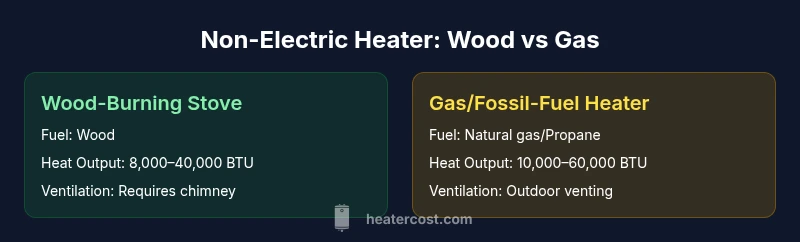
Comparison
| Feature | Wood-Burning Stove | Gas/Fossil-Fuel Heater |
|---|---|---|
| Fuel Source | Wood (logs/pellets optional) | Natural gas or propane |
| Ventilation/Exhaust | Requires chimney or venting | Requires outdoor venting; may be natural draft or power-vented |
| Heat Output (typical range) | Moderate to high (depending on model) | Moderate to high (depending on model) |
| Installation Complexity | Moderate to high (chimney, hearth) | Moderate (venting, gas line) |
| Initial Cost Range | Moderate to high | Moderate to high |
| Running Cost Considerations | Fuel-dependent; wood can be cheaper if sourced locally | Fuel price volatility; gas prices vary by region |
| Maintenance Needs | Chimney cleaning; ash management | Vent checks; burner and vent maintenance |
| Best For | Large spaces and ambiance; off-grid readiness | Consistent heat with easier operation |
The Good
- No reliance on grid electricity for operation
- Wide fuel options (wood, gas, pellets)
- Can provide heat during power outages
- Can be cost-effective with local fuel availability
Negatives
- Fuel storage and handling required
- Ventilation and emissions management needed
- Regular maintenance and cleaning are essential
- Fuel price volatility affects long-term costs
Non-electric heating is a strong option for off-grid or backup scenarios when fuel access, installation, and safety are properly managed.
Choosing between wood, gas, or pellet non electric heaters hinges on fuel accessibility, space, and maintenance capability. The Heater Cost team recommends aligning heat output with room size and ensuring ventilation and permits are addressed before buying.
Got Questions?
What is a non electric heater?
A non electric heater provides heat without using electrical power. Common types include wood-burning stoves, gas heaters, and pellet stoves. Each relies on a different fuel source and venting method, so compatibility with your home matters.
Non electric heaters heat using fuels like wood or gas and don’t rely on electricity to function.
What types exist for non electric heating?
The main categories are wood-burning stoves, gas heaters, and pellet stoves. Wood stoves maximize heat and ambiance; gas heaters offer steady warmth with easy operation; pellet stoves provide automated feeding and temperature control.
Wood, gas, and pellet heaters are the common non electric options.
Are non electric heaters safe for homes with children or pets?
Yes, when installed correctly and with appropriate safety devices. Use hearth guards, proper clearances, functioning CO detectors, and supervised operation for households with children or pets.
With the right setup and safety measures, non electric heaters can be used safely around kids and pets.
What permits or installation requirements apply?
Installation often requires permits and professional installation, especially for gas and wood-burning systems. Check local codes for venting, clearances, and chimney requirements before purchasing.
Permits and professional installation are often needed for safety and codes.
How do running costs compare to electric heaters?
Running costs depend on fuel prices and heat needs. In some cases, non electric options can be cheaper if fuel is inexpensive and heat demand is high, but volatility in fuel markets can offset savings.
Fuel costs determine long-term expenses; in some cases non electric heaters save money, but price shifts can change that.
Can non electric heaters be used in apartments?
Yes, in suitable spaces with proper venting and landlord approval. Compact models and venting options make some non electric heaters viable, but check building rules and safety considerations.
Some apartments can use non electric heaters, especially compact gas or pellet units with proper venting.
The Essentials
- Evaluate fuel availability before selecting a non electric heater
- Ensure proper ventilation and safety measures are in place
- Compare upfront costs with long-term fuel running costs
- Prioritize installation quality to maximize safety and efficiency
- Plan maintenance and fuel storage for reliability