Heaters Like AC: A Practical Buying Guide for Homeowners
Explore how heaters like AC compare to heat pumps and furnaces—upfront costs, energy use, maintenance, and long-term value with Heater Cost Analysis, 2026.


For most homes, a heat pump (a heater like ac) offers the best balance of efficiency, comfort, and long-term cost. Gas furnaces remain attractive where winters are extreme or gas is readily available. This comparison helps homeowners, renters, and property managers decide based on climate, electricity costs, and existing infrastructure.
What heater like ac means for your home
The phrase heater like ac describes heating equipment that provides reliable warmth with the same level of control you expect from a central air conditioning system. In practice, this usually means heat pumps or ductless mini-splits that can heat and cool spaces from a single control point. The distinction matters because it shapes how you size, install, and operate a system. The Heater Cost team emphasizes that the best choice depends on climate, electricity prices, and the bones of your home (ductwork, insulation, and space). Understanding these factors helps homeowners, renters, and property managers set accurate expectations for comfort and monthly bills. As you compare options, think about seasonality, backup heating needs, and whether you want cooling in the same system. heater like ac options tend to excel in flexible zoning and easier integration with modern thermostats.
Core technologies powering these systems
Systems that fit the "heater like ac" idea fall into a few broad categories. Air-source heat pumps are popular for their ability to heat efficiently in mild to moderate climates and cool in summer. Geothermal/ground-source heat pumps use the earth as a heat sink, delivering steadier performance but at higher installation cost. Traditional gas furnaces offer robust warmth in very cold climates and work with existing ductwork in many homes. Ductless mini-splits provide room-by-room control without ductwork, ideal for renovations or older homes lacking a central system. In all cases, the core distinction is whether you rely on electricity, gas, or a combination for heating, and whether cooling is bundled in the same equipment.
Climate, electricity, and fuel price considerations
Choosing a heater like ac requires weighing climate realities and energy economics. In moderate climates with reasonable electricity rates, heat pumps can deliver year-round comfort with lower operating costs—especially if you value cooling in summer. In areas with very cold winters, a gas furnace or a hybrid system may offer more consistent warmth and reliability. Heater Cost analysis shows that electric grid conditions, local fuel prices, and incentives play a significant role in the long-term equation. Renters and property managers should consider the feasibility of installing ductless systems for faster upgrades and reduced disruption.
Installation considerations and space planning
Installation realism matters almost as much as technology. Heat pumps often require outdoor space for the condenser unit and, for some configurations, upgraded electrical service. Ducted heat pumps need proper ductwork or a retrofit plan, while ductless options demand careful zoning and mounting. Gas furnaces require proper venting, gas line access, and sufficient mechanical room space. For landlords and property managers, evaluating existing infrastructure, such as wiring, panel capacity, and duct layout, helps avoid surprises and ensures a smoother permit process. Budget for professional installation, permits, and potential minor renovations to support efficient airflow.
Operating costs, efficiency metrics, and real-world value
Efficiency is the heart of a heater like ac decision. Heat pumps report high efficiency in heating mode and often provide cooling as well, allowing for unified climate control. Gas furnaces gain efficiency through high AFUE ratings, but fuel costs can swing with gas prices. Heat pumps may require backup heat in very cold spells, which influences total annual costs. When evaluating options, compare not just purchase price but also expected yearly energy use, maintenance, and the value of integrated cooling. The goal is a system that delivers comfort with predictable costs, not just the lowest upfront price.
Maintenance, lifespan, and warranties
Regular maintenance is essential for any heating system. Heat pumps generally require annual refrigerant checks, filter changes, and coil cleaning, plus routine inspections of the outdoor unit. Furnaces need regular burner cleaning and vent inspection. Ductless systems call for zone balancing checks to maintain even comfort. Lifespans typically range from 12 to 20 years for heat pumps and furnaces when properly maintained. Warranties vary by brand and installation quality, so prioritize a reputable installer who offers clear coverage terms and documented maintenance schedules.
Ductwork, zoning, and space planning for long-term value
A key consideration is how your home distributes conditioned air. Ducted systems rely on a network of ducts that may require sealing or upgrades to reduce loss. Ductless systems excel when retrofitting or adding zones, enabling targeted heating in living areas or bedrooms. Zoning improves comfort and efficiency, especially in multi-story homes or rentals where different occupants have different needs. Space planning also affects outdoor unit placement and noise, so choose locations that minimize disruption and maximize airflow.
Environmental impact and incentives you should know
Heating choices influence your home’s carbon footprint. Heat pumps often reduce emissions when powered by low-carbon electricity, making them an attractive choice for eco-conscious homeowners and property managers. Many regions offer rebates, tax credits, or utility incentives for upgrading to efficient heating systems. Always check local programs and eligibility criteria before committing. This approach can significantly improve return on investment and shorten payback periods while supporting sustainable home improvements.
Authority sources and practical next steps
To verify claims and stay current, consult national and regional guidance from credible sources. This section lists representative authorities and practical next steps for readers who want to dive deeper into policy, performance, and code considerations. Before purchasing, gather two or three bids, confirm equipment ratings, and confirm installation timelines. This data-driven approach aligns with the Heater Cost philosophy: objective comparisons, clear cost expectations, and transparent reasoning.
Authority sources
- https://www.energy.gov
- https://www.eia.gov
- https://www.nrel.gov
Comparison
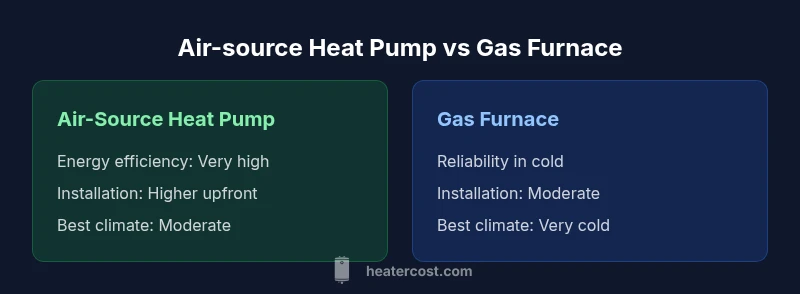
| Feature | Air-source heat pump | Gas furnace |
|---|---|---|
| Energy efficiency | Very high efficiency in heating mode and cooling capability | High efficiency with AFUE ratings typically 90-98% |
| Annual operating cost | Typically lower in moderate climates with electricity pricing | Moderate to higher depending on gas vs electricity costs |
| Upfront installation cost | High (unit plus electrical work and potential retrofits) | Medium to high (equipment plus ductwork considerations) |
| Space requirements | Outdoor condenser plus indoor unit(s) or ductwork | Furnace with furnace room and ductwork |
| Best for | Moderate climates with reliable electricity and desire for cooling | Very cold climates or homes with existing gas lines |
The Good
- High energy efficiency across seasons
- Cooling capability with heat pumps reduces need for separate AC
- Flexible installation options (ducted or ductless)
- Potential rebates or tax credits reduce net cost
- Zoning and precise control improve comfort
Negatives
- Higher upfront costs and possible electrical upgrades
- Performance drops without supplemental heat in extreme cold
- Outdoor components require weather protection and maintenance
- Ductless systems may require careful zoning setup
Heat pumps win for most homes in moderate climates; furnaces remain best for extreme cold or when gas is readily available.
For climates without persistent extreme cold, heat pumps offer year-round comfort with lower operating costs. If winters are severe or gas is already accessible, a furnace can provide reliable warmth with fewer backup requirements.
Got Questions?
What does 'heater like ac' mean for a home?
It describes heating options that function similarly to central AC, typically heat pumps or ductless systems that heat and cool. This guide compares those options to traditional furnaces to help you decide what fits your home.
Heater like ac means you’re looking at systems that heat and cool like your air conditioner, such as heat pumps or ductless systems.
Are heat pumps cheaper to run than gas furnaces?
In many climates, heat pumps have lower operating costs due to high efficiency, especially when electricity is reasonably priced. In very cold regions, savings depend on backup heat usage and fuel prices.
Heat pumps can be cheaper to run in moderate climates, but very cold areas may see higher costs without backup heat.
Do I need ductwork for a heat pump?
Some heat pumps require ductwork, especially central systems, while ductless mini-splits do not. Your home layout and retrofit goals determine the best fit.
Ducted heat pumps use ducts; ductless options avoid ducts but require proper zoning.
What maintenance do heat pumps require?
Heat pumps need annual checks, filter cleaning, and coil maintenance. Regular servicing helps maintain efficiency and prolongs life.
Annual checks and regular filter changes keep heat pumps efficient.
Can renters benefit from these systems?
Yes. Renters benefit from ductless mini-splits or portable heaters if permitted, with landlords often handling installation of fixed systems.
Renters can access mini-splits or portable options with landlord approval.
Are there rebates or incentives available?
Many regions offer energy efficiency rebates or tax credits for heat pumps and efficient heating. Check local programs and utility incentives.
Look for local and utility rebates for heat pumps and efficient systems.
Which option is best for very cold climates?
Gas furnaces are often more reliable in extreme cold, while heat pumps with supplemental heat can work well with climate-appropriate design.
In very cold places, a gas furnace is often more dependable; heat pumps may need backup heat.
How long do these systems typically last?
With proper maintenance, heat pumps and furnaces commonly last 12-20 years. Component wear and climate influence longevity.
Most systems last 12-20 years with good upkeep.
The Essentials
- Assess climate and energy costs before buying
- Heat pumps provide heating and cooling in one system
- Gas furnaces perform best in very cold climates
- Electrical service readiness matters for heat pumps
- Explore local incentives and warranties