Heater 10000 BTU: Cost, Efficiency, and Buying Guide
Explore heater 10000 btu options, costs, efficiency, and installation tips to help homeowners, renters, and property managers compare and choose the right unit.


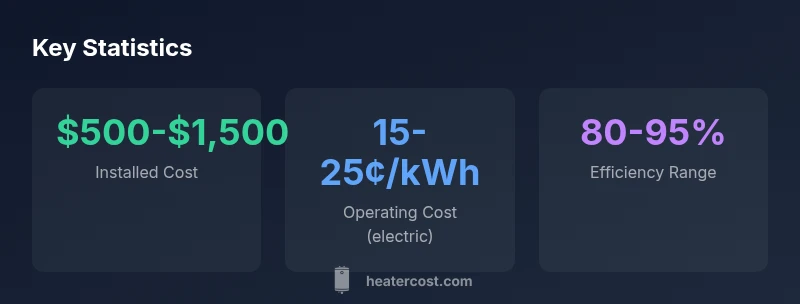
A heater 10000 btu rating is typically suitable for small spaces and apartments, delivering targeted warmth without supplying whole-house heating. Installed costs usually range from $500 to $1,500 depending on fuel type and venting needs. For spaces under 400 square feet, a 10000 BTU unit often provides reasonable efficiency when paired with proper insulation. When comparing options, consider fuel type, energy costs, and safety features.
Understanding the 10000 BTU Rating for Home Heating
BTU, or British Thermal Unit, measures how much heat a device can produce in a given period. A 10,000 BTU heater is commonly positioned as a compact unit designed for small living spaces, apartments, or rooms that require supplemental warmth rather than full-house heating. The exact warmth you feel depends on room size, ceiling height, insulation, window drafts, and outdoor climate. In practice, a heater 10000 btu rating can maintain comfortable temperatures in spaces roughly 200 to 400 square feet under moderate winter conditions, but you should adjust expectations for poor insulation or high ceilings. According to Heater Cost, the most reliable way to size correctly is to perform a rough BTU calculation that accounts for climate, window efficiency, and occupancy patterns. This ensures you avoid overheating or underheating, both of which waste energy and raise utility costs. It's also critical to choose a model with safety features such as auto shutoff, tip-over protection, and thermal cutoffs, and to verify that electrical circuits and gas lines are appropriate for the unit.
Sizing Rules of Thumb for Small Spaces
For spaces in the range of roughly 200 to 400 square feet, a 10000 BTU heater is often a practical starting point. If your ceilings are tall (above 8 feet) or if your space has large drafts, you may need more capacity or supplemental insulation. Conversely, very well-insulated rooms may warm comfortably with 8000 to 12000 BTU models. A good approach is to measure the room and calculate the target BTU by multiplying square footage by a climate-adjusted factor. Heater Cost recommends testing the heat during the coldest part of the year and adjusting as needed. Remember that placement matters: position the heater so the warm air circulates without obstructing foot traffic or drapes. Finally, verify that wiring or gas connections can safely support the unit and that any required permits are in place before installation.
Fuel Type and Operating Costs
The cost dynamics of a 10000 BTU heater depend heavily on fuel type. Electric units tend to have lower upfront costs and simpler installation but can incur higher electricity bills if used continuously in cold climates. Gas-powered models may deliver lower operating costs per hour initially, but require venting, gas lines, and ongoing maintenance. The right choice hinges on local energy prices, appliance efficiency, and how often you heat the space. For renters or spaces with intermittent heating needs, electric models often offer the best balance of convenience and cost. For homes with existing gas infrastructure, a well-vented gas unit can be economical over the long term, provided you meet safety standards and maintenance requirements. Heater Cost analysis notes that total cost of ownership includes installation, maintenance, and potential venting.*
Installation Considerations and Safety
Installations for a 10000 BTU heater vary by fuel type. Electric units typically require a dedicated circuit and a grounded outlet, whereas gas models need proper venting, vent pipes, and gas line connections that meet local codes. A professional installation is advised to ensure clearance from walls, furniture, and combustible materials. Temperature and humidity controls should be placed away from heat sources that could affect accuracy. Safety features like tip-over switches, automatic shutoff, and overload protection reduce the risk of fire or electrical hazards. Regular inspections of cords, outlets, and gas lines help prevent leaks and electrical issues. Always verify that the unit matches the room size and that the electrical panel has the capacity for the added load.
Efficiency, Emissions, and Indoor Air Quality
Efficiency is more than a label—it translates to real energy savings and indoor comfort. With a 10,000 BTU heater, you should aim for models with high efficiency ratings and low emissions where applicable. For gas models, ensure proper venting and combustion air to avoid carbon monoxide buildup. Electric heaters do not emit combustion byproducts, but you should still consider space placement and ventilation to prevent overheating in enclosed spaces. In well-sealed homes, an energy-efficient unit paired with insulation upgrades yields the best overall performance. Maintaining clean filters and ensuring adequate airflow reduces heat loss and keeps the system performing near its labeled efficiency.
Maintenance and Longevity for 10k BTU Heaters
Longevity depends on usage, maintenance, and quality of components. Regular cleaning of filters or coils, checking for loose connections, and scheduling annual professional inspections can extend the life of a 10k BTU heater. For gas models, annual vent inspection, combustion analysis, and venting integrity are crucial for safety and efficiency. Electric units require less ongoing maintenance but benefit from periodic cord and switch inspections. Small-scale heaters typically have fewer moving parts than larger systems, but neglecting routine care accelerates wear and reduces efficiency. Consider transferring the unit to a less demanding location during peak seasons to reduce wear and prolong life.
Comparing 10k BTU Models Across Brands
Different brands provide similar 10k BTU options, but performance differences arise from build quality, safety features, and control interfaces. Look for models with programmable thermostats, auto shutoff, and stable fan operation. Before purchase, check warranty terms, replacement part availability, and user reviews that reflect real-world performance. While some brands emphasize compact design or silent operation, others highlight durability or smart-home compatibility. Use the BTU rating as a starting point, but evaluate energy efficiency, safety standards, and service support to choose the best fit for your space.
Practical Decision-Making Framework for 10k BTU Heaters
Start with an accurate room assessment that accounts for insulation, drafts, and climate. Compare electric versus gas options based on local energy prices, installation costs, and safety considerations. Use the BTU target to shortlist models and then check efficiency ratings and warranty terms. Finally, factor in long-term maintenance costs and potential retrofit needs, such as improved insulation or weather-stripping, which can dramatically improve comfort without increasing heat output.
Comparison of 10k BTU heater types
| Model Type | Typical BTU | Common Space (sq ft) | Pros | Cons |
|---|---|---|---|---|
| Portable electric heater | 10000 BTU | 200-400 | Low upfront cost; portable | Higher operating cost; limited real heat |
| Gas-fired compact heater | 10000 BTU | 250-500 | Strong heat, fast warm-up | Ventilation requirements; emissions |
| Infrared panel heater | 10000 BTU | 400-600 | Even heat distribution; silent | Higher upfront cost; space constraints |
Got Questions?
What size room is best suited for a 10000 BTU heater?
A 10,000 BTU heater is generally suited for small to mid-sized rooms, roughly 200–400 square feet, depending on insulation and climate. For well-insulated spaces, you may extend coverage up to 400–500 square feet with careful use. Always validate with a sizing calc.
A 10,000 BTU heater works best in small to medium rooms; check insulation and climate for the right fit.
Are 10k BTU heaters more expensive to install than larger units?
Installation costs vary by fuel type and existing infrastructure. Electric units are often cheaper to install than gas models due to venting needs. Total ownership costs depend on energy prices and usage.
Electric heaters are usually cheaper to install, but running costs depend on energy prices.
Can I install a 10k BTU heater myself?
Electric 10k BTU heaters are often plug-in or require a simple outlet, while gas units need proper venting and gas line work by a licensed professional. Always follow local codes and safety guidelines.
Gas heaters should be installed by a licensed pro; electric units may be DIY-friendly if outlets are accessible.
What maintenance does a 10k BTU heater require?
Maintenance varies by fuel type. Electric models require periodic filter or coil cleaning and cord checks; gas models need annual vent inspection, combustion checks, and safety testing to prevent leaks and ensure efficiency.
Electric heaters need filter cleaning; gas heaters need annual vent checks.
How do insulation and drafts affect a 10k BTU heater's performance?
Poor insulation or drafts significantly reduce warmth, causing longer runtimes and higher operating costs. Improving insulation and weather-stripping can greatly boost efficiency and comfort, sometimes allowing a smaller BTU unit to perform adequately.
Better insulation means warmer rooms with less energy.
“A properly sized 10k BTU heater delivers consistent comfort without oversizing, reducing energy waste and lowering annual costs.”
The Essentials
- Size room accurately using BTU guidelines.
- Consider fuel type and installation requirements.
- Account for insulation and climate when sizing.
- Budget for installation, venting, and maintenance.