30000 btu propane heater: Costs, Sizing, and Safety
A practical guide to understanding a 30000 btu propane heater, including sizing, upfront costs, fuel considerations, efficiency, safety, and maintenance for homeowners and property managers.


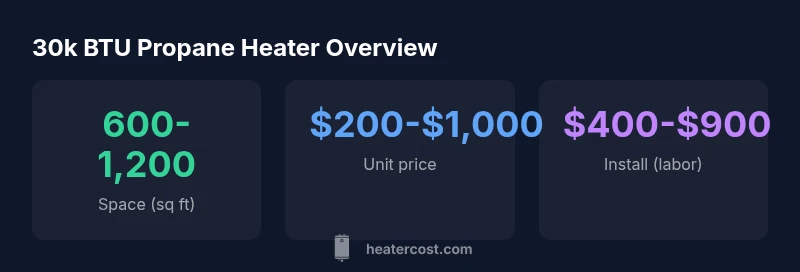
30000 BTU propane heaters are commonly used to heat spaces of roughly 600 to 1,200 square feet, depending on climate and insulation. Hardware costs typically range from $200 to $1,000, with installation often between $400 and $900. When you add venting, propane supply, and potential permits, total upfront can run from about $600 to $2,500. Fuel costs depend on usage and propane prices.
Understanding the 30000 btu propane heater
A 30000 btu propane heater is a compact, high-output option designed to deliver quick, zone-focused heat. BTU stands for British Thermal Unit and measures how much energy the unit can produce per hour. In practical terms, a 30000 btu propane heater can raise the temperature of a defined space more rapidly than smaller units, provided the space is well-sealed and the climate is temperate. The Heater Cost team notes that real-world performance depends on insulation, ceiling height, window quality, and occupant behavior. In drafty homes or large, open areas, heat will disperse more quickly and you may need longer runtimes or supplementary heat sources. On the other hand, well-insulated rooms with tight air sealing will retain warmth longer, allowing a 30000 btu propane heater to maintain comfort with shorter duty cycles. This is especially relevant in regions with cold winters and frequent temperature swings. When selecting a unit, consider how many floors it must heat and whether you want a vented or vent-free design, since that choice influences efficiency, indoor air quality, and safety considerations.
Sizing and Space Coverage for a 30000 btu propane heater
Sizing a 30000 btu propane heater begins with your target space and climate. A rough starting point in typical homes places 30k BTU in the 600–1,200 square-foot band, but this range shifts with insulation quality, ceiling height, and outdoor temperatures. In a well-insulated 1,000 sq ft space, a 30k BTU unit can deliver comfortable warmth with occasional cycling, while in an older or draft-prone room you may experience more frequent on/off cycling and heat loss. Venting vs vent-free designs change heat distribution and indoor air quality: vented units release combustion byproducts outdoors, potentially allowing higher running efficiency, while vent-free models rely on room ventilation and CO detectors. For mixed-use spaces (open floor plans), consider zoning or supplementary heaters to avoid overworking a single unit. Finally, always size to the space with a load calculation or professional guidance; do not rely solely on square-foot rules of thumb in extreme climates.
Cost Considerations: Hardware, Installation, and Fuel
Hardware cost for a 30000 btu propane heater typically ranges broadly by model, features, and venting needs. Vented models can require additional installation hardware and vent piping, which adds to the upfront price. Installation costs vary by region and existing venting or ductwork; labor, venting components, and permits can add hundreds to thousands of dollars to the bill. Propane fuel costs are variable and depend on usage, tank size, and regional price fluctuations. In many homes, annual propane expenditure for space heating with a dedicated unit can be a meaningful component of total operating costs, especially in cold months. According to Heater Cost, planning for both upfront and ongoing costs helps homeowners avoid budget surprises and select a solution that fits climate, space, and lifestyle.
Efficiency, Emissions, and Safety: What to Know
Efficiency for a 30k BTU propane heater depends on the exact model and venting configuration. Vented designs typically deliver higher year-round efficiency and lower indoor pollutant concentrations because combustion byproducts are directed outdoors. Vent-free models can feel warmer in the space but may require stricter room ventilation and CO detectors. Beyond efficiency, safety is paramount: install units away from combustibles, ensure proper venting where required, and maintain CO detectors on every level of the home. The Heater Cost team emphasizes adhering to manufacturer guidelines and local codes to balance warmth with safety.
Installation Best Practices and Common Pitfalls
Professional installation is highly recommended for vented systems; improper venting or gas connections can create safety hazards. Before installing, verify local permits and inspection requirements, ensure adequate clearance from walls and furniture, and plan for a dedicated propane supply line or tank location. Common pitfalls include skipping a load calculation, underestimating the impact of drafty spaces, and ignoring CO detectors. A well-planned installation minimizes hot/cold spots, reduces energy waste, and extends equipment life.
Maintenance, Lifespan, and Total Cost of Ownership
Regular maintenance extends the life of a 30000 btu propane heater. Schedule annual inspections, check gas lines and connections for leaks, clean or replace filters as needed, and test CO detectors monthly. Lifespan varies by model and usage but typical expectations range from about 8 to 15 years with proper care. Considering maintenance, fuel costs, and potential replacement timing helps homeowners compare long-term ownership costs across vented and vent-free options. The Heater Cost analysis underscores that proactive upkeep reduces the risk of unexpected failures during peak heating season.
Cost and performance snapshot for 30,000 BTU propane heaters
| Category | Low range | High range |
|---|---|---|
| Unit price (30,000 BTU propane heater) | $200 | $1,000 |
| Ventilation components (vented models) | $150 | $600 |
| Installation cost (professional) | $400 | $900 |
| Annual propane fuel cost (typical usage) | $400 | $1,200 |
Got Questions?
What space does a 30,000 BTU propane heater heat?
A 30,000 BTU propane heater can heat roughly 600-1,200 sq ft in typical homes, with real results depending on insulation, drafts, and ceiling height. For best results, run a load calculation and consider zoning for large or open areas.
A 30k BTU heater heats about six hundred to twelve hundred square feet, depending on insulation and airflow.
Are vented models preferred over vent-free for a 30k BTU propane heater?
Vent options affect indoor air quality and heat distribution. Vented models expel combustion byproducts outdoors, while vent-free units rely on room ventilation and CO detectors, which may impact comfort and safety depending on room size and occupancy.
Vent-vented units usually offer consistent heat with outdoor venting; vent-free require good ventilation and CO detectors.
What are typical installation costs for a 30k BTU propane heater?
Installation costs vary by region and existing venting or ductwork. Expect labor, venting hardware, and permits to add hundreds to thousands of dollars to the upfront price.
Install costs vary; you’ll typically pay a few hundred to a few thousand depending on setup.
What maintenance does a 30k BTU propane heater require?
Schedule annual inspections, check gas lines for leaks, test CO detectors, and clean components as recommended by the manufacturer. Replacement parts should be used as directed to maintain efficiency and safety.
Have it checked yearly and keep detectors current.
Is a 30k BTU propane heater energy efficient?
Efficiency depends on model and venting. Vented units often deliver higher efficiency and better heat distribution; vent-free units may feel warmer but require proper ventilation and adherence to safety guidelines.
Yes, but it depends on the model and venting setup.
What safety considerations should I know?
Place the heater away from combustibles, ensure proper ventilation where required, install CO detectors on every level, and follow local codes and manufacturer instructions to minimize safety risks.
Keep detectors up, vent properly, and follow safety guidelines.
“When sized correctly, a 30,000 BTU propane heater can responsibly heat transitional spaces while keeping operating costs predictable.”
The Essentials
- Verify space coverage: 30k BTU heats 600–1,200 sq ft in typical homes.
- Plan for installation: venting, permits, and propane supply add upfront cost.
- Expect wide price ranges: hardware, venting, and labor vary by model.
- Fuel cost varies with propane prices and usage; monitor consumption.
- Safety matters: CO detectors and proper venting are essential.