Heating a 1,000-Square-Foot Home: Sizing, Costs, and Practical Tips
Learn how to size a heater for a 1,000-square-foot home, compare fuel types, and estimate costs. This Heater Cost guide covers BTU ranges, efficiency, installation considerations, and practical tips to save on energy bills in 2026.


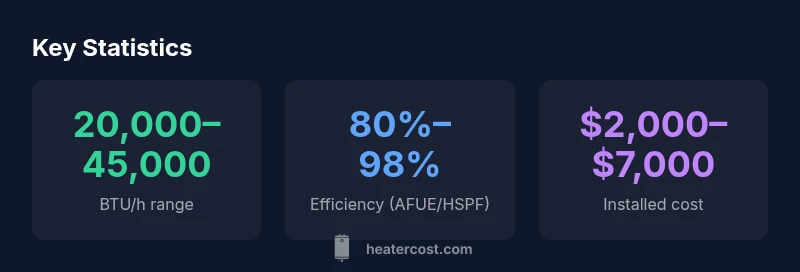
According to Heater Cost, sizing a 1,000-square-foot home typically requires about 20,000–45,000 BTU per hour (6–13 kW) of heating capacity, depending on climate, insulation, and air leakage. In practice, many homeowners opt for a mid-range system that balances upfront cost with ongoing energy use and comfort. Consider higher-efficiency models when payback periods justify the higher upfront price, especially in extreme climates, and remember that heat loss through windows and doors can significantly affect actual needs.
Understanding Sizing for a 1,000 Square Feet
Sizing a heating system for a 1,000-square-foot home is not a one-size-fits-all decision. Industry guidelines translate space into heating capacity, typically around 20,000–45,000 BTU per hour (6–13 kW), depending on climate, insulation, windows, and air leakage. A well-insulated, airtight home will generally trend toward the lower end of the range, while older or draftier structures push toward the upper end. The objective is to meet demand on the coldest days without oversizing, which can waste energy and raise upfront and ongoing costs. A professional load calculation, often called Manual J, considers wall and attic insulation, window area, occupant behavior, appliances, and ventilation to yield a precise sizing recommendation. Ask installers for this calculation and compare it to manufacturer charts to confirm the selected unit aligns with seasonal needs.
Climate Variations: Hot, Cold, and Everything In Between
Climate plays a pivotal role in heater sizing. In mild regions, 20,000–30,000 BTU/h might suffice, while in cold climates the requirement can approach 40,000–45,000 BTU/h or more. Humidity, wind exposure, and building shade influence heat loss, just as construction quality does. For a 1,000-square-foot home, the same house in different regions can require markedly different equipment. When planning, consider design-day temperatures (the coldest day you expect annually) and how often the system will run at peak capacity. A properly sized unit reduces runtime cycles, improves comfort, and lowers wear on equipment.
Insulation, Air Leakage, and Heat Loss
Insulation levels and air sealing largely determine actual heating needs. A home with high R-values, quality attic insulation, and well-sealed ducts will hold heat longer, allowing a smaller unit to meet demand. Conversely, drafts around doors and windows, leaky ducts, or inadequate attic insulation can dramatically increase required BTU/h. Evaluate windows (single vs double pane, low-E coatings), door seals, and ductwork paths. Even modest improvements—like weatherstripping and sealing gaps—can meaningfully reduce the size and cost of the heating system you need.
Heating Technologies for 1,000 Sq Ft: Pros and Cons
Choosing a technology matters for efficiency and cost. Gas furnaces are common for larger spaces and quick heat, but electric resistance heaters are less efficient but simple to install. Heat pumps offer high efficiency in moderate climates and can provide cooling in summer, but performance can dip in freezing temperatures unless paired with supplemental heating. Radiant and baseboard heaters deliver targeted warmth with minimal noise but can be more expensive to install for whole-home coverage. For a 1,000 sq ft home, many households opt for a compact ducted or ductless system with a carefully designed heat distribution plan to minimize dead zones.
Sizing Rules of Thumb: Practical Approaches
A practical approach combines a rule-of-thumb method with professional verification. A rough guide is 20–45 BTU per square foot, varying by climate and insulation. Professionals then refine this with a load calculation. Always favor a unit that turns on and off more frequently during milder days, rather than one that runs continuously at low output. Oversizing is a common pitfall; it raises cost and reduces efficiency due to short cycling. Compare multiple models and verify compatibility with existing ductwork or a planned duct layout before purchase.
Energy Costs and Efficiency: What to Expect
Efficiency directly influences operating costs. Higher AFUE or HSPF ratings generally translate to lower energy usage for the same thermal output. Real-world costs depend on local energy rates, equipment efficiency, and how well the home retains heat. Heaters with modern controls (smart thermostats, zoning, and setback features) often deliver better comfort with lower energy bills. For a 1,000-square-foot home, consider not just the upfront cost but the expected annual energy use and the payback period for higher-efficiency options. Heater Cost analysis notes that the best choice balances upfront investment with long-term savings.
Installation Considerations and Permits
Installation requirements vary by system type and locale. A licensed technician should evaluate ductwork, venting, electrical connections, and ventilation clearance. Local permits may be required for new equipment, ductwork, or significant alterations to燃 gas lines or electrical circuits. Proper venting is critical for combustion-based systems to prevent dangerous buildup of gases. Post-installation, a thorough test run ensures there are no leaks, proper airflow, and that safety devices function correctly.
Maintenance to Sustain Comfort and Efficiency
Regular maintenance protects comfort and reduces operating costs. Change filters every 1–3 months, depending on usage and filter type. Schedule annual professional inspections to check duct integrity, airflow balance, thermostat calibration, and heat exchanger condition. Clean outdoor coils if you have an outdoor unit, and ensure vents remain unobstructed by furniture or drapes. Well-maintained equipment runs more efficiently, lasts longer, and keeps temperatures steady in a 1,000-square-foot home.
Case Studies: Real-World Scenarios for 1,000 Sq Ft Homes
Case A: A well-insulated 1,000 sq ft bungalow in a mild climate uses a mid-range heat pump. Because heat loss is modest, the system maintains comfortable temperatures with relatively low energy use, and a digital thermostat enables efficient zoning. Case B: An older 1,000 sq ft duplex with drafty windows and limited insulation requires a higher BTU/h input during prolonged cold snaps. A compact furnace paired with attic sealing improvements reduces heat losses and delivers a shorter payback period due to improved efficiency.
How to Verify Sizing Before Purchase
Before buying, request a formal load calculation from a licensed professional and compare it with the manufacturer’s sizing charts. Ask for a performance warranty and confirm compatibility with your home’s distribution system (ducted or ductless). If you plan to upgrade insulation or windows soon, factor those improvements into future sizing changes. Finally, check local rebates or incentives that may influence the cost-effectiveness of different heating options.
Sizing and cost rough guide for 1,000 sq ft homes
| Aspect | 1000 sq ft range | Notes |
|---|---|---|
| Sizing range (BTU/h) | 20,000–45,000 | Climate/insulation dependent |
| Estimated annual energy use | varies by efficiency | Depends on rate and system type |
| Typical installed cost (range) | $2,000–$7,000 | Includes equipment and basic installation |
Got Questions?
What heater type is best for a 1,000 sq ft home?
The best heater depends on climate and home design. Heat pumps excel in moderate climates and can provide cooling; gas furnaces offer strong heating in colder regions. Electric resistance is simple but less efficient. A professional load calculation helps determine the most cost-effective option.
For a 1,000 square-foot home, heat pumps work well where winters aren’t extreme, while gas furnaces suit very cold climates. Talk to a pro for the right choice.
Should I oversize to avoid cold spots?
Oversizing leads to short cycling, higher upfront costs, and lower efficiency. It’s better to size accurately and use zoning or programmable thermostats to manage comfort.
Avoid oversizing. Proper sizing with zoning gives steady comfort and lower energy use.
How is proper sizing verified?
A Manual J load calculation performed by a licensed professional provides exact sizing. Compare results with manufacturer charts and consider future insulation improvements.
Have a specialist do a load calculation and compare with the equipment chart.
What affects ongoing operating costs the most?
System efficiency (AFUE/HSPF), energy rates, and how well your home retains heat. Efficient systems and good insulation dramatically reduce annual costs.
Efficiency and insulation matter most for yearly costs.
Is a heat pump suitable for very cold climates?
Modern cold-climate heat pumps perform well down to lower temperatures, but you may need a supplemental heat source during extreme cold snaps.
In very cold places, you might pair a heat pump with a backup heat source.
Do permits affect installation?
Yes. Permits may be required for new equipment, ductwork, or venting changes. Check local codes and hire a licensed installer.
Permits vary by area, so verify with your local building department.
“Sizing correctly is the foundation of comfort and energy savings. A precise load calculation, combined with good insulation and an efficient, well-matched system, delivers far better results than guessing.”
The Essentials
- Start with a load calculation from a pro
- Climate and insulation dictate needed BTU/h
- Avoid oversizing to reduce waste and short cycling
- Consider higher efficiency for long-term savings
- Factor installation and permits into total cost