Why Are Heat Pumps So Expensive: Costs, Payback, and How to Save
Explore why heat pumps carry high upfront costs, including equipment, installation, and refrigerant. Learn about payback periods, incentives, and how to compare bids to maximize value.


Why are heat pumps so expensive? The upfront price reflects advanced cooling/heating technology, high-efficiency components, and the installation challenges of retrofitting or integrating with existing systems. According to Heater Cost, the sticker price is driven by three core factors: equipment quality, installation complexity, and the need for proper electrical and home envelope integration.
Why the sticker price for heat pumps is high
If you ask why are heat pumps so expensive, the answer starts with the technology itself. Heat pumps are built to operate efficiently across seasons, which means sophisticated compressors, inverter-driven motors, and refrigerant circuits designed for a broad temperature range. In practice, this translates to higher material costs and more precise manufacturing tolerances. According to Heater Cost, the premium also reflects quality controls, longer lifecycles, and improved reliability. Homeowners should view the upfront cost as a capital investment in comfort, resilience, and long-term operating expenses. The initial price tag is a barrier for some, but the value proposition improves when you factor in reduced fossil fuel dependence and potential incentives.
Key takeaway: the upfront expense is not just a price tag; it’s a bundle of high-efficiency equipment and engineering designed to deliver consistent comfort for years.
Equipment costs: what makes the unit so costly
At the core of the heat pump price is the outdoor unit paired with an indoor air handler. Modern heat pumps use variable-frequency drives and high-efficiency compressors that optimize output to create a comfortable indoor climate with less energy than traditional electric resistance or fossil-fuel systems. Additionally, refrigerant lines, smart controls, and corrosion-resistant materials add to the bill. The premium often includes advanced sensors, improved defrost cycles, and durability features that ensure performance in colder climates. From Heater Cost’s perspective, component quality directly impacts reliability, warranty coverage, and long-term maintenance needs. If you’re weighing options, demand a bid that itemizes the equipment and clearly states efficiency ratings (COP, SEER, and HSPF) so you can compare apples to apples. LSI terms to consider: COP, SEER, HSPF, inverter technology.
Installation complexity and labor: retrofits aren’t one-size-fits-all
Installation is frequently the largest variable in total cost. Retrofit scenarios may require electrical panel upgrades, new conduit, or upgraded ductwork to support a heat pump’s heat delivery and defrost cycles. In homes with existing hydronic or fossil-fuel heating, a contractor may need to coordinate multiple trades, which can increase labor time and cost. If your home lacks suitable ductwork, you’ll face additional costs for air distribution or alternative configurations like ductless zones. The Heater Cost team notes that even small energy upgrades—such as improved insulation or air sealing—can reduce running costs later, enhancing the overall value. Plan for a multi-day installation window and ask for a detailed sequencing plan from your installer.
Operating costs and payback: balancing savings and price
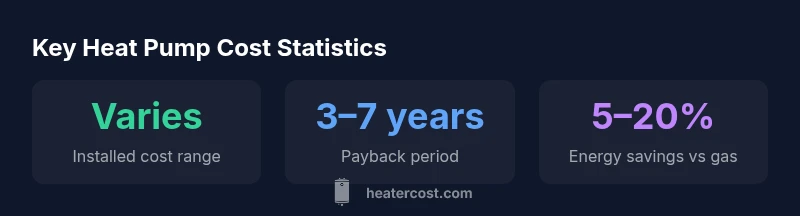
Heat pumps deliver energy savings by using electricity to move heat rather than generate it. The result is often lower operating costs, but savings depend on climate, electricity prices, and the unit’s efficiency. In milder regions, the payback period may be shorter due to higher seasonal usage and favorable electricity rates; in very cold areas, performance varies with heating demand and system sizing. The efficiency ratings—COP, SEER, and HSPF—help estimate annual savings, but real-world results depend on home insulation, thermostat settings, and maintenance. Heater Cost emphasizes that a thorough home assessment and a properly sized system are essential to maximize payback and avoid oversizing or undersizing, both of which erode value over time.
Financing, incentives, and the true value proposition
Financing options and incentives can significantly affect the net cost of ownership. Many jurisdictions offer rebates, tax credits, or utility-based programs designed to offset part of the upfront expense. The exact amount and eligibility vary by region, program, and installation characteristics. When you’re evaluating bids, factor in any available incentives and compare the post-incentive costs and payback expectations. Even small improvements—such as upgrading insulation or sealing ducts—can complement a heat pump and shorten payback periods. The Heater Cost team recommends engaging with a local program specialist early in the process to understand what you qualify for and how to apply.
How to compare offers and protect your investment
To avoid overpaying, collect at least three detailed bids and ensure each includes itemized equipment, labor, permits, and disposal costs. Compare efficiency ratings and confirm that installers follow local code requirements. Request a site assessment, a schematic for air distribution, and a written maintenance plan. Check warranty terms for both parts and labor, and ask about commissioning and performance testing. Finally, consider the total lifecycle cost—energy use, maintenance, and potential incentives—rather than the upfront sticker price alone.
Cost components and typical ranges for heat pump installation
| Category | Typical Cost/Range | Notes |
|---|---|---|
| Equipment costs | Varies by model | Outdoor unit, indoor coil, refrigerant lines, controls |
| Installation labor | Varies by home | Ductwork, electrical upgrades, refrigerant piping |
| Permits & inspections | Varies by jurisdiction | Region-specific requirements |
| Ductwork & piping | Varies by home | May require upgrades or modifications |
Got Questions?
What contributes most to a heat pump's cost?
The combination of high-efficiency equipment and the labor-intensive installation, especially when retrofitting or upgrading electrical and ductwork. The refrigerant circuitry and smart controls add to both material and labor costs.
The highest costs usually come from the equipment and installation work, especially if retrofits are needed.
Are heat pumps worth the upfront investment?
In many homes, yes, particularly where electricity is affordable and long-term operating costs are lower than fossil fuels. The payback period depends on climate, energy prices, and system efficiency.
If your climate and electricity rates are favorable, heat pumps can pay back over several years.
Do incentives significantly reduce the net price?
Yes, in many regions there are rebates and tax credits that can substantially cut the upfront cost. Eligibility varies, so check local programs and work with your installer to apply.
Incentives can cut upfront costs, so check what programs exist where you live.
How does climate affect payback?
Payback improves in milder climates with higher heating efficiency and greater seasonal energy use. In very cold areas, performance hinges on system sizing and auxiliary heat options.
Climate matters a lot—expect faster payback in moderate climates.
What maintenance costs should I expect?
Annual maintenance is typically modest, focusing on filter changes, refrigerant checks, and system diagnostics. Neglect can reduce efficiency and raise long-term costs.
Keep up with regular maintenance to protect efficiency and avoid bigger repairs.
What should I ask contractors when comparing bids?
Ask about equipment efficiency ratings, warranty coverage, installation responsibilities, permitting, ductwork changes, and post-installation performance testing. Ensure bids include all fees and a commissioning plan.
Ensure bids cover all costs and include performance testing after installation.
“Heat pumps are expensive upfront because they bundle advanced heating and cooling tech with careful site integration. When sized and installed correctly, they deliver reliable comfort with lower operating costs over time.”
The Essentials
- Anticipate higher upfront costs due to equipment and installation complexity
- Seek itemized bids and verify efficiency ratings (COP/SEER/HSPF)
- Explore incentives to improve net payback and total value
- Plan for long-term savings alongside upfront investment