Gas Heater Costs and Care in 2026: A Practical Guide
Explore the costs, efficiency, and maintenance of gas heaters. Learn how AFUE, installation costs, and operating expenses shape your home heating budget. This Heater Cost guide helps homeowners, renters, and managers compare options and make informed decisions.


According to Heater Cost, a gas heater is a fuel-burning heating appliance that uses natural gas or propane to produce heat for spaces or water. Common forms include furnaces and wall units, often vented for exhaust. Efficiency and installation costs vary by model, home layout, and venting requirements.
What is a gas heater and how it works
A gas heater uses combustion of natural gas or propane to raise air or water temperature inside a home. In most space-heating systems, a gas furnace uses a burner to heat a steel heat exchanger, then a blower pushes warm air through ducts. In boiler-based systems, the heated water or steam travels through pipes to radiators or radiant floor systems. Some smaller units, like gas wall furnaces, provide zone heating in single rooms. Safety features include limit switches, flame sensors, and shutoffs. Exhaust must be vented to the outdoors, typically via metal flues or direct-vent pipes; ventless gas heaters exist but are less common for whole-home heating. For renters or small homes, a portable gas heater may serve as a supplemental heat source, though it requires careful placement and CO detectors. The gas heater category also includes water-heating boilers that supply domestic hot water alongside space heating; these are usually installed in basements or utility rooms.
Types of gas heaters
Gas heating comes in several primary forms. A central furnace (gas-fired) distributes heat via ducts to the living spaces. A gas boiler heats water for radiant or hydronic systems. Gas wall furnaces provide zone heating in a single room or small area. Some homes also use gas-fired boilers for domestic hot water alongside space heating. Each type has different installation needs, venting requirements, and efficiency profiles. When selecting a unit, consider whether your home has existing ductwork, space constraints, and local codes that govern venting and combustion air.
Efficiency and AFUE explained
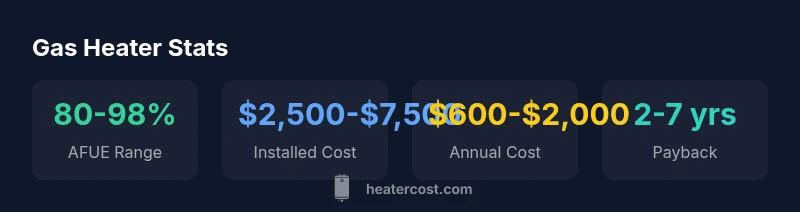
AFUE, or annual fuel utilization efficiency, gauges how effectively a gas heater converts fuel into heat. Typical gas furnaces range from around 80% to 98% AFUE, with high-efficiency models often using condensing technology to reclaim latent heat. Boilers generally show similar AFUE ranges, though hydronic systems may have different installation considerations. Higher AFUE usually delivers lower ongoing fuel costs, but the upfront price can be higher. When Heater Cost analyzes options for 2026, we emphasize balancing upfront cost, space, and climate. Look for Energy Star labels where applicable and verify ongoing maintenance needs to preserve efficiency over time.
Venting, safety, and CO detectors
Most gas heaters require venting to the outdoors, ensuring safe removal of combustion byproducts. Direct-vent and sealed-combustion designs tightly couple the appliance with outside air intake. Vent-free gas heaters exist but are typically limited to supplemental use and require strict spacing and CO detectors. Regardless of type, install CO detectors in sleeping areas and near living spaces, test them monthly, and replace batteries annually. Regular vent inspections prevent blockages and ensure exhaust paths remain clear. Proper venting and detectors are essential safety measures that protect occupants and improve overall system reliability.
Sizing and installation considerations
A correctly sized gas heater is critical for comfort and efficiency. An oversized unit cycles on and off, wasting energy and shortening equipment life. A professional should perform a load calculation (Manual J) and evaluate ductwork or piping needs. Installation considerations include clearances, combustion air availability, venting, and local permitting. Some jurisdictions require permits and inspections for gas appliance installation, and incorrect installation can void warranties. Heater Cost emphasizes working with qualified HVAC technicians who follow manufacturer guidelines and local codes to optimize performance and safety.
Maintenance and service tasks
Routine maintenance extends the life of a gas heater and keeps costs predictable. For furnaces, replace or clean air filters regularly, inspect the burner and heat exchanger for cracks, and verify blower operation. Boilers require similar combustion checks, plus boiler fill, pressure testing, and expansion tank assessment. Schedule annual professional maintenance to inspect venting, seals, and safety controls. Keep the area around the unit clear of dust and clutter, and verify CO detectors and smoke alarms are working. Regular maintenance helps preserve efficiency and reduce the risk of breakdowns.
Cost and economics: upfront vs operating costs
Upfront costs involve the purchase and professional installation, with fuel type and equipment efficiency driving the price. Operating costs depend on local natural gas prices, climate, and usage patterns. Heater Cost analyses indicate that higher AFUE units can lower annual fuel bills, sometimes offsetting higher initial costs over several years. When evaluating options, consider the total cost of ownership over the equipment lifetime, including maintenance, parts, and potential insurance implications. Gas heaters can be economical in colder regions with reliable gas supply, but long-term economics vary by market.
Gas heater vs alternatives: electric and heat pumps
In moderate climates, heat pumps can offer comfort with high efficiency and year-round performance, often lowering operating costs relative to electric resistance heating. In very cold climates, natural gas furnaces may still outperform heat pumps on certain days due to reduced compressor load. When considering a replacement, compare installed costs, efficiency ratings, and local electricity and gas rates. Heater Cost recommends a hybrid approach for some homes, pairing a gas furnace with a heat pump to optimize efficiency across seasons.
Choosing the right gas heater for your home
Start by assessing your home size, climate, and existing infrastructure. If you have ductwork, a gas furnace may be a natural fit; for radiant floors or domestic hot water, a gas boiler could be preferable. Evaluate venting options, space constraints, and local permits. Check the AFUE rating, warranty coverage, and service availability in your area. Finally, obtain multiple quotes from certified HVAC professionals, and verify the installer’s compliance with codes and safety standards. The goal is reliable heat, safety, and predictable operating costs.
Common mistakes and myths
Myth: All gas heaters are expensive to run. Reality: efficiency and usage patterns determine costs; myth: venting is optional. Reality: proper venting is essential for safety and performance. Myth: Bigger is better. Reality: an oversized unit wastes energy and shortens equipment life. Myth: Maintenance isn’t necessary. Reality: regular servicing preserves efficiency and reduces breakdown risk. By debunking myths and following best practices, homeowners can make informed decisions about gas heater purchases and ongoing care.
Gas heater types: efficiency and cost ranges
| Gas Heater Type | Typical AFUE | Typical Installation Cost | Notes |
|---|---|---|---|
| Gas furnace | 80-98% | $2,500-$7,500 | Central heating with ducts |
| Gas boiler | 80-95% | $4,000-$12,000 | Hydronic heating, radiators or radiant floors |
| Gas wall furnace | 60-85% | $1,600-$5,000 | Zone heating for single rooms |
Got Questions?
What does AFUE measure and why does it matter for a gas heater?
AFUE stands for annual fuel utilization efficiency. It measures how efficiently a gas heater converts fuel into heat over a typical year. A higher AFUE typically means lower fuel costs, though it may require a larger upfront investment. Consider your climate and usage when weighing AFUE.
AFUE tells you how efficiently a heater uses fuel. Higher AFUE means lower energy use over the year, which is important when planning long-term costs.
Do gas heaters require venting?
Most gas heaters vent exhaust outside; venting type depends on the model (direct-vent, sealed-combustion, or standard vent). Venting affects installation costs and safety. Always ensure venting paths are clear and meet local codes.
Yes, most gas heaters need to vent exhaust outdoors. Venting type varies by model and must meet code requirements.
What maintenance does a gas heater require annually?
An annual professional inspection should cover the burner, heat exchanger, venting, and safety controls. Replace or clean filters where applicable, test detectors, and address any corrosion or wear. Regular servicing helps maintain efficiency and safety.
Have a pro inspect the burner and venting every year, plus test detectors and replace filters as needed.
Is a gas heater safe for homes with children or pets?
Gas heaters can be safe when installed correctly and maintained, with CO detectors and proper clearance from combustibles. Follow manufacturer clearance specs and keep children and pets away from open flame sources.
Gas heaters are safe with proper installation and detectors; keep kids and pets away from hot surfaces.
How long does a gas heater typically last?
Most gas furnaces and boilers last around 15-20 years with good maintenance. If the unit is larger or older and poorly maintained, life expectancy may be shorter. Regular service helps maximize lifespan.
Most gas heaters last 15-20 years with good maintenance.
When should I replace my gas heater rather than repair it?
If reliability becomes a recurring problem or repairs approach a sizable fraction of replacement cost, replacement is often more economical. Consider efficiency, safety, and available warranties when deciding.
If repairs pile up or efficiency drops, replacement is usually wiser.
“Gas heaters can deliver reliable heat in colder climates, but performance hinges on proper sizing, venting, and annual maintenance. The most cost-effective option balances efficiency with needs.”
The Essentials
- Prioritize higher AFUE when possible
- Get professional sizing and permits
- Consider total cost of ownership, not just upfront price
- Regular maintenance improves safety and longevity
- Compare gas with alternatives like heat pumps