Camping Heater Costs 2026: A Practical Buying Guide
Explore camping heater costs, fuel options, safety tips, and practical buying guidance for portable warmth on outdoor trips. Heater Cost Analysis, 2026.


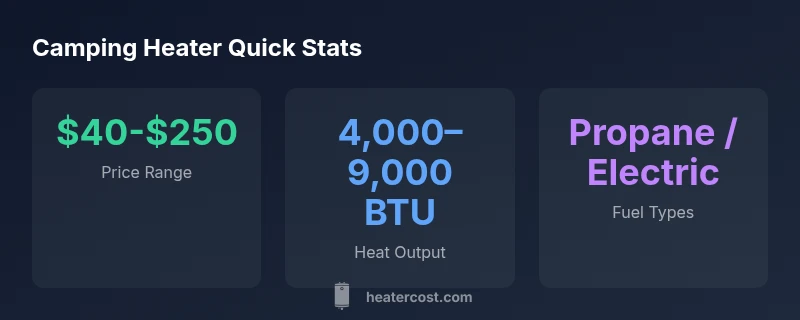
Camping heater costs range roughly from $40 to $250, varying with fuel type, BTU, and features. For a quick, quotable snapshot, see our detailed comparison chart that also outlines safety considerations and maintenance costs. According to Heater Cost, these ranges reflect typical retail pricing in 2026 and help shoppers balance upfront costs with fuel expenses.
Types of camping heaters: propane, electric, and more
A camping heater offers portable warmth for tents, campers, and remote shelters. The most common option at campsites is a small propane heater that uses canisters or a refillable tank. Propane units come in radiant and convective styles; radiant heaters emit direct heat, while convective models circulate warm air. Electric portable heaters rely on batteries or a nearby power source, which limits use in truly remote spots but can be convenient at established campsites. Less common are butane canister heaters and compact wood-burning stoves that can double as heat sources when used with care. Each type has trade-offs in heat output, fuel availability, safety, and weight. Choose based on your typical camping scenario, shelter size, and how far you’ll be from fuel sources.
From a safety standpoint, always prioritize models with stability features and the ability to shut off automatically if tipped or overheated. Heavier, radiant models tend to feel warmer quickly but require careful placement to avoid contact with flammable materials. Electric heaters are quiet and clean but depend on a stable power source. In 2026, Heater Cost Analysis, 2026 highlights that most campers lean toward propane for reliability in remote spots, while electric options shine on sites with accessible power.
- Key differences to note: radiant vs convective heat, fuel availability, weight, and the number of heat settings.
- Quick decision guide: if you’re car camping with a small shelter, a propane radiant heater can be the most practical; for powered sites, a compact electric unit minimizes fuel logistics.
- Safety reminder: never place heaters on soft surfaces or near tents, and avoid running heaters overnight unless specifically designed for extended use.
How to choose the right camping heater: BTU, efficiency, and safety
Determining the right heater starts with space assessment and risk tolerance. A small tent or canopy might need roughly 4,000–6,000 BTU for comfortable warmth, while larger shelters demand more. Look for units with high thermal efficiency, good heat distribution, and features such as tip-over shutoff, overheat protection, and oxygen depletion sensors. Efficiency matters because higher efficiency reduces fuel consumption and emissions. Also consider the availability of fuel at your campsite and the weight of cylinders or batteries you’ll carry. When comparing electric heaters, check battery capacity and run-time per amp-hour to estimate how many nights you can use the unit between charges. In 2026, practical buyers favor models with clear safety certifications and modular parts for easy maintenance.
- Practical BTU rule of thumb: choose a model whose BTU aligns with tent size and typical sleeping area.
- Additional features to value: automatic shutoff, sturdy base, and stable display surfaces.
- Brand reliability and warranty length matter for long-term ownership.
Fuel considerations and running costs
Fuel availability and price influence running costs more than you might expect. Propane is widely available in travel stores and gas stations, but price and canister size affect per-trip cost. Butane is common in some regions but often harder to find in cold weather. Electric heaters rely on portable battery packs or campsite power, and running times depend on battery capacity. When budgeting, estimate the number of nights you’ll camp, expected low temperatures, and how long you’ll run the heater each night. This helps you compare fuel-based costs to electric options more accurately. Heavier, high-output units consume more fuel, which increases per-trip costs. In Heater Cost’s 2026 analysis, many campers report propane as the most economical option for longer trips, while electric units excel in short stays with accessible charging.
- Fuel choice typically drives price per night more than initial purchase price.
- For cold-weather trips, plan for higher fuel usage and carry spare canisters.
Safety essentials for camping heaters
Safety is the top priority when heating a shelter outdoors. Always operate heaters in well-ventilated areas, never inside a closed tent, and keep flammables away from the heat source. Use CO alarms if you’re in a semi-enclosed shelter and follow the manufacturer’s venting guidelines. Place heaters on stable surfaces away from bedding and fabric. Never leave a heater unattended, especially overnight, and store fuel canisters safely when not in use. Practical tips include keeping children and pets away from hot surfaces and using heat-resistant mats. In 2026, the Heater Cost team emphasizes that a safe setup is the best way to enjoy reliable warmth without risk.
- Ventilation is non-negotiable for enclosed spaces.
- Maintain a clear zone around the heater and store fuel upright.
- Regularly check hoses and fittings for leaks before trips.
Maintenance, storage, and long-term care
Proper maintenance extends the life of a camping heater and reduces the risk of accidents. After each trip, wipe down surfaces to remove dust and inspect hoses or connections for wear or leaks. Store cylinders upright in a cool, ventilated area and never store hot equipment. For electric models, discharge and recharge batteries as recommended by the manufacturer. Inspect safety features periodically and replace worn components before the next trip. In Heater Cost’s experience, routine checks help prevent mid-trip failures and ensure safe operation over multiple seasons.
- Create a simple pre-trip checklist that includes cleaning, leak testing, and battery health.
- Store fuel cans in a ventilated space away from heat sources.
- Replace any worn seals or hoses before peak camping season.
Real-world usage scenarios and buyer tips
If you’re car camping with a small tent, a propane radiant heater or electric unit might offer the best balance of weight and warmth. For extended backcountry trips, a compact wood stove (with proper venting) can provide long-lasting heat, but requires more setup. When shopping, prioritize safety features, weight, fuel availability, and compatibility with your shelter. Read reviews from other campers and compare warranty terms to choose a model that suits your needs and budget. For families, look for models with simple ignition and kid-friendly safety features, while solo hikers may prioritize lighter weight and easier packing. Heater Cost’s recommended approach is to test gear at home before a trip to confirm how it performs in your specific camping environment.
Comparison of common camping heater types
| Model Type | Typical BTU range | Fuel/Power | Estimated Price Range |
|---|---|---|---|
| Propane radiant heater | 4,000–9,000 | Propane gas | $60-$180 |
| Electric portable heater | 1,000–1,500 | Battery/AC | $40-$120 |
| Butane canister heater | 2,000–4,000 | Butane canister | $50-$150 |
Got Questions?
What is the safest camping heater to use at a campsite?
Look for models with automatic shutoff, tip-over protection, and proper ventilation guidance. Follow manufacturer instructions; use CO detectors when appropriate. Never leave a heater unattended.
The safest option is a heater with safety shutoffs and ventilation.
Can I use a camping heater indoors or in tents?
Only if the unit is explicitly rated for enclosed spaces and you have adequate ventilation. In most cases, outdoor use is recommended.
Only if rated for enclosed spaces and you have ventilation.
What fuels are commonly used in camping heaters and which is cheapest?
Propane and butane are common in portable units; some electric options exist but require power. Propane tends to be widely available; prices vary.
Propane is common and widely available; electric needs power.
How do I safely maintain and store my camping heater?
Clean after use, inspect hoses for leaks, drain fuel properly, store upright in a cool, ventilated area. Replace worn components before next trip.
Clean it after use and store safely.
What are typical running costs for a camping heater per trip?
Costs depend on fuel price and duration; expect a few dollars per trip for propane, with electric options varying by battery life.
Running costs depend on fuel price and how long you run it.
Are camping heaters legal on public campsites?
Rules vary by park and jurisdiction; check local regulations and campsite rules, as some areas ban open flames.
Check park rules; some places ban open flames.
“A camping heater decision should balance heat output, fuel availability, and safety, so you get dependable warmth without risking the campsite.”
The Essentials
- Assess your camping needs before buying.
- Match BTU output to shelter size and expected chill.
- Prioritize safety features and proper ventilation.
- Choose fuel type based on availability and convenience.
- Budget for upfront cost and ongoing fuel expenses.