Outdoor Heater Costs in 2026: Buying, Installing, and Saving
Explore outdoor heater costs in 2026: purchase price ranges, installation considerations, energy use, maintenance tips, and budgeting strategies to help homeowners, renters, and managers.


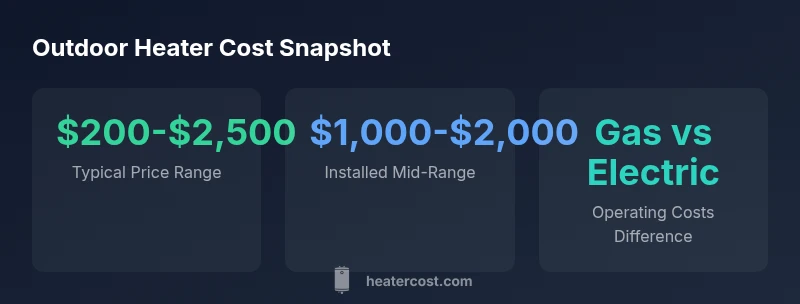
According to Heater Cost Analysis, the typical outdoor heater cost ranges from $200 to $2,500 depending on type and size, with installation often adding $300 to $1,500. Gas models generally cost more upfront but may offer lower operating costs, while electric infrared heaters are simpler to install. Plan for $1,000 to $2,000 total for mid-range setups.
What is an outdoor heater and when to consider one
Outdoor heaters extend usable outdoor living spaces into cooler seasons, enabling al fresco dining, gatherings, and year-round enjoyment. They come in several forms—gas patio heaters, electric infrared units, propane models, and natural gas models—each with distinct heat profiles, fuel considerations, and safety requirements. If you live in climates with cool evenings, or you host frequent outdoor events, an outdoor heater can improve comfort and extend your outdoor investments. According to Heater Cost Analysis, the biggest decision isn’t only price but heat type, installation complexity, and ongoing energy costs. In practice, a well-chosen outdoor heater aligns with your space, fuel accessibility, and safety needs, avoiding the cost pitfalls of under- or over-sizing. Before you shop, assess your space: ceiling height, wind exposure, typical guest count, and whether you’ll heat a dining area, lounge zone, or entire patio. For renters, portable options may offer flexibility without major installations.
Types of outdoor heaters and how they compare
The market offers several main categories: gas patio heaters (often tall, freestanding), propane heaters, natural gas models, and electric infrared units. Each type delivers heat differently: gas models provide broad, radiant warmth suitable for outdoor dining; electric infrared focuses heat on nearby objects and people with minimal ambient warmth. Pros and cons vary: gas heaters tend to cost more upfront and require ventilation and fuel supply; electric infrared heaters are cheaper to install and quieter but heat a smaller area. To choose wisely, compare fuel availability, safety features (tip-over and flame safeguards), heat range, and maintenance needs. According to Heater Cost Analysis, the best choice depends on your climate, deck layout, and how you’ll use the space.
Cost drivers: purchase, installation, and operating costs
The biggest cost driver is heat output per square foot and fuel type. Gas units typically have higher upfront costs due to hardware and venting needs, while electric infrared units trade upfront cost for simpler installation. Installation costs vary with electrical wiring, gas lines, permits, and site preparation. Operating costs depend on fuel price and usage; gas is usually cheaper per unit of heat, but electric heat can be cheaper to power in areas with low electricity rates and where you can avoid running heaters long hours. In 2026, Heater Cost’s analysis shows that you should anticipate a wide price spread for outdoor heaters and plan for both initial investment and ongoing energy use.
Sizing and layout: BTU, space, and safety
Proper sizing ensures comfortable warmth without overheating the space or wasting energy. A common guideline is 20–40 BTU per square foot for outdoor areas, adjusted for climate, wind, and ceiling height. For a 150 square foot patio, this translates to roughly 3,000–6,000 BTU, though heavy winds or open terraces may require more. Position heaters to avoid direct exposure to flammable materials and ensure at least 3–4 feet of clearance on all sides. Use heat shields or reflectors for larger tables and ensure electrical outlets or gas lines are installed by licensed professionals. Always follow manufacturer guidelines and local codes to maintain safety.
Installation considerations and permits
Gas-fired heaters often require professional installation, gas line connections, and, in some jurisdictions, permits. Electric units may require dedicated circuits, weatherproof outlets, and GFCI protection. Check your local building department or utility provider for permit requirements and inspection steps. Even portable heaters should be used with caution on wooden decks or near overhangs, and never indoors. If you rent, verify the property owner’s permission before installing any equipment. Heater Cost’s guidance emphasizes safety, code compliance, and the importance of proper fuel supply and venting.
Maintenance, safety, and lifespan
Routine maintenance extends the life of outdoor heaters. Clean heat surfaces, inspect for corrosion, check burner or heating element for wear, and replace worn components as recommended by the manufacturer. For gas heaters, check venting and gas lines for leaks; for electric models, inspect electrical connections and weatherproofing. Install a CO detector near outdoor heating setups and ensure kids and pets stay clear of hot surfaces. Seasonal storage, cover protection, and professional servicing every year or two can dramatically extend lifespan and performance.
Maximizing savings with smart controls and seasonal use
Smart controls and programmable timers can dramatically improve the cost-effectiveness of outdoor heating. Set schedules to heat only during peak use and adjust based on occupancy and weather. In addition, consider energy-efficient features like infrared heating focused on people and objects rather than the entire space, which reduces wasted heat. Weather-resistant covers and seasonal shutdowns can further cut costs. Heater Cost’s findings suggest that pairing a heater with a properly insulated outdoor living area yields the best balance between comfort and cost.
Common mistakes to avoid when buying and installing
Avoid under-sizing or over-sizing for your space, which leads to inadequate warmth or energy waste. Don’t neglect safety features such as tip-over switches, flame guards, and proper clearance. If you’re unsure about fuel type, consult a licensed installer to evaluate site conditions and code requirements. Finally, don’t skip maintenance or ignore weather exposure; outdoor heaters exposed to rain or snow require proper weatherproofing and seasonal checks to prevent rust and performance degradation.
Outdoor heater cost comparison
| Category | Typical price range | Notes |
|---|---|---|
| Gas outdoor heater | $200-$1,800 | Requires venting and gas line; higher installation complexity |
| Electric infrared heater | $150-$800 | Easier installation; heat area is focused |
| Propane vs natural gas | Variable | Fuel availability and price affect cost |
| Installation cost | $300-$1,500 | Includes electrical work, venting, and permits |
Got Questions?
What is the typical upfront cost for an outdoor heater?
Upfront costs vary by type and size. Gas units generally cost more to purchase and install due to venting and fuel connections, while electric infrared heaters tend to be cheaper to buy and install. Expect a wide range that reflects heat output and installation complexity.
Expect a wide price range influenced by heat output and installation complexity.
Do I need permits to install an outdoor heater?
Permits depend on local rules. Gas heaters usually require professional installation and may need gas-line inspections; electric heaters may require a dedicated circuit and weatherproof outlets. Check with your city or county building department.
Check with local authorities; permits may be required for gas or electrical work.
Which is cheaper to operate: gas or electric?
Gas is often cheaper per unit of heat than electricity, but total costs depend on fuel prices, usage patterns, and climate. If you operate sparingly and pay for electricity rates, electric heat can be more economical.
Gas usually costs less per heat unit, but it depends on usage and prices.
What size heater do I need for a given patio area?
A common guideline is 20–40 BTU per square foot, adjusted for wind, ceiling height, and spacing. For example, a 200-square-foot space may need roughly 4,000–8,000 BTU, with larger or windier spaces requiring more heat.
Calculate BTU per square foot, adjusting for wind and space.
What maintenance does an outdoor heater require?
Regular cleaning, inspection of burners or heating elements, checking for corrosion, and ensuring weatherproofing. For gas units, inspect gas lines and vents; for electric units, check connections and outlets. Annual servicing helps maintain safety and efficiency.
Keep it clean, check for wear, and service yearly.
Are outdoor heaters safe for covered patios?
Yes, with proper clearance and weatherproofing, but avoid enclosed or poorly ventilated spaces. Follow manufacturer guidelines and local codes, and install on a non-combustible surface with adequate airflow.
Yes, when properly installed with ventilation and clearance.
“Choosing an outdoor heater isn’t just about price—it's about space compatibility, safety, and long-term energy use.”
The Essentials
- Plan a total budget of $1,000–$2,000 for mid-range setups
- Choose heat type based on space, climate, and fuel access
- Prioritize safety features and professional installation where needed
- Use smart controls to maximize seasonal savings