Battery Powered Heater for Camping: A Practical Guide
Practical guide to battery powered heaters for camping, covering runtimes, safety, and cost considerations to help you choose the right portable warmth for outdoor trips.


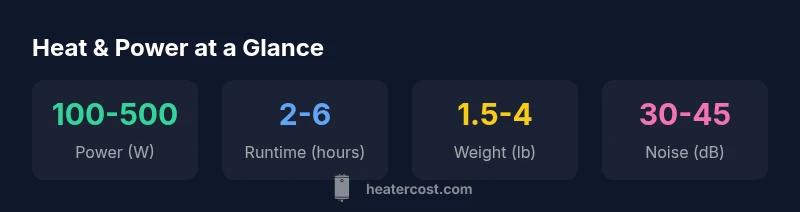
Battery powered heater for camping devices provide portable warmth using rechargeable batteries or vehicle power. Most units draw between 100 and 500 watts and run on 12-volt, USB-C, or hybrid inputs. Expect runtimes roughly from 2 to 6 hours on common camping battery packs, depending on heat setting and battery capacity.
Why a battery powered heater for camping matters
For many campers, a battery powered heater for camping offers portable warmth without the fumes, noise, or logistics of propane or white-gas heaters. According to Heater Cost, the appeal hinges on power availability, safety, and weight. In practice, this means weighing the convenience of a rechargeable pack against the heat you need to stay comfortable at night or on chilly mornings. The most common configurations use a 12-volt car battery, a USB-C powered module, or a compact lithium pack that can be charged via solar or a vehicle inlet. In mild climates, such devices can deliver a steady warmth that makes late-season trips more enjoyable. In harsher conditions, the heat output and battery capacity must align with your planned duration and shelter design. The Heater Cost team emphasizes that the best choice matches your itinerary, power access, and safety practices. Readers should also consider how wind, humidity, and tent geometry affect perceived warmth, since these factors can dramatically change the experience even with a seemingly capable heater.
Power options, heat output, and runtimes
Battery-powered camping heaters operate across a spectrum of power inputs, typically from about 100 W up to 500 W. The actual runtime depends on battery capacity (in watt-hours, Wh) and the heat setting selected. A simple rule of thumb is: Runtime ≈ BatteryWh / HeatW, adjusted for real-world energy losses. For example, a 200 Wh pack used at 150 W might deliver a little over an hour of comfortable warmth in a small shelter, whereas the same pack at 100 W could last closer to two hours. Higher-capacity packs (300–600 Wh) extend these numbers significantly, but add weight. In all cases, planning for wind exposure and shelter design is crucial, because drafty tents can dramatically diminish effective warmth.
Safety features and responsible use
Safety should guide every purchase and campsite setup. Look for overheat protection, tip-over shutoffs, and automatic shutoffs at low battery or high ambient temperature. Never operate a heater in an enclosed space without adequate ventilation, even if the device is electric. Inspect connectors and batteries before trips, avoid moisture exposure, and store packs in fire-safe containers when not in use. The difference between a safe, enjoyable camping experience and a risky one often comes down to how you manage charging, storage, and monitoring during sleep.
Key features to prioritize on a camping heater
When evaluating models, prioritize heat output options, battery compatibility, and portability. Features to consider include: multiple heat settings, fast warm-up time, battery level indicators, compatibility with USB-C or 12V car charging, compact storage dimensions, rugged construction, and IP rating for light rain exposure. A built-in safety circuit and a sealed housing reduce risk in damp outdoor environments. Weight, size, and power source flexibility are especially important for backpackers and car campers alike.
Real-world performance and trade-offs across setups
Performance varies by setting. Car campers often benefit from larger, high-capacity packs, enabling longer runtimes with higher heat at night. Backpackers prioritize light weight and compact form factors, accepting shorter runtimes and lower heat at a lighter footprint. In windy conditions, warmth is less about raw output and more about shelter design, airflow management, and placement. For any scenario, carry spare batteries or a portable solar panel to extend time outdoors without returning to basecamp for recharge.
Battery and charging strategies
Opt for packs in the 150–300 Wh range for weekend trips, with 400–600 Wh for longer stays or colder regions. USB-C and 12V outputs broaden charging options, including car, wall, and solar inputs. Solar panels complement camping heaters well in sunny locations but expect slower top-ups than wall charging. Consider modular packs you can detach and swap, and use a dedicated travel pouch to protect batteries from impact and moisture. Always follow manufacturer guidelines for safe charging and storage temperatures.
Cost considerations and value
Entry-level models generally sit in the lower price brackets due to lighter heat output and smaller packs, while mid-range options offer better heat control and larger battery compatibility. Premium units may include advanced safety features, higher efficiency, and faster charging. Because prices vary with capacity and brand, focus on total cost of ownership: battery capacity, replacement cycle, and the availability of spare packs. Expect price ranges rather than fixed figures, and weigh the value of reliability against budget constraints.
Maintenance, storage, and safety practices
Store batteries in a cool, dry place away from direct sunlight and sharp impacts. Regularly inspect for swelling, corrosion, or damaged connectors. Clean dust and debris from vents, and avoid stacking packs that could overheat. When traveling, use protective cases and keep charging cables organized to prevent wear. If a pack experiences physical damage or unexpected heat, discontinue use and consult the manufacturer.
Practical setup and usage tips
Place the heater on a stable, non-flammable surface away from sleeping areas and any tent fabrics. Ensure adequate ventilation and avoid obstructing vents with gear. Pre-warm the sleeping area before lights out, then switch to a low heat level to maintain comfort without excessive energy use. Keep spare batteries accessible, and use a simple clock or timer to monitor runtime versus ambient temperature. With thoughtful placement and power planning, a battery powered heater for camping can deliver dependable warmth across a range of outdoor adventures.
Comparison of camping-ready battery heaters by power and runtime
| Option | Typical Battery Capacity (Wh) | Heat Output (W) | Estimated Runtime (hours) |
|---|---|---|---|
| Entry-level | 60-120 | 100-150 | 0.5-2 |
| Mid-range | 150-300 | 150-250 | 1-4 |
| Premium | 400-600 | 300-500 | 2-6 |
Got Questions?
Is it safe to use a battery-powered heater inside a tent?
Yes, as long as the unit is rated for tent use and used with proper ventilation. Place it away from fabrics and never sleep with the heater running. Always follow the manufacturer’s safety instructions.
Yes, with proper ventilation and following safety instructions.
How long will a camping battery last under typical use?
Runtime depends on capacity and heat setting. A smaller pack may last a couple of hours, while a higher-capacity pack can extend warmth for several hours. Plan for contingencies and carry spares.
Runtime varies by capacity and heat setting; plan ahead.
Can solar charging support a camping heater?
Some models support USB-C or 12V charging, which can be aided by portable solar panels. Solar can help in sunny locations but expect slower top-ups and plan accordingly.
Solar helps, but don’t rely on it alone in low light.
What safety features should I look for?
Look for overheat protection, tip-over switches, automatic shutoffs, and a robust enclosure. Avoid units without ventilation guidance for enclosed spaces.
Prioritize models with built-in safety protections.
Are Li-ion batteries safe outdoors?
Li-ion packs are generally safe when used as intended, but avoid extreme temperatures and physical damage. Inspect packs regularly and store away from direct heat sources.
Use only rated packs and check them periodically.
How should I select a heater for different camping styles?
Car campers can usually accommodate larger packs for longer runtimes, while backpackers should prioritize lighter, smaller units. Match heat output and weight to your shelter design and itinerary.
Pick heat and weight to fit your trip plan.
“In outdoor heating, reliability and safety are paramount. Battery-powered heaters offer portable warmth with proper battery strategy and ventilation.”
The Essentials
- Choose a model with auto-shutoff and overheat protection
- Match battery capacity to trip length and shelter size
- Prioritize safety features and ventilation planning
- Consider weight and charging options for your itinerary
- Test setup at home before taking it on the trail