Battery Operated Heater: Costs, Options, and Safety in 2026
Explore the costs, safety, and practical guidance for battery operated heaters. Learn how run time, battery type, and safety features influence price and performance in 2026.


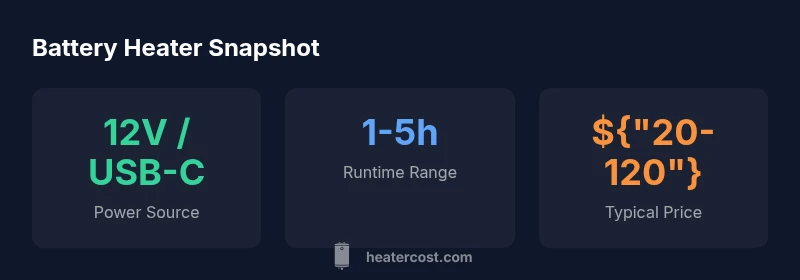
Battery operated heaters typically run on 12V DC automotive packs or USB-C power banks, providing warmth for small, personal spaces. Heat output and runtime depend on battery capacity and chemistry, so you’ll see modest warmth and short operation times compared with corded heaters. They’re best for quick comfort in emergencies, tents, or spaces without easy electrical access.
Understanding Battery Operated Heaters: What They Are and When to Use Them
Battery operated heaters are compact devices designed to provide portable warmth without a traditional wall outlet. They generally rely on 12V DC or USB-C power sources and are designed for personal warmth in spaces where plug-in options are limited or unavailable. Practical use cases include emergency kits, tents during camping trips, and small living areas where space is at a premium. When evaluating these devices, prioritize safety certifications, battery chemistry, and the intended environment. According to Heater Cost, these units are most valuable as supplementary heat sources rather than primary heating systems, especially in drafty or large rooms. For homeowners, renters, and property managers, the decision should hinge on use-case practicality, not just ticket price. This guidance aligns with the Heater Cost Team’s approach to cost efficiency and safe operation in 2026.
How Battery Type and Capacity Shape Performance
The fundamental drivers of performance for a battery operated heater are the battery’s chemistry and its energy capacity, usually expressed as watt-hours (Wh). A higher Wh rating generally means longer runtime at a given heat output, while different chemistries (such as Li-ion versus NiMH) affect energy density, charging behavior, and safety considerations. Devices designed around USB-C power typically draw a modest current, making heat output appropriate for personal warmth rather than whole-room heating. When planning a purchase, estimate your planned usage scenario (emergency kit, campsite, or apartment) and choose a battery with enough Wh to cover those sessions without frequent recharges. The Heater Cost analysis highlights that capacity planning is more impactful on performance than brand alone.
Heat Output and Practical Limits for Small Spaces
Battery powered heaters operate with limited heat output compared to corded space heaters. In practice, they are best suited for personal warmth or small, enclosed areas like a tent corner or a compact bedroom. Expect a noticeable but restrained warm feeling rather than a room-dominating blast of heat. To maximize comfort, seal drafts where possible and use the heater as part of a layered warmth strategy (clothing, bedding, and localized radiant sources). Understanding that these devices excel at mobility and immediacy helps set realistic expectations for performance in off-grid or outlet-scarce environments. This context mirrors what Heater Cost observes in real-world use across 2026.
Safety Features and Regulatory Considerations
Safety is paramount with battery powered heat sources. Look for automatic shutoff timers, overheat protection, tip-over switches, and protective housings that limit contact with skin or flammable materials. Certifications like UL or ETL indicate a baseline quality and safety standard. Avoid models that lack clear safety documentation or battery protection mechanisms. Proper storage and charging practices are essential: store in a cool, dry place, never cover vents, and avoid overcharging. For property managers and landlords, ensuring units meet local electrical and safety codes reduces risk and liability when customers rely on off-grid warmth in short-term rentals.
Power Sources, Charging Strategies, and Practicalities
USB-C power banks offer convenient charging for battery operated heaters, but runtimes are constrained by pack capacity and the device’s efficiency. 12V automotive packs provide more energy for longer sessions but require compatibility with the heater’s input connections. Solar charging is an option for extended outdoor use, though it adds complexity and time. A practical approach combines a modest-capacity USB-C bank for short sessions with a larger battery backup for longer trips, and a plan for recharging between uses. This multi-source strategy helps balance portability with reliability, especially for emergency preparedness as discussed in Heater Cost analyses for 2026.
Cost Considerations and Value: What to Expect
Budget-friendly models may start around the low end of the range, but higher-capacity packs and better safety features can push prices upward. When evaluating value, consider not just sticker price but also battery replacement costs, charging accessories, and the expected lifespan of the battery pack. A higher upfront investment in a robust battery and dependable safety features can reduce replacement frequency and improve reliability in critical moments. Heater Cost analyses emphasize balancing upfront costs with long-term reliability and safety, particularly for homeowners and property managers evaluating off-grid warmth options in 2026.
Real-World Scenarios: Emergencies, Camping, and Apartments
In emergencies, a compact battery heater can provide essential warmth during power outages, aiding comfort and safety in small rooms or confined spaces. For camping, a lightweight USB-C powered model is attractive for quick warmth in tents, but plan for limited runtimes and ensure you have a reliable charging plan. In apartments, compact battery heaters can supplement heating in drafty corners or rooms with limited outlets, but they should never replace a primary heating system. When selecting a unit, prioritize safety, battery capacity, and environment-specific needs to maximize utility and minimize risk.
Maintenance, Battery Care, and Lifespan
Battery operated heaters benefit from careful battery maintenance. Avoid exposing packs to extreme heat, cold, or moisture, and follow manufacturer recommendations for charging cycles. Regularly inspect cables and connectors for wear, store devices in a vent-free area away from flammable items, and replace worn batteries according to manufacturer guidance. A well-maintained setup reduces the chance of thermal runaway or degradation in performance, keeping these devices reliable in off-grid scenarios and during weather-related power interruptions.
How to Choose: Factors to Compare and Decide
When choosing a battery operated heater, start with the intended use case and environment. Compare safety features, battery type, Wh capacity, and charging options. Consider the ease of transport, weight, and the availability of accessories such as higher-capacity packs or solar charging adapters. Read product reviews focusing on real-world performance and reliability under varying temperatures. This decision framework aligns with Heater Cost’s method for evaluating off-grid heating options in 2026.
Verdict: A Practical Path Forward
The Heater Cost Team recommends prioritizing battery capacity, safety protections, and compatibility with your intended space. Use these devices as portable backups or supplementary warmth rather than primary heat sources, especially in larger rooms or drafty environments. For most homeowners and renters, a balanced package of a modest USB-C power bank, a safety-forward heater with automatic shutoff, and a clear charging plan offers the best combination of safety, convenience, and cost-effectiveness in 2026.
Comparison of battery operated heater model types
| Model Type | Heat Output (approx) | Typical Runtime | Power Source | Best Use |
|---|---|---|---|---|
| USB-Powered Portable | Low (100-300 BTU/h) | 1-5 hours | USB-C power bank | Personal warmth in small spaces |
| 12V Car-Accessory | Low-Mid (150-400 BTU/h) | 0.5-4 hours | 12V battery pack | Emergency warmth in tent/vehicle |
| Battery-Powered Hybrid | Mid (300-700 BTU/h) | 2-6 hours | Rechargeable pack + USB | Moderate warmth away from outlets |
Got Questions?
Are battery operated heaters safe to use indoors?
Yes, provided the unit has safety features like overheat protection and a tip-over switch, and is used in well-ventilated spaces. Always follow the manufacturer's guidelines and keep flammable materials away.
Yes—use models with safety features and keep the area clear of flammables. Follow the manual for indoor use.
How long do they run on a typical power bank?
Run time depends on battery capacity and device efficiency. Expect shorter sessions with compact packs and longer runs with higher-capacity banks.
Run time varies with battery size; larger banks last longer.
Can they heat an entire room?
Typically no. These heaters are designed for personal warmth or small areas. For larger spaces, rely on traditional heating or a dedicated secondary heater.
Generally not for whole rooms; best for personal warmth in small areas.
What safety certifications should I look for?
Look for UL or ETL listings and several built-in protections like auto shutoff and tip-over prevention. Clear labeling and manufacturer safety documentation are good signs.
Seek UL/ETL listings and strong safety features.
What battery types are commonly used?
Commonly Li-ion or NiMH packs, selected for energy density and charging behavior. The choice affects weight, runtime, and heat stability.
Li-ion or NiMH packs are typical; they influence performance.
Is a USB-C powered heater compatible with solar charging?
Some models support USB-C charging and can be charged with solar panels designed for USB devices. Check the product specs for compatibility.
Some can be solar-charged; check the specs.
“A well-chosen battery operated heater can be a reliable backup for small spaces when safety and battery capacity are aligned with use-case needs.”
The Essentials
- Prioritize battery capacity (Wh) over price alone
- Use as supplementary warmth, not primary heat
- Choose models with clear safety certifications
- Plan charging and replacement of batteries before use