Water Heater Replacement Near Me: Costs, Process, and Local Tips
Learn how to evaluate water heater replacement near me costs, timelines, and options. Compare tanked vs tankless, understand permits, and find a reliable local installer with practical guidance from Heater Cost.


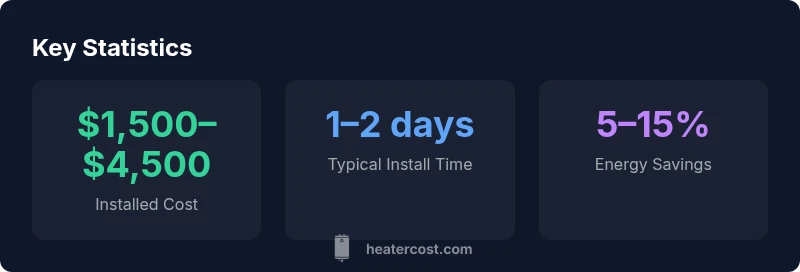
Water heater replacement near me typically costs between $1,500 and $4,500 installed, depending on fuel type, tank size, and local labor rates. Upgrading to a high-efficiency electric tank or a modern gas model often yields the best long-term value. In many areas, a professional install takes 1–2 days and requires any necessary permits.
Understanding When Replacement Is Right
Replacing a water heater is often a prudent move when a unit is aging beyond its useful life, shows persistent leaks, or becomes unreliable in delivering hot water. In the context of water heater replacement near me, the decision hinges on safety, reliability, and cost. The Heater Cost team emphasizes weighing ongoing repair costs against the price of a new, more efficient unit. If energy bills have risen noticeably or you experience frequent outages, replacement typically offers better value over time. Consider how the new unit will fit your space, fuel availability, and climate, as well as any anticipated changes in your household hot-water demand. A local assessment helps confirm sizing, venting requirements, and installation constraints, ensuring you choose the right model for your home.
Cost considerations and typical ranges
Cost is the top question homeowners ask about replacement. In general, standard electric or gas tank models installed in a typical home cost between $1,500 and $4,500 when you include labor, materials, and permits. Tankless systems can push the price higher, often in the $3,000 to $6,000 range installed, depending on home configuration. Regional price differences, permit requirements, and whether you replace like-for-like or upgrade to a higher efficiency model influence final numbers. Heater Cost Analysis, 2026 shows that labor dominates price variability in many markets, and the cost delta between tanked and tankless options is a key consideration for homeowners.
Tanked vs Tankless: Pros, Cons, and When to Choose
Tanked water heaters store heated water, supply it on demand, and tend to have lower upfront costs. They’re simple to install and reliable, with shorter wait times for hot water recovery. Tankless units heat water on demand, saving space and energy but typically require higher upfront investment and more complex installation. If your household uses a lot of hot water or has limited space, tankless can be worth it; otherwise, a high-efficiency tank may be the more economical option. Local code and venting constraints can also sway the decision in favor of one type over the other.
Energy efficiency and operating costs
Replacing an old heater with a high-efficiency model lowers standby losses and reduces energy bills over time. Look for Energy Factor (EF) ratings and consider models with better insulation and heat traps. A more efficient unit may require higher upfront costs but typically pays back through energy savings and longer lifespan. The exact savings depend on climate, fuel type, and usage, so it’s wise to model your home’s profile to estimate payback.
Permits, codes, and scheduling
Many municipalities require permits for water heater replacement, especially when gas lines or venting are modified. A licensed installer typically handles permit applications and ensures compliance with local codes, venting, and setback requirements. Scheduling may be affected by permit processing times and technician availability. In some markets, a gas line pressure test or venting inspection is required, so discuss permit expectations upfront with your contractor.
Step-by-step replacement process you can expect
- Initial assessment: a contractor sizes the unit based on household hot-water needs and existing venting or piping. 2) Permit and scheduling: paperwork is filed and a date is set. 3) Shutdown and drain: the old unit is disconnected and drained safely. 4) Installation: the new unit is mounted, connected, and vented. 5) Testing: pressure, temperature, and venting are checked; safety devices verified. 6) Cleanup and handoff: the area is restored and warranty information explained. Expect 1–2 days from start to finish in most homes.
How to choose the right installer near me
Seek a licensed, insured contractor with local references and clear pricing. Check for written estimates, permits included, and a detailed description of installed equipment. Ask about warranties on parts and labor, speed of response, and after-service support. Online reviews and a quick site visit can help verify competence.
Maintenance plan to maximize lifespan
Regular maintenance extends life and preserves efficiency. Schedule annual or biyearly inspections, flush the tank, check anode rod, test thermostat, and inspect the venting system for leaks. Keep the area around the heater clear, insulate exposed pipes, and replace expansion tank if required. A proactive plan reduces unexpected outages.
Warranties, financing, and getting the best value
Most water heaters come with a manufacturer warranty on the tank and parts, plus a labor warranty provided by the installer in many cases. Compare terms across models and installers; look for longer coverage on the tank, heat exchanger, and components. Financing options, rebates, and utility incentives can help manage upfront costs. The Heater Cost Team's verdict is that local installation quality, proper sizing, and a robust warranty are the best predictors of long-term value. If you’re searching for reliability and transparency, start by requesting written quotes from multiple local providers and verify permit handling.
Comparison of common water heater types
| Model Type | Avg Lifespan | Typical Installation Time | Initial Cost Range |
|---|---|---|---|
| Tank (gas) | 8-12 years | 1-2 days | 1,000–2,000 |
| Tank (electric) | 10-15 years | 1-2 days | 1,000–3,000 |
| Tankless | 15-20 years | 2-3 days | 3,000–6,000 |
Got Questions?
What factors influence the cost of replacing a water heater near me?
Costs vary with unit type, fuel, tank size, venting needs, and permit fees. Labor rates differ by region, and some installers bundle disposal of the old unit. Request written estimates from multiple local providers to compare. The value is often in combined efficiency and warranty coverage over time.
Costs vary by unit type, fuel, and local labor. Get multiple written estimates to compare.
How long does installation usually take?
Most installations take 1–2 days, depending on existing venting, gas lines, and whether any ductwork or piping changes are needed. Tankless setups can extend slightly due to venting and gas line work. Your installer should provide a timeline in the estimate.
Most installs take one to two days; tankless may take a bit longer.
Should I upgrade to tankless when replacing?
Tankless can save space and reduce standby energy losses, but they have higher upfront costs and more complex installation. Consider your hot-water demand, budget, and whether space constraints are a concern. A local professional can model payback for your home.
Tankless saves space but costs more upfront; assess demand and budget.
Do permits apply to replacement?
Permits are common when gas lines or venting are altered. A licensed installer usually handles permit applications and inspections. Check with your city or county for exact rules before starting.
Permits are common; your installer usually handles them.
What warranties come with a new water heater?
Most units include a manufacturer warranty on the tank and parts, plus a labor warranty offered by the installer. Read terms carefully and confirm coverage duration before purchase.
Look for both tank and labor warranties; confirm durations upfront.
Repair or replace: when is it better?
If repair costs approach or exceed half the replacement cost, or reliability is uncertain, replacing with a newer, efficient model is usually wiser. Consider long-term energy savings and potential warranty benefits.
If repairs cost half or more, replacement is often better.
“Local, licensed installation is essential to ensure safe venting, proper permits, and accurate sizing for your home. Proper installation protects energy efficiency and prevents future repairs.”
The Essentials
- Assess replacement needs early to avoid outages
- Understand local costs and permit requirements
- Consider energy-efficient models to reduce operating costs
- Tankless options offer space savings but higher upfront costs
- Choose a licensed local installer for best value