Instant Under Sink Water Heater: Costs, Sizing, and Maintenance
Explore the costs, sizing guidelines, and maintenance for instant under sink water heaters. Learn how to size for your faucet flow, compare installation options, and estimate payback with practical ranges and brand-tested advice from Heater Cost Analysis, 2026.


An instant under sink water heater is a point-of-use unit that heats water on demand right at the faucet, delivering hot water quickly while saving space. Typical models provide about 0.5–2.0 GPM, fit in a cabinet under the sink, and require a dedicated circuit for electric versions. Costs vary by capacity and features, with broad ranges to consider during planning.
What is an instant under sink water heater?
The instant under sink water heater is a compact point-of-use device designed to heat water as it flows from the faucet. Placed under the sink, it eliminates the long wait for hot water and the need for a bulky storage tank. According to Heater Cost, these units are particularly appealing for kitchens and bathrooms where hot water is needed quickly and space is at a premium. For many homeowners, the main selling points are a faster hot-water experience, reduced heat loss from long runs, and easier retrofits in smaller homes or apartments. In practice, you’ll typically find electric models that connect to a nearby junction box and supply lines that come from the cold-water feed. Gas-powered under-sink heaters exist but are far less common in residential settings due to venting and installation complexity. When evaluating options, consider your home’s electrical capacity, available cabinet space, and how often you use hot water at the point of use.
In short, an instant under sink water heater delivers hot water on demand at the tap, without the bulk of a conventional tank. The Heater Cost team has found that homeowners who prioritize space savings and quick hot-water delivery often choose this type of unit as part of a broader hot-water strategy.
How these units work: heat on demand at the point of use
Most instant under sink water heaters operate with a compact heating element that activates when water flow is detected. Unlike traditional tank heaters, there’s no reservoir waiting to fill; instead, cold water passes through a heat exchanger or heating coil and exits as hot water within seconds, depending on flow rate and incoming temperature. Electric models use a dedicated circuit and a small transformer to regulate the element, while gas versions rely on a compact burner with venting. Sizing is crucial because the hotter your incoming water, the less energy you need to heat it to your preferred temperature. This is why plumbers and energy experts often emphasize the importance of calculating the temperature rise (the difference between incoming cold water and your hot-water target) before purchase. When you juxtapose the costs and benefits—space savings, faster supply, and install complexity—you’ll see why many households opt for a point-of-use solution as part of a comprehensive hot-water plan.
From a reliability perspective, these devices have evolved to include safety features like leak detection, automatic shutoff, and thermal cutoffs. The Heater Cost analysis notes that quality units with good warranty coverage tend to outperform cheaper models over time, especially in households with variable water temperatures or fluctuating power supply.
Sizing your needs: GPM, temperature rise, and power
Sizing is the heart of a successful POE (point-of-use) installation. The first step is to estimate your required flow rate in gallons per minute (GPM). For most kitchen sinks, a 0.5–1.5 GPM unit is sufficient for most daily tasks, while larger sinks or simultaneous hot-water uses (like a dishwasher) may push you toward 1.5–2.0 GPM. The temperature rise—how hot the water needs to be from your incoming cold supply—directly affects the heater’s power needs. A higher temperature rise demands more heating capacity, which can increase electrical load and possibly dictate a gas option if available. Many homeowners underestimate the impact of water temperature; in colder climates, incoming water can be well below 60°F, demanding greater heater power to reach the desired drinking-water-like temperature.
Another sizing factor is electrical capacity. Electric POE heaters typically require a dedicated 15–20A circuit, sometimes with 120V or 240V configurations depending on the model. Check your home’s panel capabilities and the distance from the electrical source to the under-sink cabinet to avoid voltage drop. If you plan to run the unit alongside other heavy loads, a professional assessment may be wise to prevent nuisance trips or overheating.
Installation considerations: electrical, plumbing, and codes
Installing an instant under sink water heater is not a purely cosmetic upgrade; it involves practical electrical and plumbing work. Start by measuring cabinet space to ensure the unit, shutoff valves, and supply lines fit without crowding the area. For electric models, confirm that a dedicated circuit is available and consider arc-fault or ground-fault protection where required by local codes. Plumbing connections should be compatible with standard 1/2
and compression fittings, with stainless steel braided hoses giving durable service. If your home uses hard water, consider a simple pre-filter to extend the heater’s life. Venting is rarely required for electric POE heaters, but if you’re installing a gas model, proper venting and clearances are critical, and permits may be needed.
During installation, professional plumbers or licensed electricians can help verify proper wiring, pipe alignment, and safety clearances. In rental properties, ensure you have written permission from the landlord and check your local building codes and insurance requirements before proceeding. A properly installed unit should come with a manufacturer’s warranty, but it’s important to document the installation for future service.
Costs, rebates, and payback: what to expect
Cost considerations for instant under sink water heaters cover the unit price, installation, and any required upgrades to electrical infrastructure. Typical POE units range from around $150 to $700, depending on capacity, efficiency, and features such as digital temperature control or self-cleaning mechanisms. Installation costs can add to the total, particularly if electrical work or cabinet modifications are required. In some regions, you may be eligible for energy-efficiency rebates or tax incentives, which can shorten the payback period. When evaluating total cost, compare whether the investment yields practical benefits like reduced water waste, shorter wait times, and improved comfort, rather than focusing solely on the upfront price. The Heater Cost analysis suggests a reasonable payback occurs when the unit replaces or complements longer hot-water runs from a central heater.
Consider the long-term maintenance costs as well. Regularly inspecting connections, cleaning mineral buildup, and monitoring performance can minimize downtime and extend service life. If you share this upgrade with other appliances, you may realize additional energy savings by coordinating with a whole-house efficiency plan.
Pros and cons by use case
For small kitchens, apartments, or guest bathrooms, an instant under sink water heater offers notable benefits: compact footprint, quick hot water, and simple retrofits in many cases. If you frequently use hot water for tasks like dishwashing, installing a POE unit can dramatically cut wait times and curb water waste. On the downside, the addition increases electrical load and requires careful sizing and installation. In homes with already maxed-out panels, you may need to upgrade the service, which increases total project cost. Gas-powered POE units are less common and can introduce venting constraints and code considerations. Electric models work well with standard circuits but still require professional installation to ensure safe, code-compliant operation.
Ultimately, the best use-case aligns with a clear hot-water need at a single sink, a manageable electrical footprint, and a willingness to perform a straightforward upgrade in the kitchen or bathroom cabinet. For households seeking efficiency without sacrificing reliability, a well-chosen POE heater can be a practical, space-saving solution.
Maintenance and reliability tips
Regular maintenance helps maintain performance and extend the life of an instant under sink water heater. Start by inspecting the inlet and outlet fittings for leaks and ensuring the supply lines are free of corrosion. If your water is hard, consider installing a small pre-filter to reduce mineral buildup on the heating element, which can improve efficiency and longevity. Periodic flushing with cold water and manufacturers’ recommended cleaning cycles can minimize scaling. Check the thermostat setting to ensure it remains within your preferred range, and keep an eye on the unit’s warning indicators or error codes. Reputable models with solid warranties tend to be more reliable over time, and scheduling professional service every few years can prevent unexpected failures. Finally, document the installation and keep the warranty information in a known place to facilitate future service or replacement procedures.
Electric vs gas: choosing the right power source for POE heaters
Electric instant under sink water heaters are by far the most common, thanks to simpler installation and lack of venting requirements. They easily fit into standard kitchen or bathroom cabinets, requiring a dedicated circuit and safe electrical clearances. Gas-powered point-of-use heaters are less common in residential settings due to venting complexity and code constraints; where available, they often demand more robust installation and ongoing maintenance. If you’re choosing between power sources, consider local energy costs, your home’s electrical capacity, and installation cost. For most homeowners, electric models provide the easiest path to quick hot water at the sink with a reasonable total cost and minimal disruption. When in doubt, consult a licensed plumber or an electrician to confirm the best choice for your home’s layout and local codes.
Quick-start checklist
- Define your gravity of hot-water needs at the sink (GPM target).
- Confirm electrical capacity and dedicated circuit requirements.
- Measure under-sink cabinet space and verify accessibility for service.
- Check water quality and consider a pre-filter if water is hard.
- Review warranty terms and installation requirements with a professional.
- Compare models with features like temperature control, digital displays, and safety shutoffs.
- Schedule a professional inspection if you rent and can’t perform upgrades without authorization.
Comparison of point-of-use instant water heaters
| Aspect | Typical Range | Notes |
|---|---|---|
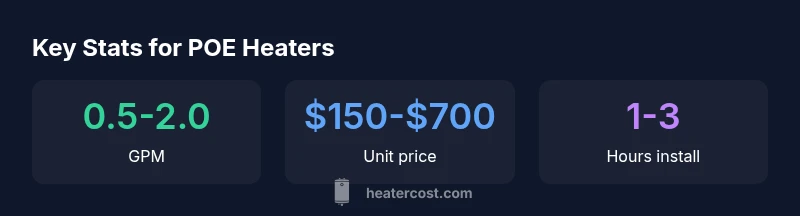
| Flow rate (GPM) | 0.5-2.0 | Depends on model and water temperature |
| Unit price | 150-700 | Depends on capacity and features |
| Installation time | 1-3 hours | Electrical and plumbing work involved |
| Energy savings vs tank heater | 20-40% | Assumes proper sizing |
| Warranty | 2-5 years | Varies by manufacturer |
Got Questions?
What is an instant under sink water heater?
A point-of-use unit that heats water on demand right at the faucet, without a large storage tank. It’s designed for rapid hot water at a single sink and saves space.
A small heater installed under your sink that heats water instantly as you turn on the tap.
What flow rate can I expect from these units?
Most units deliver about 0.5 to 2.0 GPM, depending on model, temperature rise, and incoming water temperature.
Typically between half a gallon and two gallons per minute, depending on the model and water temperature.
Do I need a dedicated circuit for electric POE heaters?
Yes. Electric POE heaters usually require a dedicated 15–20A circuit, and some setups may need 240V configurations depending on the unit.
Yes, most electric models need a dedicated circuit; check the installation guide.
Are these suitable for apartments or rental properties?
Yes, many compact POE units fit under cabinets in apartments, but you’ll need landlord permission and to ensure code compliance.
They can work in rentals, but verify codes and landlord approval first.
How do I size a unit for a sink?
Calculate desired GPM, consider the temperature rise from incoming water, and review panel or circuit capacity. Choose a model rated above your calculated need.
Figure out the flow you need, check incoming water temperature, then pick a unit with a bit more capacity.
“Instant under sink water heaters deliver hot water on demand with a compact footprint, but proper sizing and professional installation are essential for reliable performance.”
The Essentials
- Define your sink’s hot-water needs before choosing a unit
- Plan for a dedicated circuit for electric POE heaters
- Factor in installation complexity and potential plumbing changes
- Expect a payback through reduced wait time and water waste
- Prioritize models with solid warranties and reputable support