Immersion Heater Costs: Buy, Install, and Save in 2026
Explore immersion heater costs, sizing, installation considerations, and maintenance tips to pick a cost-effective, reliable hot-water solution for homes.


An immersion heater heats water directly inside a hot water cylinder, delivering hot water without a central boiler. According to Heater Cost, immersion heaters are a compact, flexible solution suitable for homes with limited space, seasonal use, or as a reliable backup. This quick-answer overview introduces how they work, typical costs, and key decisions to make before buying.
What is an immersion heater and where it fits in domestic hot water systems
An immersion heater is a simple electric heating element that sits inside a hot water cylinder and heats the stored water directly. For many homes it serves as a compact, flexible solution when space is limited or when a backup heat source is desirable. According to Heater Cost, the appeal lies in a straightforward installation path, minimal plumbing changes, and the ability to decouple hot water heating from a central boiler. This makes immersion heaters particularly attractive for smaller properties, retrofits, or seasonal use where demand is not constant. When evaluating options, homeowners should weigh the cylinder size, electrical supply, and the expected pattern of hot water use. In many cases, a well-mimensioned immersion heater can deliver quick hot water without the complexity of a full system upgrade.
How immersion heaters work
An immersion heater operates by passing electrical current through a resistance element that heats the surrounding water inside the cylinder. The device is controlled by a thermostat and a high-limit cut-out to prevent overheating. In practice, the heater heats the water to a set temperature and maintains it through a standby cycle. The simplicity of direct immersion means fewer moving parts than a boiler-based system, but performance hinges on choosing the right wattage for your cylinder and voltage, as well as ensuring the cylinder is well insulated to minimize heat loss. Regular checks of the element and thermostat can improve longevity, while ensuring the electrical circuit is protected by an appropriate residual-current device (RCD) and dedicated circuit.
Costs and energy considerations
Costs for immersion heaters vary with model, installation complexity, and electrical tariffs. A key decision is whether to run the heater on a dedicated circuit or integrate it with existing circuits. Homeowners should consider how often hot water is used, the temperature set-point, and tariff timing, as off-peak electricity can substantially reduce running costs. Heater Cost analysis notes that the efficiency of an immersion heater is largely determined by how well the cylinder is insulated and by how quickly water is heated to the desired temperature. For many households, immersion heating provides an economical solution when used as a backup or supplementary heat source, rather than the primary heating method, especially in regions with high electricity rates or limited space for larger heating systems.
Sizing, placement, and compatibility
Sizing an immersion heater requires aligning the cylinder capacity with the heater’s wattage and the thermostat’s control range. A unit that’s too powerful for the cylinder can cause rapid temperature changes and increased standby losses, while one that’s underpowered may struggle to meet demand during peak usage. Placement is typically inside the hot water cylinder, but some systems use dual-element configurations for faster heating of larger tanks. Compatibility with the cylinder’s fittings, any existing surge protection, and the electrical supply voltage are critical factors. A correctly sized unit reduces wear on the element and minimizes wasted energy.
Installation, safety, and compliance
Professional installation is strongly recommended for immersion heaters to ensure proper electrical protection and adherence to local electrical codes. An electrician should verify that the circuit is adequately rated and that the cylinder has the correct headroom for the element installation. Safety concerns include hot surfaces, the potential for electric shock, and the need for robust thermal insulation to minimize heat loss. In addition, if legionella risk is a concern in your climate, regular heating to the appropriate target temperature and periodic system flushing can reduce risk. Use reputable components and follow manufacturer guidelines to maximize safety and reliability.
Maintenance and longevity
Immersion heater elements can degrade over time due to mineral buildup or electrode wear. Periodic inspection and descaling, where appropriate, can extend element life and maintain performance. Replacement elements are widely available, and maintaining a simple maintenance schedule can prevent unexpected outages. Keeping the cylinder well insulated reduces heat loss and can reduce the number of heating cycles required, which in turn lowers wear on the element. Regular safety checks, especially on thermostats and cut-outs, help ensure continued reliable operation.
Choosing the right model and brand options
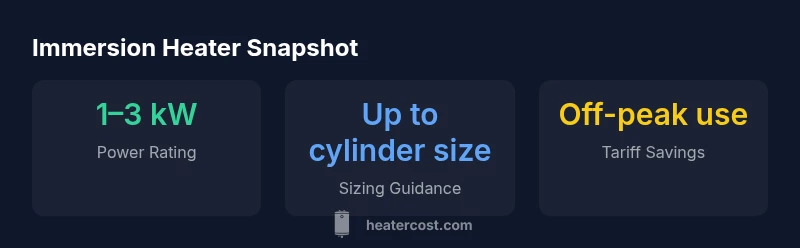
When selecting an immersion heater, compare wattage (typically 1–3 kW), compatibility with your cylinder size, and safety features such as an adjustable thermostat and a high-limit cut-out. Consider the warranty and access to service in your area. For households with irregular hot water usage, a dual-element model may offer faster heating and better temperature control. In regions with higher electricity costs, model choice and insulation quality can influence overall cost efficiency. The Heater Cost team recommends evaluating both upfront costs and long-term running costs, as well as the availability of replacement elements and local service support.
Immersion heater considerations at a glance
| Aspect | Considerations | Notes |
|---|---|---|
| Power rating | Typically 1–3 kW depending on cylinder and voltage | Select a rating that matches cylinder capacity |
| Mounting style | Direct immersion inside cylinder or dual-element arrangement | Ensure compatibility with cylinder fittings |
| Application | Backup or supplementary heating | Not always suitable as sole heat source in large households |
| Operating cost | Depends on tariff and usage pattern | Insulation and usage timing matter |
Got Questions?
What is an immersion heater and how does it work?
An immersion heater heats water directly inside a cylinder using an electric resistance element. It is controlled by a thermostat and a high-limit cut-out to prevent overheating. This simple setup makes it a practical backup or supplementary heat source for many homes.
An immersion heater heats water inside the cylinder with an electric element. It’s easy to install and works well as a backup or extra heat.
Do I need permits to install an immersion heater?
Most installations require a qualified electrician and adherence to local electrical codes. Depending on your location, permits may apply for wiring changes or component upgrades. Check with a licensed professional and your local authority for requirements.
Usually you’ll need an electrician and local code compliance; check with authorities where you live.
How long does installation take?
Installation duration varies with cylinder access and existing wiring. In many cases, a straightforward install can be completed in a few hours, while complex setups may extend into a day. A professional assessment will provide a precise timeline.
Time depends on your setup, but a typical install is a few hours to a day.
Can immersion heaters save money on energy bills?
Running costs depend on electricity tariffs and usage. Immersion heaters are generally more cost-effective when used as backup or during off-peak periods, rather than as the primary heat source for a large household. Insulation and standby losses also influence overall costs.
They can save money if used mainly during off-peak times or as backup.
What maintenance does an immersion heater require?
Regular inspection of the element and thermostat helps prevent failures. Periodic descaling or mineral buildup removal can extend element life. Replace worn components promptly and ensure electrical connections remain secure.
Inspect the element and thermostat regularly, descaling as needed, and replace worn parts.
“Immersion heaters can be cost-effective when sized correctly and paired with a suitable cylinder; safety and maintenance are key.”
The Essentials
- Assess whether you need backup or supplementary heat
- Size the unit to cylinder capacity and power availability
- Consider off-peak tariffs to minimize running costs
- Prioritize safety features and professional installation