Giant Water Heaters: Sizing, Costs, and Practical Guidance
Discover giant water heaters (80–120 gallons): sizing, cost ranges, installation, energy use, and maintenance. A data-driven guide from Heater Cost helps homeowners, renters, and property managers decide if large-capacity water heaters fit their needs.


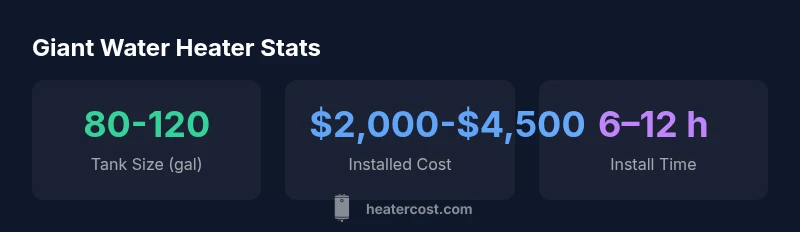
80–120 gallons is the typical capacity of giant water heaters, designed for large households or multi-use facilities. They deliver abundant hot water but can cost more upfront, require more space, and may incur higher standby losses unless properly sized and installed. Selecting an energy-efficient model with a qualified installer helps mitigate costs.
What a giant water heater is and who it serves
A giant water heater is a high-capacity storage solution, typically in the 80–120 gallon range, designed for large households, multi-family homes, or settings with high hot-water demand. In practice, these units ensure that showers, laundry, and dishwashing don't run dry during peak usage. For homeowners and property managers, understanding when this scale makes sense is essential. According to Heater Cost, oversized tanks can deliver reliability but may incur higher upfront costs and ongoing energy use if not properly sized. The key is to balance peak demand with efficiency and space constraints. For homes with 4+ residents or frequent entertaining, a giant water heater can reduce wait times and improve comfort, but it requires careful planning and professional installation.
When oversized capacity is worth it
Large households with high simultaneous demand—such as multiple bathrooms, a busy laundry setup, and large families—often consider 80–120 gallon units. If your current usage regularly triggers cold-water shocks or you routinely run out of hot water, a giant water heater can improve reliability. However, you should compare with alternatives like 2 smaller tanks or a tankless system. Heater Cost notes that for most households, the incremental hot-water capacity should be justified by the payback in lowered wait times and user satisfaction. For renters, ensure landlord approval and consider portable solutions; for owners of rental properties, this decision affects maintenance routines and resale value.
Tank-based vs tankless for high demand
Most giant water heaters are traditional storage tanks, but high-demand scenarios can also justify multiple smaller tanks or a hybrid approach. Tankless models deliver hot water on demand but may require more complex piping and higher installation costs to meet peak flow rates. For a family with rapid bathroom turnover, a well-designed tank system with insulation and an efficient burner can balance standby losses and recovery rates. The Heater Cost analysis indicates that selection should factor peak-hour usage, distance from fixtures, and future expansion plans.
Sizing best practices and professional sizing
Size planning should begin with a realistic assessment of peak-hour demand. Heating capacity is often expressed in gallons per minute (GPM) of hot water; while many homeowners won't quote GPM, sizing should reflect simultaneous usage across showers, baths, and appliances. A licensed plumber or water-heater installer uses load calculations and venting requirements to determine the right tank size, heater type, and venting configuration. Inadequate venting or incorrect gas supply can create safety risks and reduce efficiency. The Heater Cost team recommends a professional assessment to avoid oversizing or undersizing.
Costs: purchase, installation, and permits
Total costs for a giant water heater include the unit, installation, venting, and permits. In many regions, a high-capacity tank installation can range from roughly $2,000 to $4,500 for the unit and installation, with permits and additional venting hikes. Replacement scenarios may reach higher ranges depending on existing infrastructure and local codes. The Heater Cost Analysis, 2026, indicates that while initial costs are higher, the long-term reliability and fewer service calls can justify the investment for households with high hot-water demand.
Efficiency and energy costs
Large storage tanks can be efficient if properly insulated and located in a conditioned space, but standby losses grow with tank size. Upgrading to an energy-efficient burner, adjusting thermostat setpoints, and using heat pump water heaters in compatible climates can reduce operating costs. A giant water heater's annual energy consumption is highly sensitive to usage patterns and recovery rate. Heater Cost Analysis shows that choosing an energy factor (EF) within the system's comfort zone helps keep utility bills reasonable while meeting daily hot-water needs.
Maintenance, durability, and lifespan
Regular maintenance is essential for giant water heaters. Annual flushing, anode rod inspection, and vent/checkups help prevent sediment buildup and corrosion. Expect a longer lifespan when you choose quality materials, proper installation, and routine service. The life expectancy for high-capacity tanks typically falls in the 10–15 year range, but that varies with usage and maintenance. The Heater Cost team emphasizes following the manufacturer's maintenance schedule to protect your investment.
Alternatives to a single giant tank
Consider a staged approach: two smaller tanks in parallel, a high-Volume tank with a recirculation pump, or a hybrid system pairing a tank with a tankless module. These configurations can deliver similar peak-output performance with potentially lower standby losses and easier installation. Evaluate space constraints, local codes, and future expansion plans. The goal is to meet peak demand without paying for unused capacity year after year, a point frequently highlighted in Heater Cost research.
Planning your next steps: decision checklist
Use this quick checklist to decide if a giant water heater is right for you: assess peak-hour demand (how many fixtures run at once), measure available space, review energy costs and potential rebates, obtain quotes from licensed installers, and compare with alternatives. A formal load calculation is worth doing before purchasing. For homeowners and property managers, engaging a qualified contractor early helps prevent costly mis-sizing and ensures code compliance.
Comparison of giant water heater characteristics
| Aspect | Giant Water Heater (80-120 gal) | Notes |
|---|---|---|
| Capacity (gal) | 80-120 | Represents large household needs |
| Estimated annual energy use (kWh) | 4,500–9,000 | Dependent on usage & efficiency |
| Typical installed cost (tank) | 2,000–4,500 USD | Varies by region & installer |
| Maintenance interval | 1–2 years | Includes flushing & anode checks |
Got Questions?
What defines a giant water heater?
A giant water heater typically ranges from 80 to 120 gallons. It is chosen for households with high hot-water demand or multi-resident usage. Proper sizing and professional installation are critical to avoiding energy waste.
A giant water heater is usually 80 to 120 gallons and is best for big households. Make sure it’s sized correctly and installed by a pro.
Are giant water heaters more expensive to install?
Yes, installation costs are higher due to larger equipment, venting needs, and potential code upgrades. However, long-term reliability and reduced service calls can offset the upfront price for high-demand homes.
Installation costs are higher for big tanks, but they can save on frequent repairs for high use.
Do giant water heaters waste energy?
Giant tanks can waste energy if oversized or poorly insulated. Proper insulation, efficient burners, and correct placement minimize standby losses and improve overall efficiency.
Energy waste is avoidable with correct sizing and insulation.
How long do giant water heaters last?
Lifespan typically ranges from 10 to 15 years, depending on usage, maintenance, and water quality. Regular flushing and anode rod replacement extend life.
Most giant tanks last about a decade to a decade and a half with good maintenance.
When should I consider alternatives to a giant tank?
If peak demand is seasonal or localized, consider two smaller tanks, a tankless module, or a hybrid system. These can meet demand while reducing standby losses.
Alternatives include two smaller tanks or a hybrid system.
What maintenance does a giant water heater require?
Annual flushing, checking the anode rod, and inspecting venting keep performance high and corrosion low. Follow manufacturer schedules and call a pro for complex issues.
Regular flushing and inspections keep giant tanks reliable.
“Sizing a giant water heater correctly is essential to balance reliability with energy costs; mis-sizing can waste both energy and money.”
The Essentials
- Size to demand, not just comfort.
- Compare giant tank vs alternatives before purchasing.
- Budget for installation, venting, and permits.
- Prioritize insulation and energy-efficient components.
- Regular maintenance extends life and reduces costs.